Get Full Government Meeting Transcripts, Videos, & Alerts Forever!
Get email alerts on the Ag Climate Resilience topic
No spam. Unsubscribe anytime.
WSDA presents climate resilience plan for agriculture with six goals and 27 actions
Summary
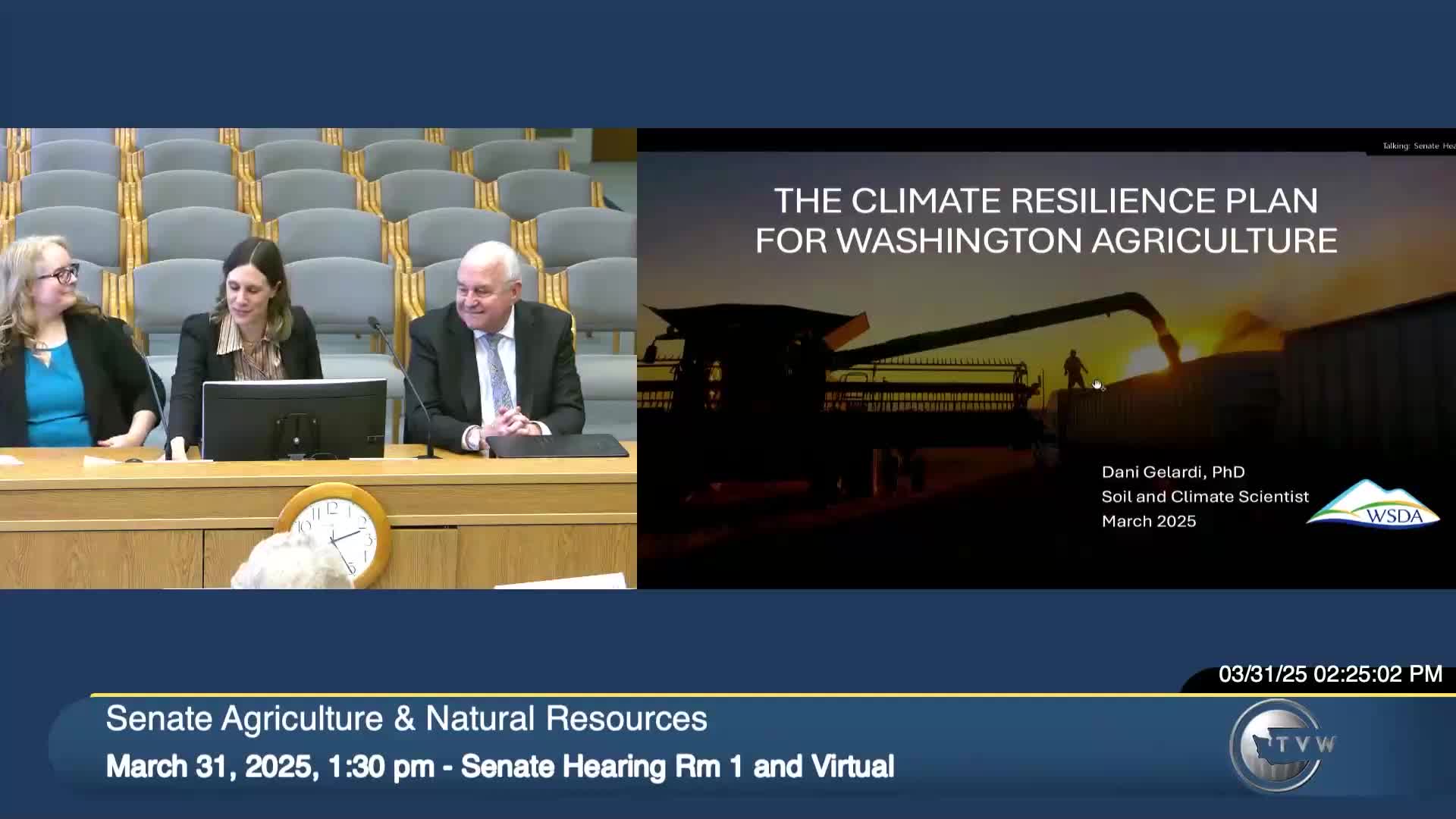
The Washington State Department of Agriculture presented a climate resilience plan to the Senate committee that outlines six goals and 27 strategic actions to help farms, farmworkers, and agricultural landscapes adapt to extreme weather and longer‑term climate trends.
Danny Gilardi, senior soil scientist and climate coordinator at the Washington State Department of Agriculture (WSDA), presented the agency’s climate resilience plan, describing the science, stakeholder engagement and proposed actions to support producers and farmworkers.
Why it matters: WSDA told the committee that climate impacts are already affecting Washington agriculture in varied ways — from drought‑stressed dryland wheat in the east to unprecedented heat and coastal shellfish losses on the west coast — and that a coordinated plan is needed to protect production, worker safety, and rural livelihoods.
Stakeholder outreach and key findings: WSDA said it gathered input from more than 400 farmers and about 200 farmworkers through surveys and listening sessions. The agency reported that over 70% of respondents said extreme heat, drought, wildfire, changing weather and yield fluctuations negatively affected their operations in the past five years; more than 50% reported impacts from changing pests, disease, heavy precipitation and water supply changes. WSDA also cited 2021 as an example year of compound impacts: it noted a historic drought that year and reported wildfires consumed 674,000 acres in Washington.
Six goals and examples of actions: the plan organizes 27 strategic actions under six goals: (1) increase preparedness, response and recovery from extreme weather (including better weather data and emergency livestock sheltering); (2) support on‑farm climate‑smart practices (research, technical assistance, better‑designed grants, inclusion of tribes and underserved producers); (3) safeguard sufficient high‑quality surface and groundwater (on‑farm efficiency and multi‑benefit water projects); (4) prepare the agricultural workforce (worker safety networks and new curriculum for technical colleges); (5) minimize pest, weed and disease impacts (surveillance, data sharing); and (6) align laws and regulations to advance resilience and agricultural viability.
Existing programs and needs: WSDA cited the Washington Soil Health Initiative, partnerships with Washington State University, the STAR incentives framework, and the compost reimbursement program as existing tools. Interviewees told WSDA they need more place‑ and crop‑specific research, more extension capacity, and more flexible, accessible funding to implement new practices.
Committee discussion and next steps: WSDA said the plan includes proposed cost estimates, timelines and metrics for each action and asked for continued collaboration across agencies, stakeholders, and the Legislature. Committee members discussed water planning and cross‑agency coordination; WSDA described roles the agency can play in convening and ensuring agriculture is represented in regional water discussions.
Ending: WSDA officials told the committee the resilience plan is intended to guide investments and partnerships to maintain agricultural productivity and worker safety in a changing climate; the agency did not present a formal funding bill during the session.