Get Full Government Meeting Transcripts, Videos, & Alerts Forever!
Get email alerts on the Legal Defense topic
No spam. Unsubscribe anytime.
Commissioners authorize conditional legal defense for former employee Anthony Coble
Summary
Okanogan County commissioners voted to authorize a conditional defense for former county employee Anthony Coble after the county received a federal civil complaint and a formal defense request under Washington law. Commissioner who had a conflict recused.
The Okanogan County Board of Commissioners voted to authorize a conditional defense for former county employee Anthony Coble after the county received a civil complaint in federal court and Coble requested a county defense under state law.
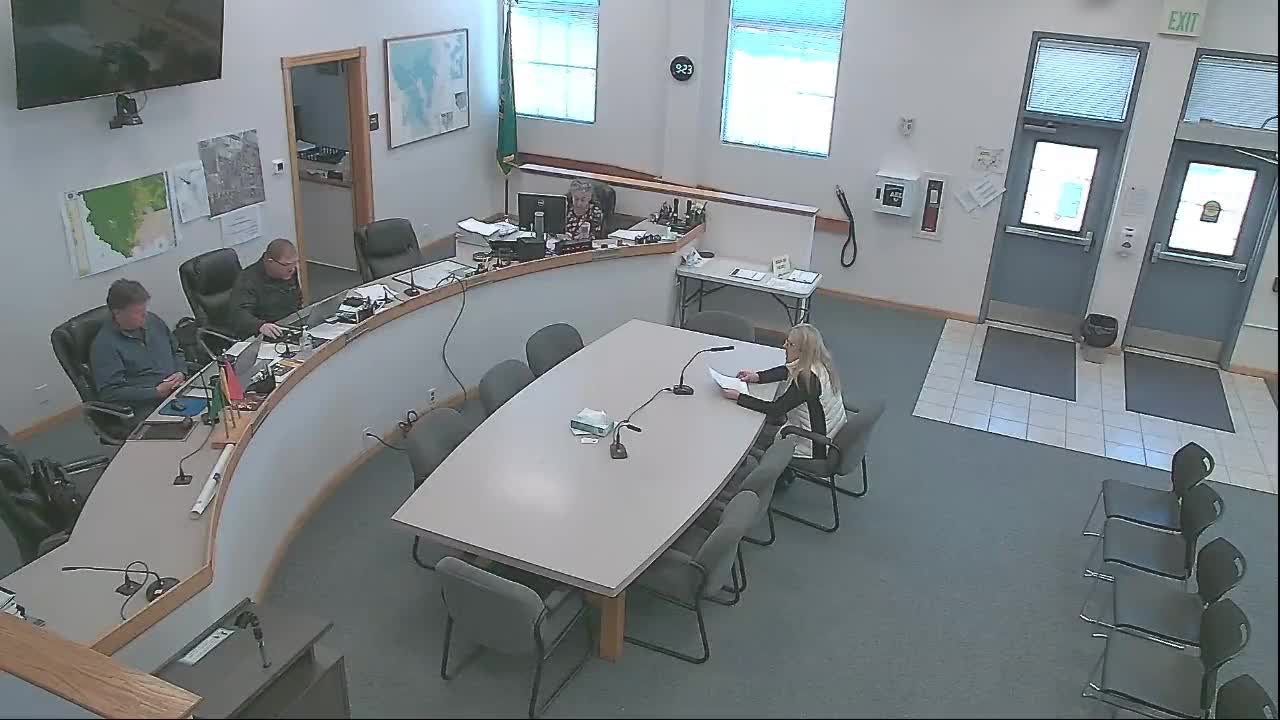
Shelley Kietzman, the county’s human resources director and risk manager, told commissioners the county had received a civil complaint (225‑CVD‑0058) filed Feb. 18, 2025, in the U.S. District Court for the Eastern District of Washington and that, under RCW 4.96.041, the county is required to defend a current or former employee who requests a defense when the acts alleged are within the scope of employment. She asked the board for a motion to authorize a conditional defense.
Kietzman moved to authorize a conditional defense for Coble; a commissioner seconded. The motion passed on a voice vote with commissioners present saying “aye.” One commissioner announced a personal connection to the case and formally recused themself from any involvement, including executive-session discussion, and that recusal was entered into the minutes.
The authorization directs county officials to sign a conditional defense agreement for Coble; the transcript records the motion and an affirmative voice vote but does not list a roll-call tally. Kietzman said the county’s preliminary review found the acts alleged were reported to be within the scope of employment, which triggers the statutory defense duty; she presented the RCW citation and asked for the board’s authorization to proceed. The board also completed an executive-session sequence immediately before and after the motion; the minutes note recusal and the statutory basis cited by staff.
No litigation outcome was decided in open session. The board’s action was limited to authorizing the conditional defense per the employee’s request and entering the recusal into the public record. The authorization was recorded on the minutes and staff said they would complete the signed agreement later that day.
Why it matters: The county’s decision to authorize defense shifts litigation administration and potential costs into the county’s liability framework under state statute; it also required the formal recusal of a commissioner who reported a personal connection to the matter, which the board recorded in the minutes.