Get Full Government Meeting Transcripts, Videos, & Alerts Forever!
Get email alerts on the Open Space Program topic
No spam. Unsubscribe anytime.
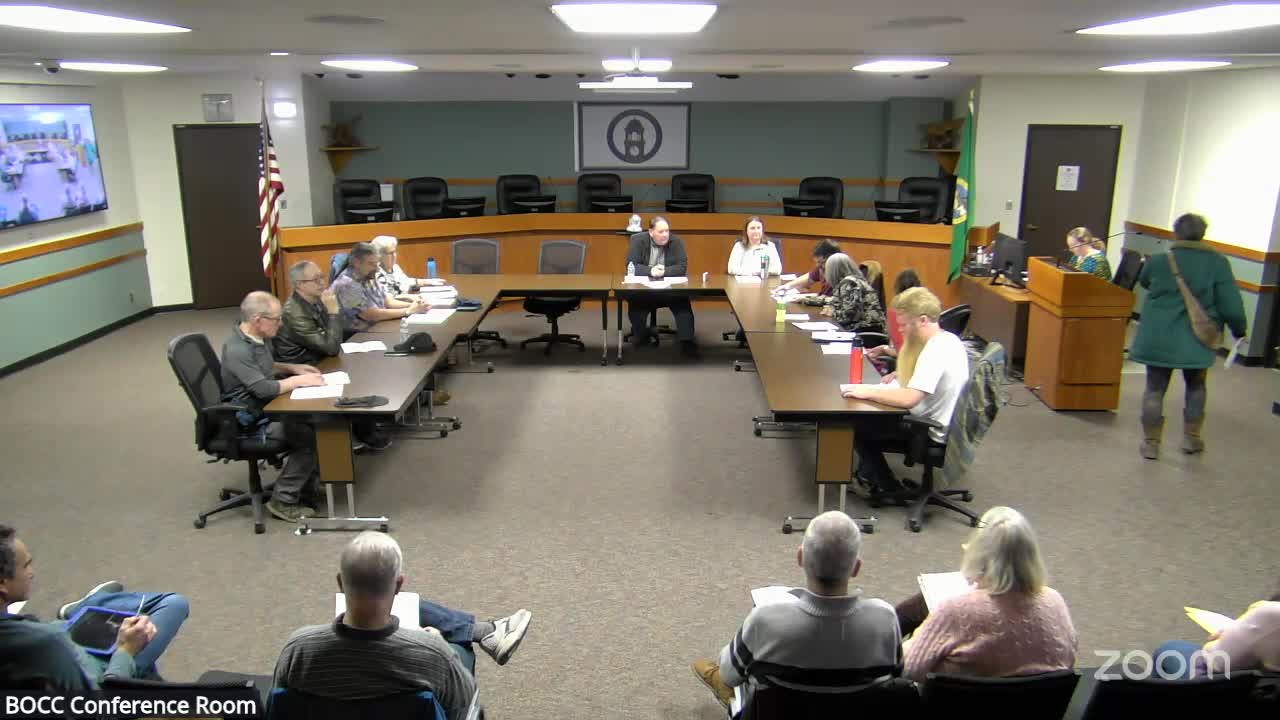
Clallam County Planning Commission hears dozens of public concerns on proposed open-space code revisions
Summary
The Planning Commission continued its review of proposed revisions to the county's open-space program after more than two hours of public comment on recording fees, possible removal from the program, and how wetlands, farms and smaller parcels would be treated under the draft code.
The Clallam County Planning Commission on Tuesday continued a public hearing on draft revisions to the county's open-space program after extensive public comment on how the changes would affect individual landowners and county tax distribution.
The draft code would revise the county's open-space benefit-rating system, clarify qualifying criteria and administrative procedures, and set minimum parcel-size rules. Staff told property owners they should submit written comments by April 8 for inclusion in the commission's next meeting; the public hearing was continued to April 16.
The commission sought public input on proposed changes that county staff and commenters said are intended to modernize a program established in 2001 and to make administration consistent with later state growth-management and critical-areas regulations. "The program is not being eliminated," a member of the commission said; "it's simply an effort to modernize the program and make it more applicable to the current needs of the county."
Department of Community Development staff and the assessor's office answered questions about how the draft would be applied. Danelle, a Department of Community Development staff member, said the point-based system that determines eligibility is found in the county code and that staff reports and site information would document how each parcel scores under the revised rules. She told the commission, "Under current and proposed regulations, properties must remain in the program for 10 years. And then if requested to be removed, they pay 7 years of back taxes."
Pam Rushton, identified in the meeting as a representative of the assessor's office, addressed recording fees that would apply if contracts are changed when the code is updated. "Recording fees are set by the state," Rushton told the room, citing a $304.50 recording charge and saying the county receives about $9.83 of that amount. "So the county's not making any money by this recording fee," she said.
Several landowners asked whether they would be required to pay back taxes if they were removed from the program. Danelle replied that where the county initiates a change to the program and a parcel no longer qualifies, the county would notify owners and they would not be required to pay back taxes for changes the county caused. "You will not be required to pay the back taxes because this is something that we have caused a change," she said.
Speakers pressed staff on a range of technical and practical issues in the draft code, including a proposed 4-acre minimum for participation in the open-space program in many circumstances, how wetlands and other regulated critical areas would be scored, and whether parcels that are already constrained by critical-area or shoreline rules would be treated as receiving a double benefit if also entered in the open-space program.
Several residents raised the point that many parcels currently enrolled in the county program were placed there long ago. Bob Martin, who identified himself as the county's former community development director, advised caution in implementation: "I would suggest reversing that," he said of requiring an audit of all enrolled parcels only after the code changes. Martin recommended auditing properties first to determine which parcels truly meet program objectives before adopting a new ordinance.
Other frequently raised concerns included: - The effect on low-income and senior landowners if their property is removed from the program and their tax burden increases. - Whether wetlands or other constrained portions of parcels should be excluded from the new point system because they already reduce market value or are otherwise protected by other regulations. - Confusion about application fees, who must reapply, and the timeline for notifications.
Staff explained administrative details repeatedly during public comment. Danelle said owners already enrolled would not need to reapply immediately: "So you don't have to reapply if you're already in the program because there's no reason to reapply," she said. She also said audit work to apply new criteria had not yet been performed and that the county would notify owners if parcels no longer qualified under any final code changes.
Commission members and staff acknowledged the program's complexity and recommended written comments. The commission set a schedule: written comments must be received by the county by April 8 to be included in the packet for the April 16 meeting. The commission said it will revisit the draft, consider clarifications and possible wording changes (including how the code addresses back taxes and recording fees), and forward a recommendation to the Board of County Commissioners.
The meeting closed with the commission reiterating the next steps and encouraging affected property owners to consult the Department of Community Development and the assessor's office to review how the draft would apply to their parcels.