Get Full Government Meeting Transcripts, Videos, & Alerts Forever!
Get email alerts on the Pilt Fire Response topic
No spam. Unsubscribe anytime.
Fire districts ask Clallam County to consider sharing PILT funds to cover park response costs
Summary
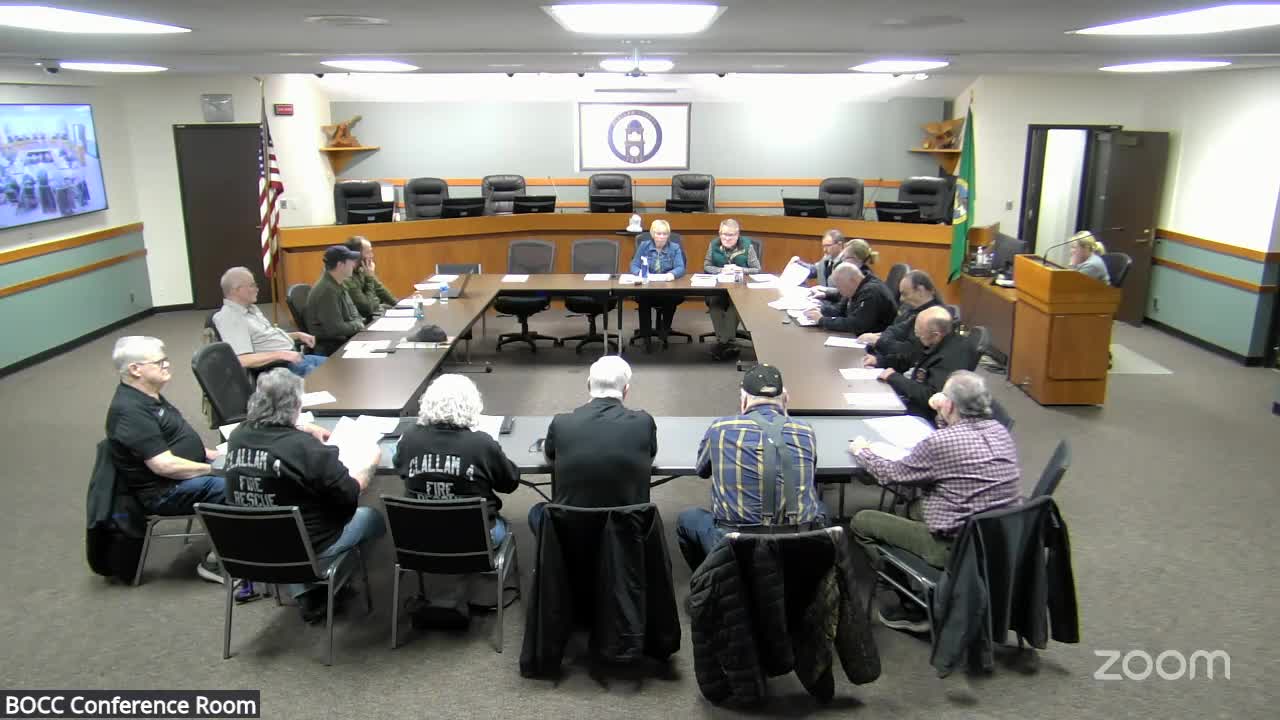
At the same Clallam County Revenue Advisory Committee meeting, fire district representatives and commissioners discussed a request that the county consider sharing Payment in Lieu of Taxes (PILT) receipts to cover unreimbursed fire and emergency responses on federal lands.
At the same Clallam County Revenue Advisory Committee meeting, fire district representatives and commissioners discussed a request that the county consider sharing Payment in Lieu of Taxes (PILT) receipts to cover unreimbursed fire and emergency responses on federal lands.
Why it matters: several fire districts said they provide fire and emergency medical services inside Olympic National Park and other federal lands but receive little or no reimbursement. The districts requested the county consider an agreement to allocate some PILT funds to districts that bear those direct costs.
Fire district representatives described the volume of calls and the financial burden on small districts. A district representative said that some residents inside park boundaries pay county taxes but the districts still shoulder costs for responses to recreation-area incidents and remote rescues. "We're just asking if the county commissioners would be willing to work with us," a fire district speaker said.
County officials said federal PILT payments are made to units of local government and that the county typically retains PILT receipts. County staff recommended an in-house legal review to determine eligibility and any contractual or statutory constraints before the county takes a policy position. "Let's have our county attorney take a look at whether or not that can even [be done]," one county official said.
Committee members suggested several next steps: (1) county legal review of PILT statute and any existing agreements; (2) if legally permissible, the county could convene negotiations with fire districts; and (3) districts should document incidents and costs to create an evidentiary record to present to the county and, if needed, to the board of county commissioners. Staff noted that letters of support submitted to the Board of Natural Resources are included in administrative records and can be useful in litigation; committee members discussed the similar evidentiary value of written requests and aggregated incident logs for PILT negotiations.
Ending: staff agreed to ask the county attorney to review PILT eligibility and whether county policy or interlocal agreements could allow sharing funds. Committee members asked that the topic be returned to a future meeting once the attorney has advised.