Get Full Government Meeting Transcripts, Videos, & Alerts Forever!
Get email alerts on the Grant Funding topic
No spam. Unsubscribe anytime.
Northwest Straits Foundation outlines grant support, partnership process for Clallam County MRC
Summary
Don Hunter of the Northwest Straits Foundation presented to the Clallam County Marine Resources Committee on how the foundation partners with MRCs to pursue grants, provide small operational support and host interns. He urged early project conversations and described typical timelines and reporting expectations.
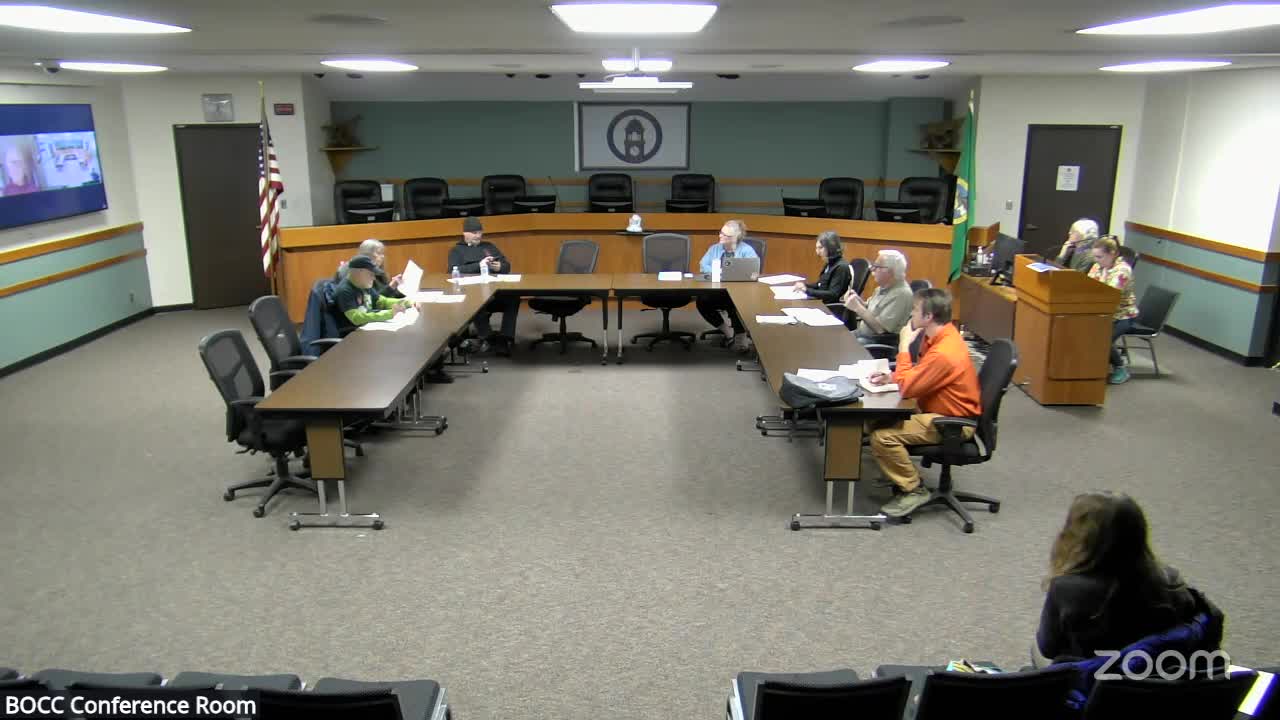
Don Hunter, executive director of the Northwest Straits Foundation, told the Clallam County Marine Resources Committee on Zoom that the foundation can support local Marine Resources Committees (MRCs) by helping pursue grants, providing small direct project support and by hosting interns or providing in-kind resources. "Our role is to collaborate," Hunter said, adding that the foundation’s mission is to "restore and preserve the long-term health of the Salish Sea by fostering collaboration, encouraging stewardship and conservation, and implementing science-based restoration."
Hunter said grant cycles are regular but competitive and that most projects take several months to secure funding: "we know it takes about 6 to 12 months to secure funding for most projects." He described a range of funders the foundation monitors and pursues on behalf of MRC partners, from smaller philanthropic grants to multi-year investments, and identified National Fish and Wildlife Foundation and the M.J. Murdock Charitable Trust among funders the foundation tracks. He noted the foundation also augments federal/state grants with philanthropic gifts, corporate support and individual donors.
Hunter outlined a simple project intake approach the foundation uses: a short one‑page project support form with basic information—project title, location, timeline, lead contact, project goals, partners, budget and the specific funding gap. He said that many requests begin as an individual MRC member emailing or calling the foundation: "If you got an idea, shoot me an email or one of [our staff]," Hunter said. He gave a concrete example in which the foundation supplied modest honoraria and an intern to support a school beach‑sailing program in partnership with the Lummi Nation; Hunter said that type of small, targeted support is typical.
Committee members asked how internships and reporting are handled. Hunter said the foundation can hire and pay interns and supervise them while the MRC provides technical supervision, and that the foundation produces funder-facing project reports that document project outcomes, budget, match and community benefits. Rebecca Mahan, Clallam County habitat biologist, asked whether Northwest Straits Commission (NRC) funding could be used as match on collaborative projects; Hunter said the foundation reports collaborative contributions in grant reports and encouraged the MRC to check commission/County rules about what the commission will accept as match to avoid double‑counting.
Members also discussed small requests — for example, modest sums for an event honorarium or a porta‑potty — and Hunter said funders generally prefer meaningful, outcome‑oriented projects rather than unrestricted general operating gifts; he said smaller items can be included as part of a larger stewardship or restoration grant. Committee staff asked that the foundation share the project support form and presentation materials; Hunter confirmed he had sent a PDF and offered to resend the one‑page form to MRC leads.
Why it matters: The foundation’s support can reduce administrative burdens on county staff and create funding opportunities for local restoration and stewardship projects, but Hunter reminded the committee that foundation grants generally require time and documented match and reporting. Several committee members said negotiating who administers interns or small grants can solve recurring barriers to participation for students and volunteers.
The presentation ended with Hunter inviting MRC members to contact him or foundation staff to discuss specific project ideas and ahead‑of‑cycle planning.