Get Full Government Meeting Transcripts, Videos, & Alerts Forever!
Get email alerts on the Farmland Conservation And Irrigation topic
No spam. Unsubscribe anytime.
Clallam County advisory board hears case for conserving Sequim–Dungeness farmland, irrigation upgrades and new financing tools
Summary
At a meeting of the Clallam County Conservation Futures Advisory Board, WSU Extension and land-trust speakers reviewed the region’s agricultural history, irrigation piping, recent easements and financing strategies — including buy‑protect‑sell — to keep working farms in the Sequim–Dungeness valley.
At a meeting of the Clallam County Conservation Futures Advisory Board, Washington State University Extension and local land‑trust representatives gave a 25‑to‑40‑minute briefing on agriculture in the Sequim–Dungeness valley, explaining how irrigation, conservation easements and new funding tools are being used to preserve working farmland.
The presentation, given by Clea, director of Washington State University Extension in Clallam County, and Tom of the local land trust, reviewed agricultural history and current pressures: extensive irrigation projects that began in the late 19th century; a post‑World War II decline in the number of farms; and recent efforts to buy development rights so land can stay in farming.
Why it matters: panelists said Clallam County has lost roughly 70–80% of its active farmland since about 1950, the county’s farmer population is aging (the presenter cited an average age of about 61 in Clallam County versus about 58 statewide), and water availability in late summer is increasingly constrained. Preserving productive parcels and improving irrigation efficiency were presented as key strategies to maintain local food production and rural character.
Key facts and figures
- Irrigation and water: Speakers said irrigation piping across the valley has reduced seepage and increased efficiency; the conservation district has helped install roughly 66 miles of pipeline and the valley is served by seven irrigation entities (four districts and three companies). The irrigation season was cited as April 15–Sept. 15, with diversions curtailed when river flows fall.
- Farmland loss and farm profile: Presenters noted a peak of about 400 dairies in the 1940s and said active farmland acreage has fallen from roughly 75,000 acres mid‑century to the present range cited in the presentation (~15,800–17,200 acres, depending on the dataset). The county counted 528 farms in 2017 and 514 in the 2022 agricultural census, with many small operations: presenters reported 282 farms had under $2,500 in annual farm receipts and roughly 82% of county farms report less than $10,000 annual farm income.
- Conservation easements and outcomes: The land‑trust presenter described agricultural conservation easements as legally binding agreements “tied to title” that extinguish development rights while leaving farming operations intact. The board heard that three recent conservation projects protected a combined 89 acres at a total cost of about $1.2 million; the county’s Conservation Futures contribution on those projects was reported as $242,000 and other sources leveraged roughly $1 million (about $4 leveraged for every county dollar committed).
- Financing and tools: The presenters outlined multiple funding sources commonly used to protect farmland: county Conservation Futures funds; the Washington Wildlife and Recreation Program (WWRP); Floodplains by Design; federal programs available through the Farm Bill; a state low‑interest revolving loan program described as “FarmPie” (1% loans to land trusts); a Farmland Protection and Land Access Program that can purchase easements without a local match in some cases; private fundraising; and bank loans that can seed land‑trust acquisitions.
Buy‑protect‑sell model
Tom explained a buy‑protect‑sell model the land trust has used: the trust may purchase a working farm (often using a loan), place a conservation easement on the property with grant funding, and then sell the conserved parcel at a lower, farm‑value price to a next‑generation farmer. The board was told this model has been used locally and that state programs and a revolving loan product can reduce the finance risk for land trusts.
Climate context
Presenters summarized regional climate model results cited from the UW Climate Impacts Group: warmer temperatures across seasons (largest in summer), wetter winters with more extreme events, earlier snowmelt and reduced late‑season streamflow — trends that accentuate summer irrigation shortfalls at the time farmers most need water.
Board discussion and next steps
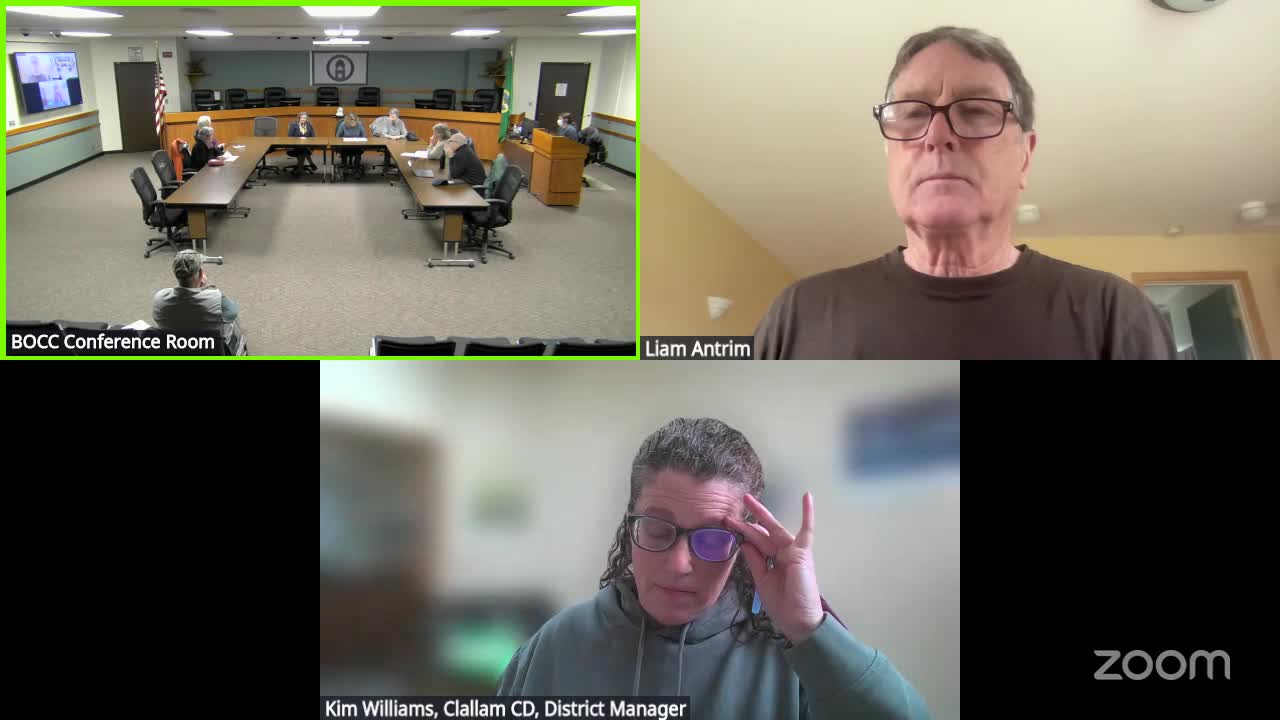
Board members asked for a future, more detailed briefing from the conservation district on irrigation piping and water‑management technicalities; Kim Williams, identified as conservation‑district manager on the call, confirmed the 66‑mile number in the meeting. Presenters said the land trust is pursuing multiple grant applications (including two projects that ranked highly in the recent WWRP review) and is discussing the projects with state legislators.
Votes at a glance
- Motion to approve the meeting agenda: moved and seconded (names not specified in the transcript); result: approved by voice vote.
- Motion to accept minutes: moved and seconded (names not specified in the transcript); result: approved by voice vote.
- Motion to adjourn: moved and seconded (names not specified in the transcript); result: approved by voice vote.
Ending
The board set its next meeting date (announced in the meeting) as April 9. Presenters urged trustees that conservation easements, irrigation investments and layered grant funding remain the primary tools for preserving working farmland in the Sequim–Dungeness valley.