Get Full Government Meeting Transcripts, Videos, & Alerts Forever!
Get email alerts on the Event Funding Data topic
No spam. Unsubscribe anytime.
Committee hears funding recaps from events and considers pooled geolocation data purchase
Summary
Committee members reviewed performance reports from festivals, sporting events and visitor centers, and discussed pooling funds to buy geolocation/event-impact data (PlacerAI or similar) to provide ZIP-code and room-night metrics for grant evaluation.
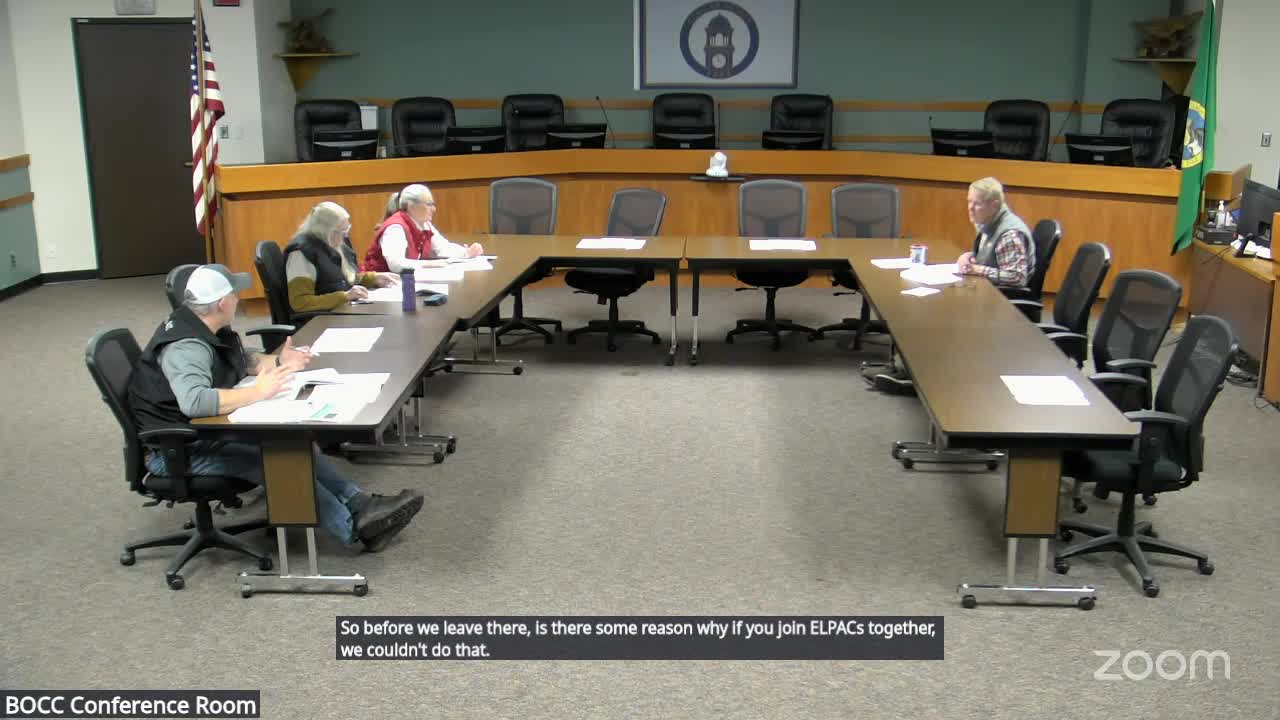
Clallam County’s Lodging Tax Advisory Committee spent the March 13 meeting reviewing performance reports from multiple events and organizations and opened a discussion about buying pooled geolocation and event-impact data to improve grant evaluation.
Members and presenters summarized recaps for a range of recipients funded with lodging-tax dollars, including Crabfest, the irrigation festival, BMX and youth sports tournaments, Ian’s Ride, Hurricane Ridge Winter Sports Club and several visitor centers. Rose, who presented Crabfest figures, said the event sold roughly 4,800 dinners through the festival platform and another nearly 1,100 through a separate partner; she said the event broke even for 2024 after City and county LTAC grants and that the event’s ticketed dinners do not reflect total walk-in attendance.
Organizers and committee members repeatedly asked for more origin and headcount data. Multiple presenters said their ticketing systems track ZIP codes and registration details, and the committee asked applicants to return with those specifics. Marsha and others described outreach about a regionwide data purchase to access mobile-geolocation metrics; Marsha said small organizations faced price points (she cited $12,000 a year for a small chamber rate from PlacerAI) and proposed pooling LTAC partners or having the Olympic Peninsula Visitors Bureau (OPVB) negotiate a regional subscription.
Participants discussed a recently identified “event impact calculator” tool offered by Destinations International and noted that geolocation products can show weekend-specific movement, visitation from outside the county, and likely spillover to gas, restaurants and retail. Committee members asked staff to investigate whether a joint subscription or county-level contract would make the cost feasible and whether such a purchase would be an eligible LTAC expense.
Several event organizers reported changes in attendance patterns: Victoria said her running and endurance events are seeing no Canadian registrations since Jan. 10 and several refund requests; other presenters said they had strong last-minute registration spikes that complicate planning and forecasting. Committee members asked applicants to clarify how much of their attendees came from outside the county or more than 50 miles away and to provide data on overnight stays and lodging distribution (city vs. unincorporated county).
The committee agreed to request those supplemental data points from applicants and to return to the geolocation purchase discussion at a subsequent meeting.