Get Full Government Meeting Transcripts, Videos, & Alerts Forever!
Get email alerts on the Fsec Local Control topic
No spam. Unsubscribe anytime.
Senate committee hears bill to require FSEC to apply local land‑use standards in energy siting
Summary
Senate Bill 1034 would require the Energy Facility Siting Council to apply a local government's land‑use regulations when the local government provides them; proponents say the change restores local control, opponents say it would add cost and complexity to siting renewable projects.
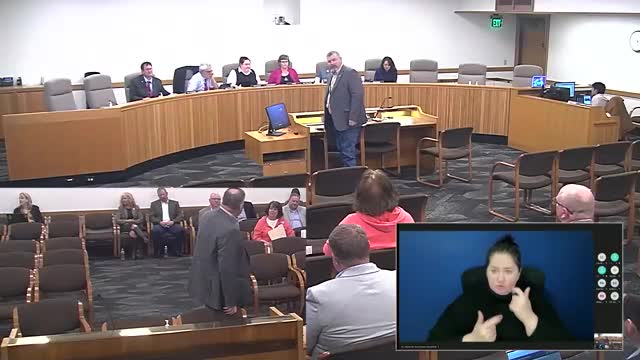
Senate Bill 1034 drew a lengthy and partisan public hearing on March 31 in the Senate Energy and Environment Committee as local officials, industry groups and farmers debated whether the Energy Facility Siting Council (FSEC) should be required to apply local land‑use regulations when a county provides them.
Sen. Todd Nash (D–District 29) introduced the measure and said it was prompted by a contentious FSEC approval in Umatilla County. "They had a siting of windmills within their county...and in the end, when their own county ordinances, their own land use planning of their county, was overruled by FSEC," Nash said, summarizing the county's view of the dispute and why the bill was needed.
Umatilla County officials and a coalition of Eastern Oregon counties testified in support. Cindy Timmons, Umatilla County commissioner, urged that FSEC not "second guess" locally adopted criteria that were produced through county planning processes. County officials described a local substantive standard — a two‑mile setback from dwellings — that FSEC did not apply in a recent site certificate decision for the Nolan Hills project. Umatilla County community development director Bob Walder asked the committee: "What would compel a county to even participate as a special advisory group if the local substantive criteria that we submit and provide is going to be ignored?" He said that the county provided its criteria at multiple stages of the FSEC process but the council nonetheless found the project complied with statewide planning goals.
Supporters framed SB 1034 as restoring local control and preserving the state’s land‑use framework. John Schafer, a county commissioner and president of the Association of Oregon Counties, said the bill "ensures that local government's land use plans and regulations are respected and applied in the siting of energy facilities." Several Eastern Oregon elected officials and commissioners — including Paul Andres (Union County), Joe Debulskis (Sherman County judge) and Lisa Collier (Wallowa County commissioner) — said their counties had adopted substantive local standards after public hearings and that FSEC overruling those standards undermined local planning.
Industry trade groups and renewable energy advocates testified in opposition. Emily Griffith, Oregon policy manager for Renewable Northwest, said: "Renewable Northwest opposes Senate Bill 1034 as it would make permitting at FSEC even more difficult than it currently is." She argued FSEC provides a consistent statewide process and that allowing local standards to be absolute could add cost and delay, discouraging investment. Angela Crowley Cook, executive director of the Oregon Solar and Storage Industries Association, said Oregon is already difficult for siting and warned that the bill could increase permitting costs and timeframes.
Other witnesses split the middle: farmers and the Oregon Farm Bureau urged protection of farmland and local authority to prevent loss of irreplaceable agricultural land, while several county witnesses emphasized that SB 1034 would not impose specific setbacks on counties but rather require FSEC to apply those that counties have lawfully adopted.
Committee members asked about the existing process and remedies. Witnesses described the special advisory group (SAG) role for counties, the three pathways developers can use under current law (local certification, FSEC approval using local substantive criteria, or direct compliance with statewide planning goals), and the contested‑case and court appeal process that followed the Nolan Hills approval. Proponents said the Oregon Supreme Court’s ruling in the Nolan Hills litigation described the overall process as complicated and allowed FSEC to avoid applying local substantive criteria; supporters said SB 1034 would clarify the statute and restore the original intent.
No vote was taken at the hearing. The chair closed public testimony and the committee invited written comments.
Ending: The hearing highlighted a core tension in Oregon energy siting policy — balancing consistent statewide permitting for energy projects with deference to locally adopted land‑use standards — and left the committee with written testimony and follow up questions to consider.