Get email alerts on the Racing Commission Budget And Safety topic
No spam. Unsubscribe anytime.
Oregon Racing Commission warns of budget shortfall, outlines safety and licensing changes during public hearing
Summary
Officials for the Oregon Racing Commission told the Transportation and Economic Development Subcommittee on March 31 that declining pari‑mutuel revenues have left the agency with about 1.4 months of operating reserves and prompted proposals to raise licensing fees, keep a larger share of wagering receipts and boost safety oversight.
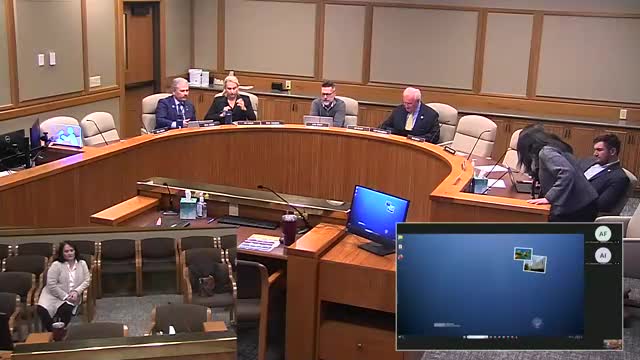
Co‑chair Gomberg convened the Transportation and Economic Development Subcommittee of Ways and Means on March 31 and opened a public hearing on House Bill 5035, the Oregon Racing Commission’s budget bill, as state officials described declining revenues and outlined proposed safety and licensing changes.
The Racing Commission’s executive director, Connie Wynne, and Tamara Brickman of the Department of Administrative Services’ Chief Financial Office told legislators the agency has seen revenue declines since 2019, when Portland Meadows closed, and again after a 2022 Department of Justice opinion curtailed historical horse racing. Wynne and Brickman said those losses, plus several advanced‑deposit wagering (ADW) companies leaving the state and a reduction in off‑track betting locations, have reduced the commission’s operating reserves.
Tamara Brickman said the commission’s ending balance at the current service level is roughly $489,000, “which left them with a little more than 1 in 1.4 months of operating balance.” Brickman said the office typically recommends three to six months of operating reserves and that the agency submitted a modified current service level that cut roughly $1 million from its request; the governor’s budget then restored some of those cuts by allowing the commission to retain certain revenues.
Why it matters: the commission regulates pari‑mutuel wagering, licenses participants and audits wagering transactions; it funds its operations from other funds — primarily wagering receipts — not the general fund. Wynne and Brickman told the committee that the commission’s financial stress affects small rural economies that host race meets and could limit the agency’s ability to increase safety oversight and maintain staffing.
Key budget and policy details discussed
- The commission is largely funded by pari‑mutuel wagering receipts (Brickman said about 79% of other‑fund revenue) and by license fees (about 15%).
- Brickman said the commission must transfer 25% of certain license/parimutuel receipts to the general fund, a transfer she said “equates to about $1,700,000” for the current budget period. House Bill 3023 (as discussed in the hearing) would authorize the commission to retain a share of pari‑mutuel revenues rather than transferring that amount to the general fund; committee testimony indicated HB 3023 did not appear to be moving at the time of the hearing.
- The commission’s personnel budget is the largest share of expenditures: officials reported roughly 42% of expenditures go to personal services, citing about $3.3 million for 10.14 full‑time equivalent positions.
- Brickman said the governor’s budget still requires roughly $350,000 or more in additional revenue beyond the fee package proposals to maintain the proposed expenditure level.
Legislation and fee changes described
- Senate Bill 853: described in testimony as a statutory change to allow the commission to raise and tier individual licensing fees (the witness said most current individual licenses are charged $20 a year and that the statute would be changed to allow fees up to $150). Brickman and Wynne said the proposal would adopt a tiered structure similar to what Washington and California use and estimated the change could generate roughly $142,000 in additional revenue (estimate provided by DAS staff).
- Changes to ADW (online wagering) fees: testimony said the bill would increase a daily ADW licensing fee by $25 a day, estimated to generate about $63,000 annually if enacted; officials said ADW license fees also increase annually under statute tied to inflation.
- House Bill 3023: would allow the commission to retain a greater share of pari‑mutuel revenues (the hearing record indicates this bill faced uncertain movement at the time of the hearing).
- House Bill 3020 (referred to in the hearing as the bill to prohibit betting on greyhound racing): testimony said the bill had been amended to delay its effective date until summer 2026. Witnesses estimated that an immediate execution of the bill as originally introduced would have reduced total handle by approximately $200,000, of which $150,000 would affect the commission and $50,000 would affect the general fund (testimony attributed these estimates to agency staff).
- Senate Bill 857: described as a bill to increase civil penalties and give the commission authority to impose civil penalties on operators taking wagers in Oregon without regulation; Wynne said the measure had cleared the Senate at the time of the hearing and would provide enforcement “teeth” against unregulated operators.
Safety, enforcement and operational changes described by the commission
- Connie Wynne said the commission had expanded veterinary staff (adding a third veterinary technician) and is moving to require 100% necropsies for race‑related equine fatalities. She described hiring contract veterinarians to cover gaps until a permanent hire is possible and said the commission is bringing a Kentucky firm to test the racing surface with specialized equipment that simulates galloping and performs radar profiling of base layers.
- Wynne said the agency plans to increase civil penalties (from a $500 maximum cited in the record to a proposed $5,000 maximum) and to expand testing and detection for illicit practices the commission suspects may be occurring at the track (testimony used the term “milkshaking,” and Wynne described work to add testing capacity).
- Wynne described new or proposed measures including an anonymous tip line, expanded steward and investigator oversight, a concussion‑protocol “helmet voucher” program for jockeys, revised rules for therapeutic medications and steroid injections, and updated air‑quality standards that had already resulted in one canceled race.
- On monitoring wagering hubs and races outside Oregon, Wynne said the commission audits the wagering process, conducts on‑site inspections at call centers and uses IT and financial auditing standards (she cited ISACA and NIST) and third‑party audits for operators, but she said the commission cannot directly audit conditions at every foreign track that provides a signal to ADWs.
Performance measures and data limits
- Wynne proposed key performance measures including a controlled‑substances threshold (she summarized a measure as “no more than 1 out of 250 tests” returning a result above allowed levels) and an equine safety metric referenced in the hearing as “no less than 5 out of every 1,000 starts” (the phrasing in the spoken record is ambiguous about whether that denotes a ceiling or floor; the commission characterized it as a target to track race‑related injuries). Wynne and staff acknowledged limits in available data — for example, injuries and nonfatal events at out‑of‑state tracks are difficult to obtain.
Public comment and committee action
- No members of the public signed up to testify at the March 31 public hearing. Co‑chair Gomberg closed the hearing after the agency presentation and committee Q&A. No formal votes on the Racing Commission budget or the specific bills were recorded during this session.
Ending
Committee members pressed the commission on enforcement tools, vet staffing and what data the agency could reasonably collect about out‑of‑state tracks. Agency officials asked lawmakers to consider the fee and revenue changes in Senate Bill 853, House Bill 3023 and related measures to shore up the commission’s budget and fund expanded safety testing and oversight. Several bills referenced in testimony remained in work‑session or committee status at the time of the hearing.
AI generated
The text on this page is AI generated. Summaries, highlights, analysis, and video transcripts are all produced from the original source material.
AI can make mistakes, so if you spot one, and we will fix it for everyone.
Note: the source content is unaltered by us. Any content source we link to, be it a video, an audio recording, or a document, is presented exactly as its publisher released it. That publisher is usually a government body, sometimes an individual official or another organisation.