Get Full Government Meeting Transcripts, Videos, & Alerts Forever!
Get email alerts on the Community Schools topic
No spam. Unsubscribe anytime.
Public hearing: supporters tell House Education Committee community schools could reduce absenteeism and coordinate services
Summary
Testimony on HB 3941 described full-service community schools as a coordination model for education, health and social services; proponents urged the committee to pass a grant program that would fund site coordinators and build statewide infrastructure.
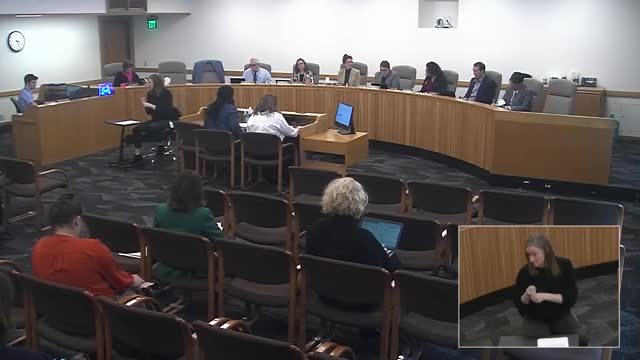
Salem — Supporters of House Bill 3,941 told the House Education Committee on March 31 that a statewide community schools grant program could reduce chronic absenteeism and better coordinate services for students and families.
In a public hearing that drew a multi-stakeholder panel, witnesses described community schools as an established strategy that places a community school coordinator or partner at the center of a school’s network of services. Sarah Arbuckle, chief of staff to Rep. Paul Winn, read the lead sponsor’s testimony, citing Oregon’s chronic absenteeism rate and research findings: "Community schools reduce absenteeism by 20 to 30% in 1 year," she said, and argued HB 3,941 would "reimagine public education as a system that supports the whole child so no student falls through the cracks." (Arbuckle was reading Representative Winn's testimony for the record.)
Krista Rowland of the National Coalition for Community Schools described the model’s national footprint and said coordinators—often based in community organizations—help make schools "true community assets" by aligning partners and driving shared accountability.
Maureen Hinman, executive director of the Oregon School Based Health Alliance, told the committee that the state lacks consistent infrastructure to coordinate existing programs. "Many districts and partners, rural and urban, are ready to move forward, but don't know how," she said. Hinman and other witnesses recommended ODE oversight, an external evaluation and steering-committee guidance to maintain accountability.
Dr. Carmen Williams, director of community schools for Portland Public Schools, described operational experience launching the model locally and said principals and site leadership must be partners: "Your principal and your administrative team need to be champions of this model and be willing to open their school doors up to the community," she said, adding site coordinators often act as "co-pilots" with principals to align services.
Funding and program design
Staff summarized HB 3,941 as establishing a grant program administered by ODE, allowing ODE to contract with a nonprofit, limiting grant recipients to five and providing each recipient a $170,000 award (the bill also included an appropriation of $4.9 million in the staff summary). Committee members pressed witnesses on those caps and on scale. Vice Chair McIntyre asked why the bill capped recipients and whether $170,000 was enough; witnesses and ODE staff said the dash 1 amendment removed the cap and a dash 2 amendment was in development that would address labor-union input and other changes.
Committee members raised implementation questions: how a coordinator would work with principals and superintendents, where coordinators would be employed (district, community-based organization or ESD), and how the program would scale beyond initial grantees. Witnesses said the model is flexible: coordinators may be district employees, housed at schools, or employed by community organizations depending on local arrangements.
Why it matters
Supporters framed HB 3,941 as an evidence-based approach that could reduce absenteeism, close achievement gaps and increase graduation rates by making services more accessible and coordinated at the school level. The measure would also fund statewide infrastructure to sustain coordination and evaluation.
Next steps
Committee members asked for a forthcoming dash 2 amendment that would reflect continuing conversations with unions and other partners. The public hearing record closed after the panel’s testimony; the bill remains at the committee stage.
Quoted testimony in this article comes from witnesses recorded on the hearing transcript and attributed to those speakers.