Get Full Government Meeting Transcripts, Videos, & Alerts Forever!
Get email alerts on the Comprehensive Plan Update topic
No spam. Unsubscribe anytime.
Kittitas County staff, consultant outline two‑year comprehensive plan update, housing and UGA work ahead
Summary
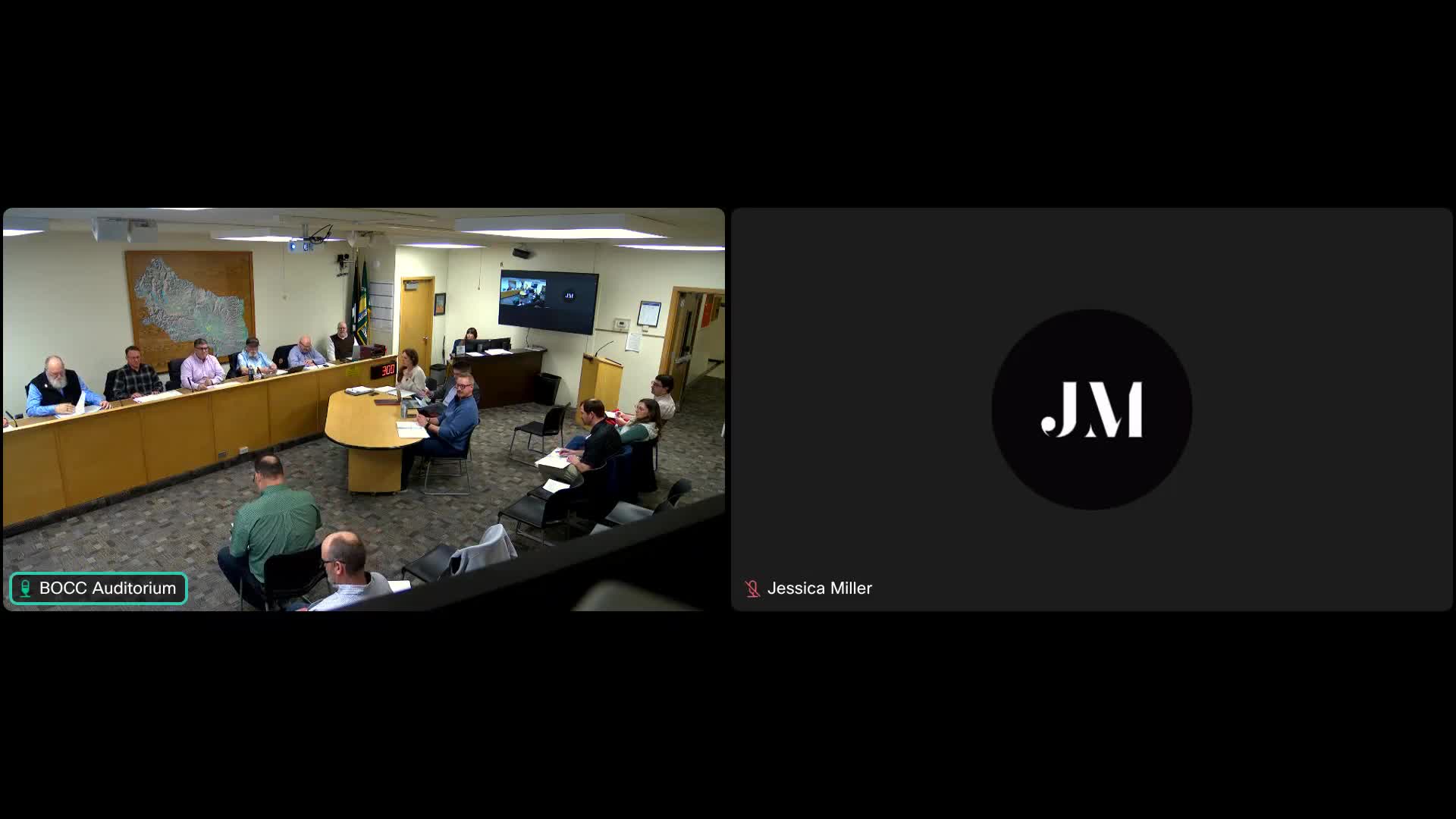
At a joint meeting of the Kittitas County Planning Commission and the Board of County Commissioners, county planning staff and consultant Clay White of Kimley‑Horn outlined a two‑year periodic comprehensive plan update required under the Washington State Growth Management Act.
At a joint meeting of the Kittitas County Planning Commission and the Board of County Commissioners, county planning staff and consultant Clay White of Kimley‑Horn outlined a two‑year periodic comprehensive plan update required under the Washington State Growth Management Act. The update will include population and housing targets based on Office of Financial Management projections, a land‑capacity analysis, revisions to policies and development regulations, and a public engagement program intended to run through the update process and lead to a submittal to the Washington State Department of Commerce.
The consultant, Clay White, described the work as a multi‑step effort that begins with selecting an OFM population projection and distributing growth targets between the county and its cities. “My job for the next year and a half is to set you all up for success,” White said as he described the project schedule, the housing‑for‑all planning tool the county will use, and a capacity analysis that will show whether current zoning allows the housing types the county must plan for.
County staff said the update is due in June 2026 and that the county has selected the OFM medium projection as the starting point for the work with the regional Council of Governments. A county staff member urged commissioners and planning commissioners to direct questions to county staff: “If you don't have questions tonight, that's fine. Please get your questions to myself or the planning manager, Jamie Aileen, or my long range planner, Jeremy Johnson, so we don't miss anything.”
Key elements officials described:
- Growth targets and distribution: Staff and the consultant explained a four‑step process that starts with the OFM projection, distributes that growth among the county and each city through the regional Council of Governments, and then uses that allocation to set housing and employment targets for 2046. The county selected the medium OFM projection as its working baseline.
- Housing needs assessment and allocation tool: The county will use the state “housing for all” planning tool to translate population targets into housing unit needs by affordability band (0–30%, 30–50%, 50–80% of area median income, etc.). Staff noted the tool allocates most lower‑affordability needs to cities and unincorporated urban growth areas because rural zones typically do not permit the density associated with lower‑income multifamily housing.
- Land‑capacity analysis and UGA boundaries: A land‑capacity analysis will inventory zoning capacity inside urban growth areas (UGAs) and identify whether rezoning, higher allowed densities or UGA expansions will be necessary. The consultant noted jurisdictions sometimes have capacity in the “wrong” zones and may need to create capacity in zones that allow housing at the affordability levels required by state law.
- Critical areas and best available science: The county will update critical‑areas regulations consistent with best available science, including sources such as the Washington Department of Fish and Wildlife where applicable. White said the update will include a technical volume synthesizing science that supports proposed code changes.
- Climate resilience and all‑hazards: The update will include a climate resilience element focused on adaptation and resiliency (for example, planning for wildfire and flooding impacts and protecting infrastructure), distinct from emissions‑reduction requirements that apply to some other jurisdictions.
- Subarea planning: Staff confirmed a subarea plan for Easton is included in the project scope; the project team will host an open house in Easton and station‑style outreach there.
- Public engagement and schedule: The consultant described a phased public engagement approach beginning in May (community surveys, open houses, targeted stakeholder outreach, roadshows and website tools). White and staff proposed issuing pre‑draft policy chapters in small batches to solicit earlier, focused feedback rather than releasing a single large draft at the end of the process.
Commissioners and planning commissioners raised policy and implementation concerns throughout the presentation. Topics they pressed on included the county’s minimum lot sizes and how changes could fare on appeal, water availability and the county’s red/yellow/green water‑zone designations, how large public‑land acquisitions (conservation organizations and state or federal purchases) affect the county’s developable acreage and tax base, and maintenance challenges for county infrastructure such as bridges and roads.
Multiple speakers requested clearer maps and visuals for public outreach. Commissioners asked staff and the consultant to prepare maps that show land the county does not control (federal, state and major conservation holdings) versus private land where local decisions influence development, so the public can better understand the geographic limits of local land‑use authority.
Staff and the consultant said they will prepare implementation language for the comprehensive plan elements, and will identify policies that require code or development regulation changes. White emphasized the update is intended to be “action‑oriented” with implementation steps rather than a document that only states goals.
Next steps: the team will finalize the public participation plan with feedback from commissioners and the planning commission, proceed with the housing needs assessment and land‑capacity analysis, and begin community outreach in May. Staff said all materials and schedules were emailed to commissioners and planning commissioners and invited additional stakeholder suggestions for the outreach list.
Ending: County staff and the consultant framed the update as an extended collaborative process with multiple briefings and workshops for the planning commission and the Board of County Commissioners over the next two years. Staff encouraged commissioners and planning commissioners to submit questions and stakeholder names via email to county staff so the team can incorporate those groups into the engagement plan.