Get Full Government Meeting Transcripts, Videos, & Alerts Forever!
Get email alerts on the Medicaid Settlement topic
No spam. Unsubscribe anytime.
Bill would create interim Medicaid settlements for Montana critical access hospitals to ease cash‑flow delays
Summary
House Bill 732 would require interim settlements for Medicaid cost reports submitted by Montana critical access hospitals, aligning state practice with Medicare to reduce long delays in final settlements that strain rural hospital cash flow.
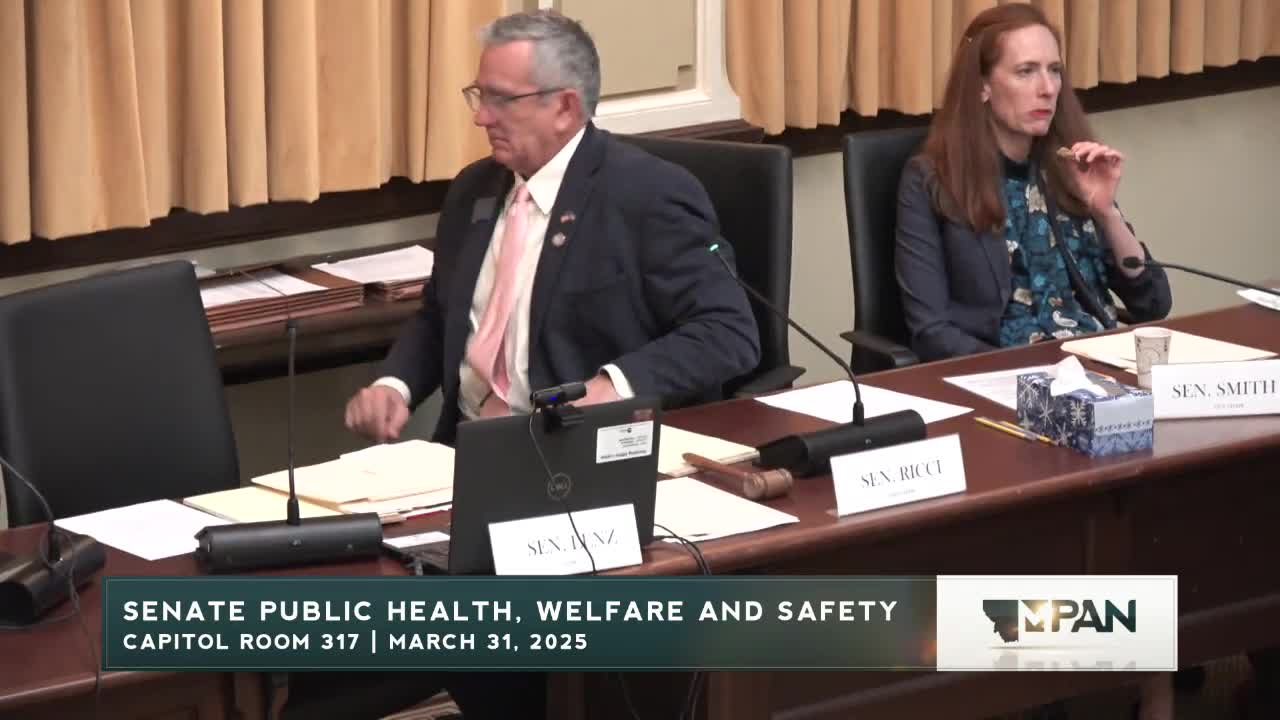
Representative David Beatty presented House Bill 732 to the Senate Public Health Committee on March 31, proposing that Montana adopt an initial settlement process for Medicaid cost reports for critical access hospitals similar to the federal Medicare process. The sponsor said Medicaid settlements currently wait until federal audits are complete, a process that can take years and create cash‑flow problems for small rural hospitals.
"Every year a hospital prepares a cost report for Medicare and Medicaid services… For Medicare, an initial settlement is made promptly, followed later by a true up made after the cost report undergoes a federal audit. But for Medicaid, a settlement isn't made until after that audit is completed, which can take years," Representative David Beatty explained. The bill would include a one‑time appropriation to clear the backlog of settlements (sponsor cited $52,800 to address current backlog) and an ongoing appropriation estimated at $15,000 annually, with about half state general fund and half federal match, according to sponsor testimony.
Proponents included the Montana Hospital Association and leaders of multiple critical access hospitals. Duane Preshinger of the Montana Hospital Association told the committee the change would align Medicaid with Medicare and relieve cash‑flow pressure at 50 rural hospitals. CEOs from Bitterroot Health and Bighorn Hospital described local examples in which long settlement delays created financial instability; Bitterroot’s chief executive said settlements delayed several years create an “obvious and unnecessary risk.” The Department of Public Health and Human Services also testified in support, saying the change would help maintain quality health care in rural communities and recommended a do pass.
The committee heard no recorded opposition during the hearing. The hearing record shows support from hospital systems, rural hospital CEOs, and the department; no committee vote was recorded during the hearing session.