Get Full Government Meeting Transcripts, Videos, & Alerts Forever!
Get email alerts on the Housing Parking Policy topic
No spam. Unsubscribe anytime.
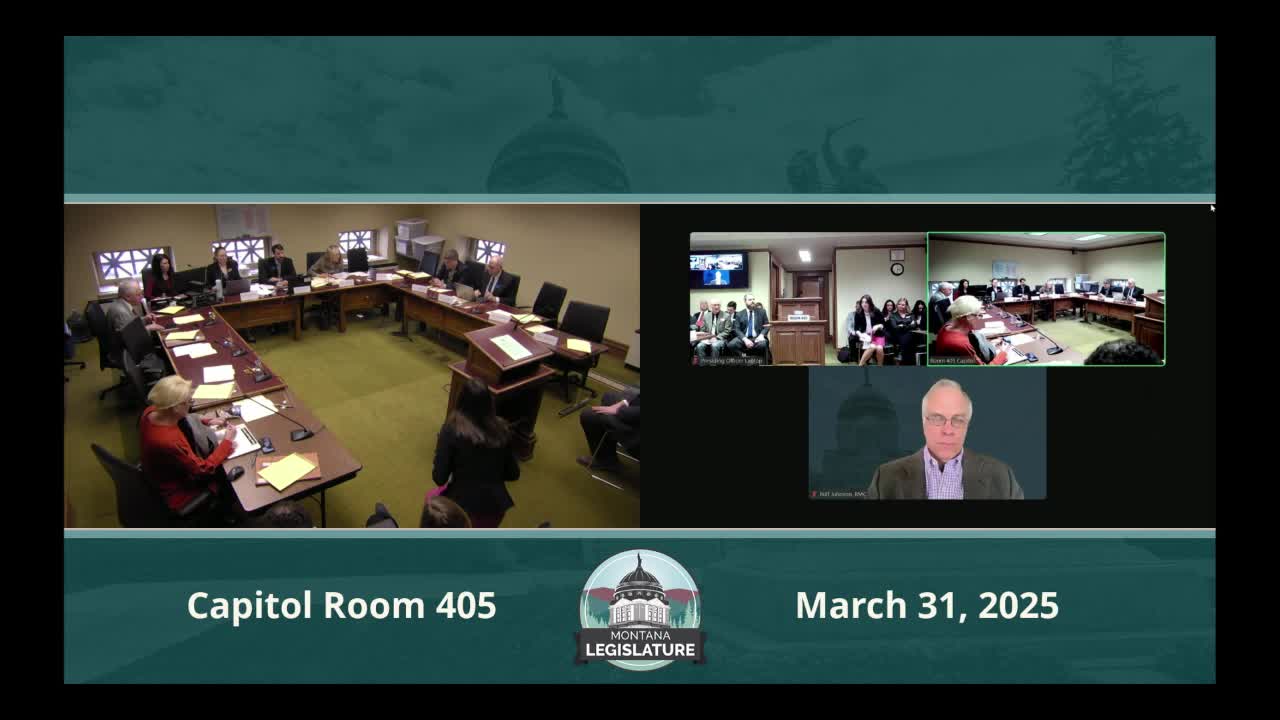
Senate committee hears bill to limit local parking minimums for small residential units
Summary
Representative Zolnikov told the Senate Local Government Committee that House Bill 492 would prohibit municipalities from imposing local parking minimums that differ from the bill’s residential standards, a change she said would reduce development costs and support more affordable housing.
Representative Zolnikov, sponsor of House Bill 492, told the Senate Local Government Committee that the bill would limit municipalities’ ability to impose parking minimums for many small residential units, arguing that parking requirements raise development costs and reduce housing affordability.
The bill would prohibit cities and towns from enforcing local parking minimums that differ from the bill’s residential standards on page 3, while explicitly preserving parking required by the Americans with Disabilities Act and carving out licensed child-care facilities and deed-restricted affordable housing from the new rule. Zolnikov also said the House removed an earlier provision that would have required local governments to compensate developers if they imposed higher parking requirements.
Supporters — including Jake Brown of Shelter Whitefish; an unnamed policy director from the Frontier Institute; Rebecca Myers of the Billings Area Chamber of Commerce; Laura Collins of the Montana Environmental Information Center; Adrienne Cotton of the Montana Building Industry Association; and Hope Morrison of the Associated Students at the University of Montana — told senators that off‑street parking requirements increase construction costs, consume land and limit the supply of affordable housing. Jake Brown said, “this is a really a targeted approach at reducing one of the contributing costs to expensive housing,” and cited industry estimates that one required parking space can add roughly 12½% to development costs.
Opponents — led by Kelly Lynch of the Montana League of Cities and Towns, Grace Brenner of the Hospitality and Development Association of Montana, Kristen Newman (ADA coordinator), Brad Longcake of the City of Billings, Bozeman City Commissioner Emma Bode and disability‑service advocates — warned the committee that removing local parking minimums could have unintended consequences. Several witnesses said accessible parking under the Americans with Disabilities Act is triggered only when regular parking is provided; Kristen Newman said, “The ADA only requires accessible parking spaces if parking is required or is provided.” Witnesses also told senators that many Montana communities lack transit alternatives to private cars and that reducing minimums without local context could increase curbside and neighborhood parking pressure.
Senators pressed the sponsor on several points: whether the bill’s 1,200‑square‑foot threshold (page 3) would apply regardless of the size of a project, whether the absence of local minimums would fuel neighborhood opposition, and whether the bill could be amended to preserve a path for local parking studies or targeted exceptions. Zolnikov said she would consider amendments, confirmed the bill’s effective date was changed in the House to Oct. 1, 2026, and said the measure was recommended by the governor’s housing task force. She also stressed that the bill does not prevent property owners or developers from providing more parking than the new minimums if they choose to.
The hearing record shows municipalities’ current parking standards vary: testimony cited Billings at about 1 space per dwelling unit, Missoula at 2, Great Falls at 1.5 and Bozeman using a 1-per‑one‑bedroom / 2‑per‑two‑bedroom metric. Zolnikov said parking costs can run from about $9,000 to $50,000 per space depending on site conditions and that parking can represent roughly 17% of rent or $200–$300 per month in some developments.
The committee did not take a vote during the hearing. Zolnikov closed by saying she would consider amendments to address ADA and municipal‑study concerns and asked for a do‑pass when the bill is scheduled for committee action.