Get Full Government Meeting Transcripts, Videos, & Alerts Forever!
Get email alerts on the Hospital Pricing topic
No spam. Unsubscribe anytime.
Senate panel advances bill capping nonprofit hospital charges at 300% of Medicare; excise tax starts 2027
Summary
The Senate Public Health Committee voted 7-4 to advance Senate Bill 554, which would limit most nonprofit hospitals’ charges to 300% of Medicare reimbursement and impose an excise tax on amounts above that threshold starting in 2027.
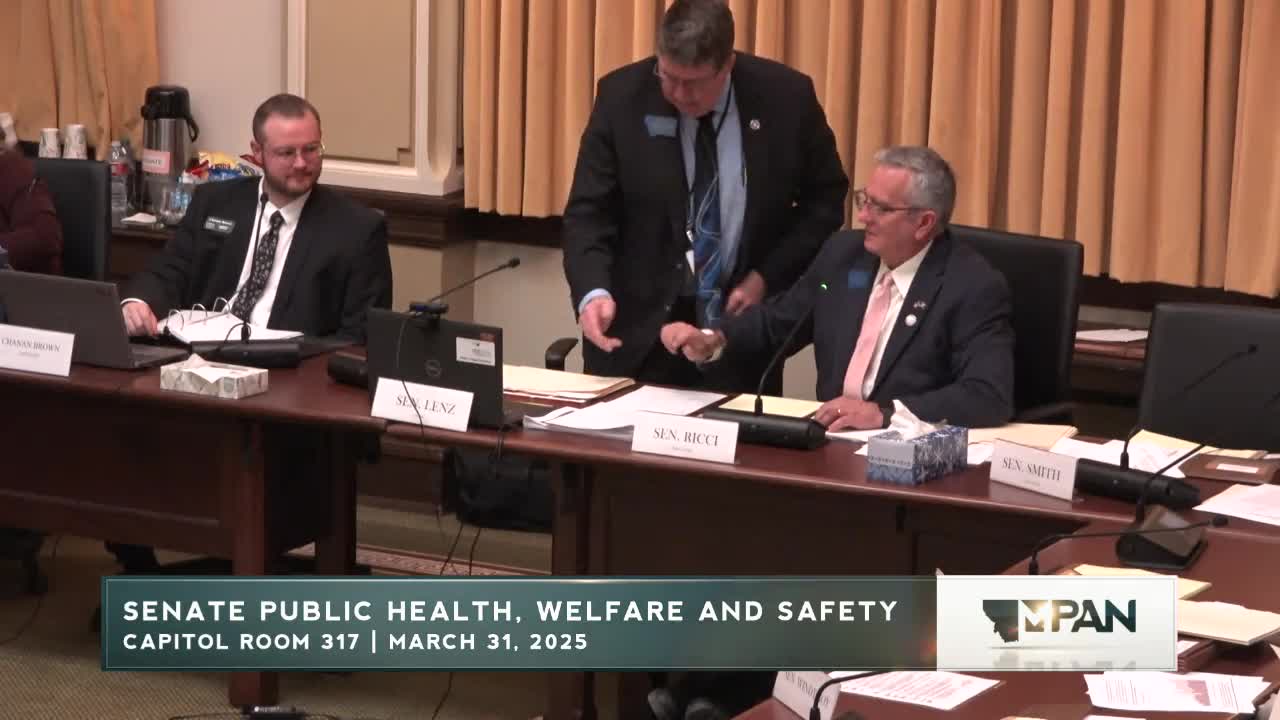
The Senate Public Health Committee voted 7-4 on March 31 to advance Senate Bill 554, a proposal that would limit charges by nonprofit hospitals (excluding critical access and rural emergency hospitals) to no more than 300% of Medicare reimbursement and impose an excise tax on amounts billed above that threshold beginning in 2027.
The bill’s sponsor, Senator Greg Hertz, said the legislation is intended to address rising health care costs and price variation across Montana hospitals. “If Medicare reimburses you at a thousand dollars, you can't bill any more than $3,000,” Hertz told the committee during opening testimony. The measure would authorize audits by the Department of Public Health and Human Services and require hospitals to file community-benefit information (Schedule H from IRS Form 990). The Department of Revenue would administer the new excise tax, which would begin at 25% of the excess charge in 2027 and rise to 50% by 2030. Collected funds would be placed in a special revenue account: 65% for Montana Medicaid, 25% for workforce development serving rural areas, and up to 10% for department administration, according to the sponsor’s description.
Supporters and informational witnesses pointed to state price‑studies and reference-based purchasing models. Christopher Whaley, a health economist and associate professor at the Brown University School of Public Health, said his research uses Medicare as a benchmark to compare commercial prices and found Montana hospital prices average about 254% of Medicare with substantial variation: “Using Medicare as a price benchmark and not as a price endpoint” allows comparisons across hospitals, Whaley testified.
Hospitals and health systems mounted organized opposition at the hearing. Pam Palagi, assistant vice president of finance for Intermountain Health’s Montana operations, said the system has experienced large Medicare/Medicaid shortfalls and warned the bill “could have catastrophic consequences on Montana's access to health care.” Kathleen Quinones, chief financial officer of Billings Clinic, said Medicare payments often underpay hospitals for the cost of care and that tying commercial charges to a fixed multiple of Medicare could worsen facilities' financial positions. Duane Preshinger of the Montana Hospital Association told the committee the bill “does not reduce costs and only adds cost to hospitals while also creating new bureaucracy for the state.”
Hospital witnesses described operational and technical barriers to compliance. Logan Health CFO Bridget Burke testified that uniform billing rules and the resource‑based nature of claims make it difficult to mechanically ensure every claim meets a single percentage cap, citing neonatal and other high‑variability services as examples that could be at risk. Providence and other hospitals described large recent operating losses in some service lines and said administration of the proposed reporting and audit requirements would be costly.
Sponsor Hertz said he carved out critical access and rural emergency hospitals because his data show higher charges come from larger hospitals, and he framed the bill as a measured, phased approach that allows hospitals time to adjust. He also noted the state health plan (now administered by Blue Cross Blue Shield of Montana) uses reference‑based pricing and has driven down what it pays toward Medicare multiples.
Committee action: Vice Chair Ricky moved to pass the bill out of committee. The roll-call vote recorded 7 ayes and 4 nays (yes: Vice Chair Ricky; Senator Glimm; Fuller (by proxy); Senator Yakovich; Senator Emmerich; Senator McGillivray (by proxy); Chair Lentz. No: Senator Kirk Carpenter (by proxy); Senator Windy Boy (by proxy); Senator Newman; Vice Chair Smith). The committee’s motion to pass SB 554 was recorded as approved and the bill was advanced to the next stage.
Background and next steps: The bill would not take effect immediately; the sponsor said the tax provisions begin in 2027 to give hospitals time to adjust. Opponents asked for more time and technical work to clarify how “charges” would be measured and how the cap would interact with a wide variety of contract types and payer methodologies. The fiscal and implementation details — particularly around reporting, audits, and the proposed excise tax administration — were highlighted by both supporters and opponents as items for further refinement.
The committee record contains extensive written and oral testimony from hospital finance officers, health economists, and state officials; the sponsor invited additional technical edits before floor consideration.