Get Full Government Meeting Transcripts, Videos, & Alerts Forever!
Get email alerts on the Public Water Connection Distance topic
No spam. Unsubscribe anytime.
Bill to Expand Optional Connections to Public Water, Sewers Advances to Hearing
Summary
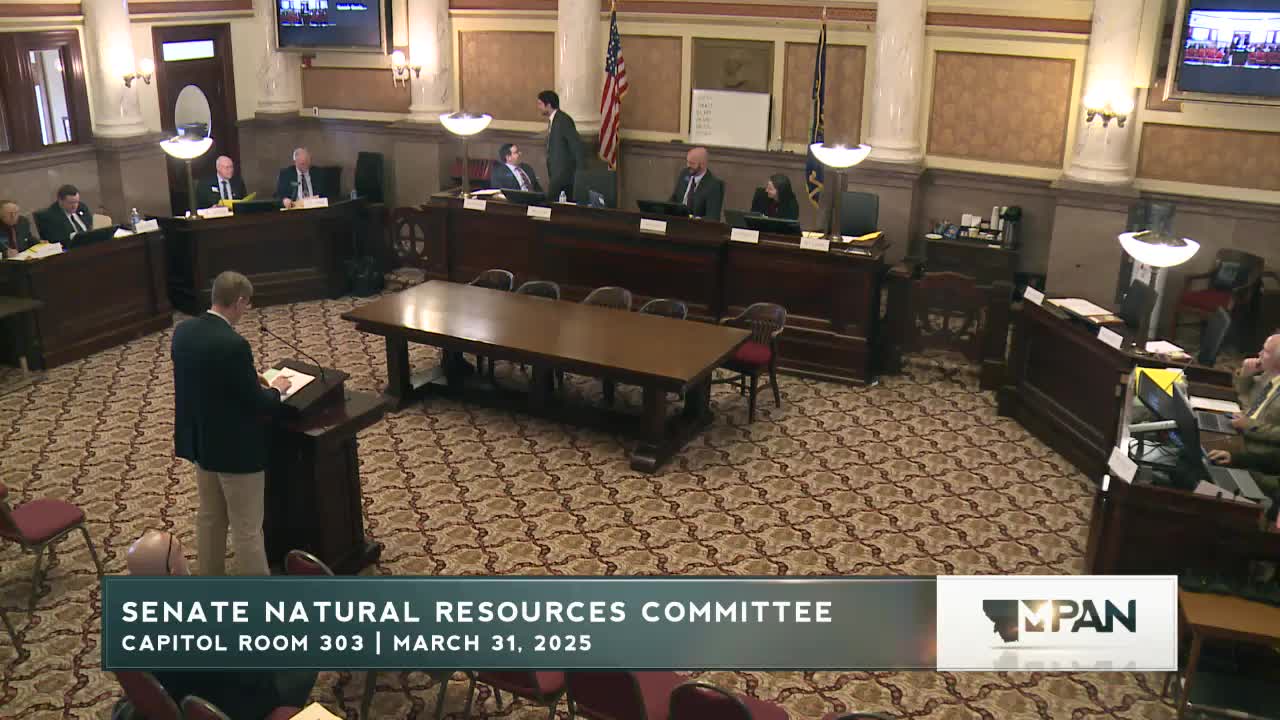
Representative Steve Fitzpatrick told the Senate Natural Resources Committee House Bill 629 expands the circumstances under which a proposed subdivision can connect to an existing public water or sewer system from a narrow optional carve‑out to any subdivision within 501–1,000 feet of a compliant system.
Representative Steve Fitzpatrick, sponsor of House Bill 629, told the Senate Natural Resources Committee the bill would expand the optional hookup zone for subdivisions near public water and sewer systems from the narrowly permitted circumstance in prior law to any subdivision located 501 to 1,000 feet from a compliant public water system.
Ben Rigby, executive director of Montana Rural Water, supported the bill and told the committee the change ‘‘provides clarity and consistency when it comes to the connection of proposed subdivisions to existing public water and sewer systems’’ and encourages consolidation, regional planning and long‑term sustainability where a system ‘‘has capacity and is properly permitted.’’
A written opponent, Paul Cartwright (former Helena city commissioner), questioned coordination with existing statutes and local authority, asking how the bill interacts with MCA language that allows a municipality to condition service on annexation and noting a past dispute between counties and cities over service across jurisdictional lines. Cartwright warned that removing municipal conditioning authority could raise water‑rights coordination issues and urged further work with DEQ.
Sponsor Fitzpatrick and witnesses clarified the bill retains conditions: municipalities must have capacity, appropriate permitting, and an appropriate water right for the connection to be accepted. Committee members asked about responsibility for uphill sewer pumping and the sponsor and witnesses confirmed developers remain responsible for required infrastructure improvements.
The hearing closed with no committee vote recorded in the transcript.