Get Full Government Meeting Transcripts, Videos, & Alerts Forever!
Get email alerts on the Foster Youth Document Fees topic
No spam. Unsubscribe anytime.
Senate bill to waive document fees for foster youth ages 18–21 receives supportive testimony
Summary
Senate Bill 412 would waive fees for certain government documents—birth certificates, ID cards, drivers' licenses and academic transcripts—for people who age out of foster care (ages 18–21). DPHHS and stakeholders told the committee it reduces barriers and can use Chafee funds for reimbursements.
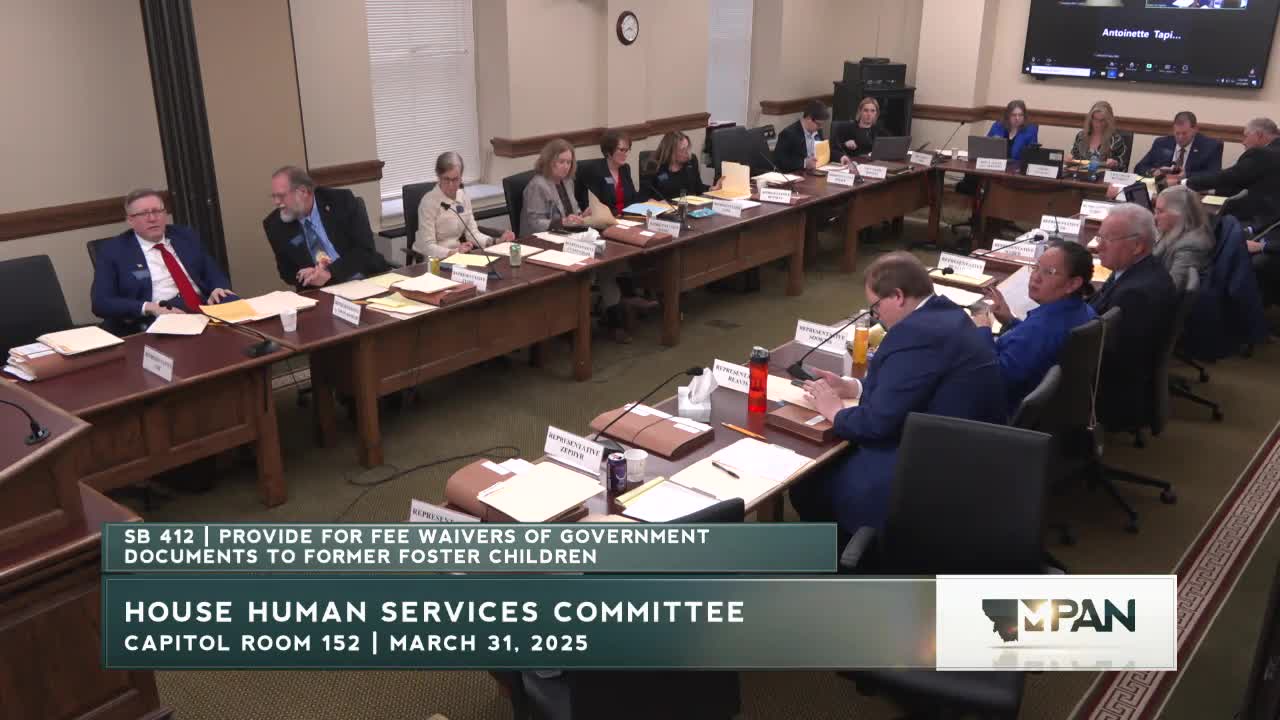
Senate Bill 412 would waive fees for specified government documents for former foster youth ages 18 to 21, witnesses told the House Human Services Committee.
Sponsor Sen. Laura Smith said the bill responds to feedback from young people exiting foster care who reported difficulty obtaining birth certificates, driver’s licenses and other documents needed to access benefits and employment. "This bill really applies to that age range of 18 to 21 when kids are really trying to get their feet underneath them," Smith said.
Nikki Grossberg, Division Administrator for Child and Family Services at DPHHS, testified the department supports the bill and that it can use Chafee funds to reimburse agencies for document costs. Grossberg said approximately 70 children aged out of foster care last year, and that the bill would reduce barriers when those young adults need certified birth certificates, replacement documents issued by county clerks or the Department of Justice, and transcripts or academic records from the Montana University System.
Why it matters: Several witnesses described the bills as a modest, targeted intervention that removes an administrative and financial hurdle for youth transitioning from foster care to independent living. DPHHS told the committee the department can work with partner agencies on reimbursement and implementation.
No opponents appeared in the hearing record. The bill remains at the hearing stage with DPHHS and stakeholders available for follow-up about implementation details and fiscal mechanics.
Ending note: Proponents asked the committee to advance the bill as a low-cost, high-impact measure to facilitate access to jobs, education and benefits for young adults who previously were in state custody.