Get Full Government Meeting Transcripts, Videos, & Alerts Forever!
Get email alerts on the Infill Development topic
No spam. Unsubscribe anytime.
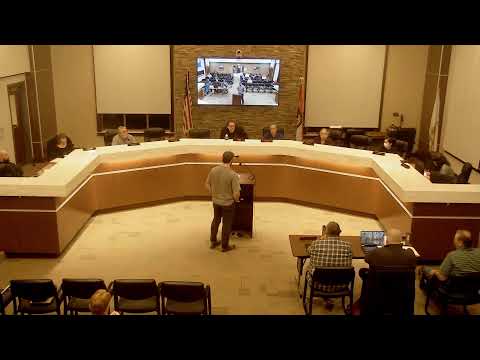
Aldermen reject proposed infill limits; direct city attorney to redraft ordinance
Summary
The Pacific Board of Aldermen on Feb. 4 declined to adopt Bill 5,252, a proposed amendment to subdivision regulations that would have defined "infill" and set density-calculation rules for residential subdivisions.
The Pacific Board of Aldermen on Feb. 4 declined to adopt Bill 5,252, a proposed change to the citys subdivision regulations that would add a formal definition and density formula for residential infill developments.
Supporters of the board motion to send Bill 5,252 back said the draft was intended to codify language from the citys comprehensive plan and to clarify how the city should measure "infill" and calculate allowable density. Opponents, including several residents and some aldermen, said the proposal could sharply limit subdivision patterns and was circulated too recently for careful review.
Planning staff and the city zoning officer told the board the draft aimed to define which parcels qualify as infill (parcels surrounded by developed lots) and to set density calculations based on surrounding lot sizes. The public record at the meeting included repeated questions about whether the draft would reduce buildable density to one-acre minimums in some neighborhoods, and whether an economic impact or parcel-count study had been done; staff and the planning officer said no such study had been completed.
Speakers pressed the board on practical effects. One resident asked whether the draft would prevent rebuilding on single lots or only affect new subdivisions; the planning officer and city attorney clarified the draft was written to apply to subdivision activity (creating multiple lots) rather than construction on single existing lots.
Alderman-level debate focused on timing and process. Attorney Jones advised that substantial revisions should not be adopted without allowing the city to follow ordinance-procedure rules (readings and publication) and that a substantially revised ordinance should be brought forward as a clean new bill so it could be properly noticed and read in two consecutive meetings.
The roll-call vote on the motion to approve Bill 5,252 was recorded in the meeting minutes and the bill did not become ordinance. Later in the meeting the board approved a separate motion directing the city attorney to draft a new ordinance that incorporates the planning departments feedback and Alderman Meadowss proposed language; that drafting motion passed unanimously.
The board and staff said the proposed new draft will be returned to the board for formal introduction and the usual two readings after additional review with planning and zoning.
Community members who spoke at the meeting urged caution, noting the potential effect on housing supply and on property owners in older neighborhoods. Board members said they want clearer language about how "neighboring" lot sizes will be measured and how the density calculation will be applied before any new regulation is adopted.
Next steps: the attorney will prepare a fresh bill incorporating input from Alderman Meadows and planning and zoning; the new bill will follow the standard ordinance-reading schedule and will return to the board at a future meeting for consideration.
Ending: The boards action leaves current subdivision rules in place; any new restrictions will appear only if and when the board adopts a later ordinance following the normal notice and reading requirements.