Get Full Government Meeting Transcripts, Videos, & Alerts Forever!
Get email alerts on the State Finance topic
No spam. Unsubscribe anytime.
House bill would move Board of Investments to a fiduciary restricted‑account structure; board says change increases transparency and could save general‑funds
Summary
A House bill would let the state Board of Investments operate some funds as restricted fiduciary accounts; board leadership said the change increases accountability, removes an internal working‑capital requirement and could return several million dollars to the general fund in the first biennium.
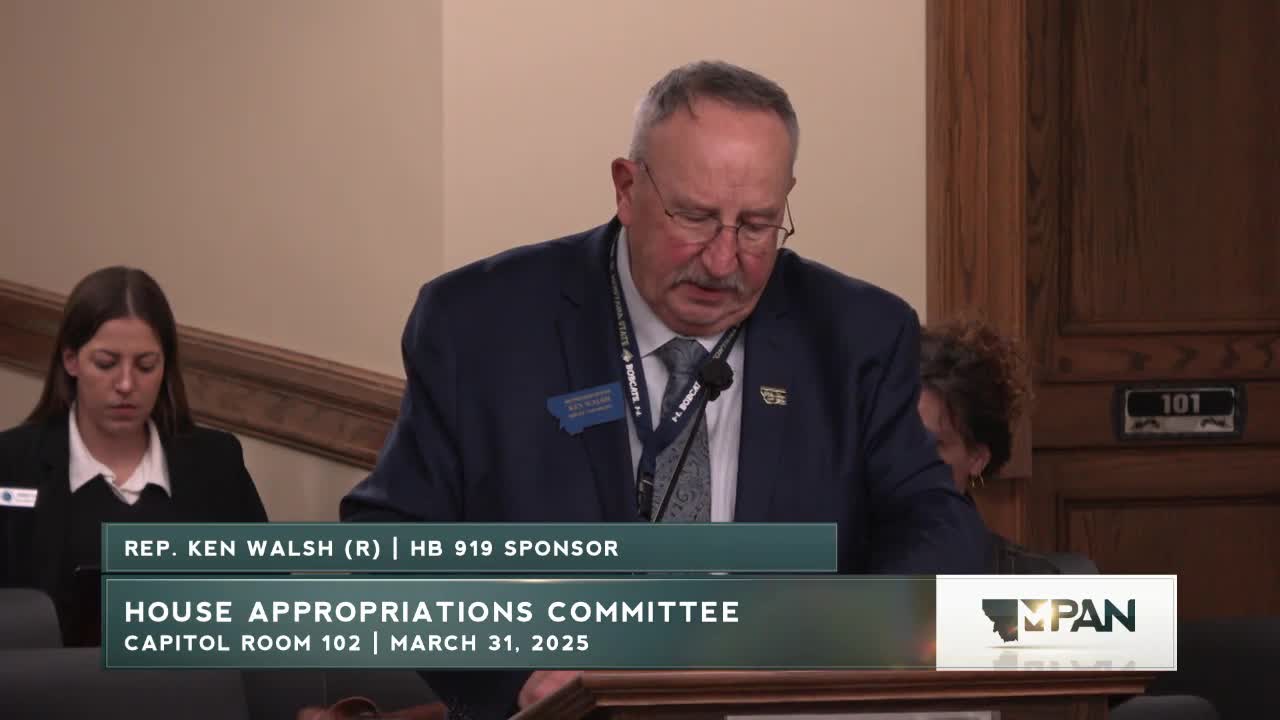
Representative Ken Walts introduced House Bill 9 19 to authorize the state Board of Investments to operate selected agencies’ funds in a restricted fiduciary account fund type rather than as internal service funds. The sponsor framed the change as technical and operational: the Board of Investments expects the move to allow more efficient management of assets held in a trustee capacity and to generate additional revenue that could offset the board’s operating costs.
Dan Villa (presented as the board’s executive director) described the practical effects: shifting to a fiduciary fund would remove a required working‑capital set‑aside, allow the board to charge clients on a fee‑for‑service basis more flexibly, and potentially produce several million dollars of additional revenue in the first biennium (the board estimated roughly $4.5 million in other revenues in year one). Villa said fiduciary duties increase accountability (fiduciary duty can be enforced by beneficiaries) and pointed to public reporting, external audits, SOC reviews and legislative audits as existing transparency mechanisms.
Committee members asked about returns and the board’s long‑term schedule of fees. Villa said the consolidated asset pension pool has a long‑term return near 7.7 percent and that trust and short‑term pools are expected to earn lower rates (around the mid‑4 percent range) in the short term as higher‑yield instruments purchased while rates rose roll onto portfolio returns.
No formal committee vote on the bill is recorded in this segment of the transcript. The board’s executive director said the fiduciary structure would allow the board to take on more custodial and servicing work for other state entities and to negotiate lower management fees by increasing scale.
Ending: The sponsor closed the hearing; staff and the board offered to provide additional implementation details. Committee members asked for specific follow‑up materials on projected revenue and the details of the working‑capital reduction.