Get Full Government Meeting Transcripts, Videos, & Alerts Forever!
Get email alerts on the Public Pensions topic
No spam. Unsubscribe anytime.
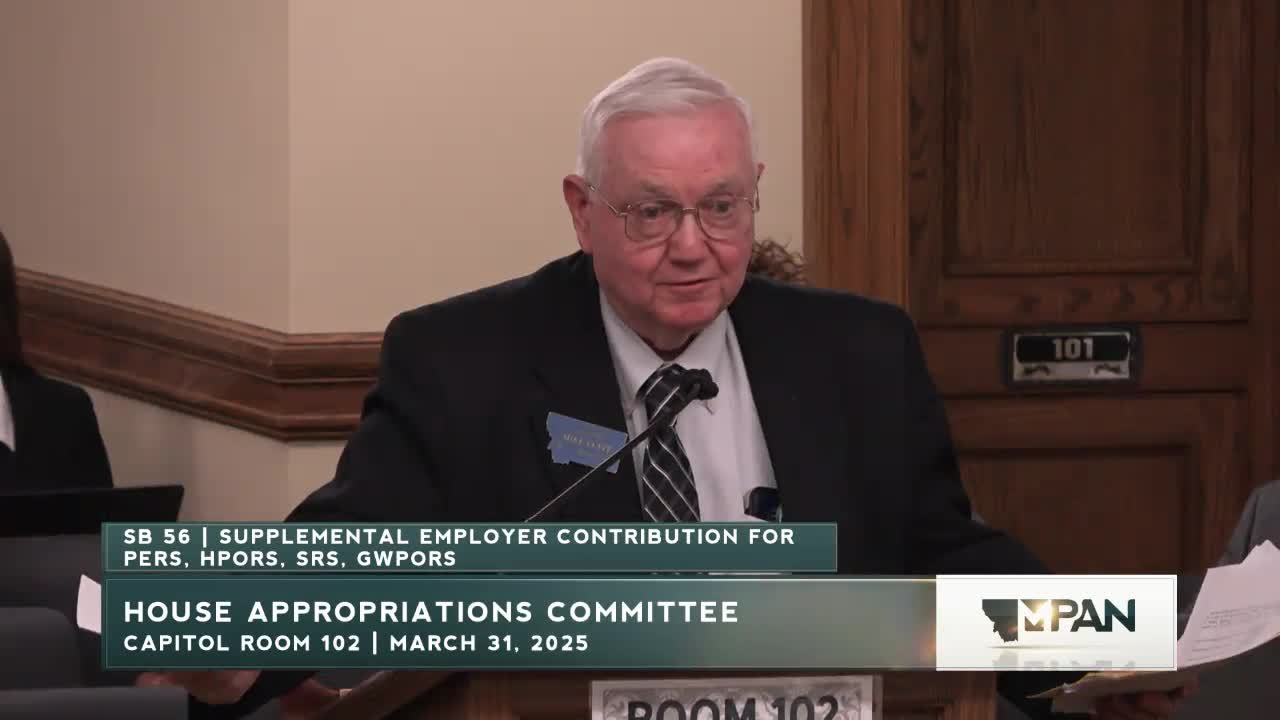
Senate Bill 56 would phase in employer contribution increases for several public retirement systems; retirement agency urges due pass
Summary
Senate Bill 56 would incrementally raise employer contribution rates for PERS, Highway Patrol, Sheriffs’ retirement and game warden/parole officer systems over 10 years to accelerate amortization of unfunded liabilities. The Public Employees Retirement Administration urged a due‑pass, citing actuarial advantages and shorter amortization horizons.
A sponsor introduced Senate Bill 56, a retirement‑system bill that would raise employer contribution rates incrementally — roughly a 1.1 percent increase beginning in the near term with an annual increase that brings the total employer rate up by roughly one percentage point per year over 10 years. Testimony explained that the bill’s goal is to shorten amortization periods for unfunded liabilities across four systems and to improve actuarial soundness.
William Hollahan, executive director of the Public Employees Retirement Administration (PERA), testified as a proponent. He told the committee the proposal would buy down unfunded liabilities and materially shorten amortization timelines in the systems named in the bill. Hollahan supplied actuarial figures in the fiscal note showing that PERS, Highway Patrol, Sheriffs’ retirement, and game warden/parole officer plans would see reduced amortization years compared with current projections.
Committee members asked technical questions about the drivers of improved amortization: market returns, the $100 million one‑time infusion enacted the prior session, and whether the state should consider a statutory compression of amortization (for example, reducing the target from 30 to 25 years). PERA staff responded that prior one‑time infusions had materially improved amortization for some smaller systems and that lowering statutory amortization to 25 years would require more immediate funding and larger contribution increases.
The hearing produced no recorded committee vote in this transcript. Hollahan urged a due pass on behalf of the Public Employees Retirement Board; committee members discussed trade‑offs between a steady glidepath and more aggressive shortening of amortization periods.
Ending: The sponsor closed and the committee reserved further action; staff indicated the fiscal note and past OTO infusions materially affected projections and would inform floor debate.