Get Full Government Meeting Transcripts, Videos, & Alerts Forever!
Get email alerts on the Housing Finance topic
No spam. Unsubscribe anytime.
Lawmakers debate restructuring Arkansas Development Finance Authority; bill would free ADFA from some state administrative rules
Summary
Lawmakers heard lengthy testimony on House Bill 17 97 to restructure the Arkansas Development Finance Authority (ADFA), making it an independent, self‑funded entity outside certain state administrative processes. Supporters said the change would make ADFA more competitive and attract private capital; opponents raised concerns about reduced
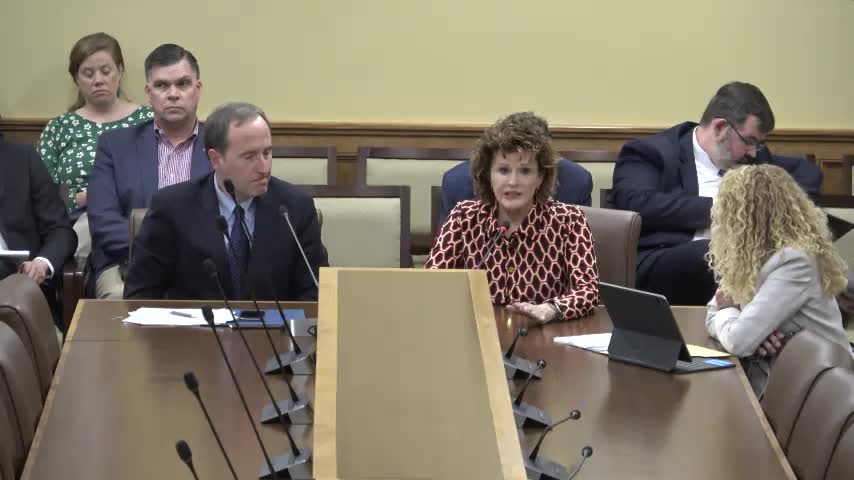
Mark Konon, president of the Arkansas Development Finance Authority (ADFA), and agency witnesses presented a proposal (House Bill 17 97) to change ADFA’s statutory status so the agency would operate with greater independence from some state administrative rules. Konon and witnesses said ADFA is a self‑funded entity that administers mortgage and housing finance programs, low‑income housing tax credit allocations and other financing tools; they argued that operational flexibility is needed to attract private investors, make timely credit decisions and remain competitive with similarly structured agencies in other states.
Supporters said ADFA does not receive general‑revenue appropriations, is financed by fees and program funds, and already undergoes external audits and board oversight. Konon noted that many states structure their housing finance agencies with similar independence; he and officials said ADFA would continue external audits, maintain an audit committee, and operate under oversight by a governor‑appointed board that includes cabinet members such as the treasurer and the secretary of Commerce.
Opposing or cautious members raised several issues: Representative Meeks asked whether the change would unwind recent efforts to consolidate executive branch operations and whether it would reduce the benefits of shared administrative services. Members also asked about procurement, pay‑grade authority and whether exempting ADFA from some state administrative rules would create uneven pay grades or remove legislative oversight. Witnesses said ADFA already performs much of its own accounting and personnel operations because of federal funding rules and the financial nature of its programs; they emphasized that ADFA’s board would still be governor‑appointed and that the entity would remain subject to independent audit and legislative oversight of debt issuances.
Members asked how ADFA funds are used and whether the agency competes with private lenders. Witnesses said ADFA’s programs are funded through federal allocations, tax credits, mortgage revenue bonds and investor equity; ADFA partners with lenders and does not generally displace in‑state banks. Testimony focused on how independent structure could help ADFA secure philanthropic and institutional capital for large‑scale housing projects and investments.
After extensive Q&A, the sponsor asked for a vote; the transcript records a committee vote to pass the bill. Members were reminded that the board composition would remain and that legislative appropriations for public debt and approvals would still apply when required.
Why it matters: ADFA oversees programs that affect affordable housing and economic development. Restructuring could speed transactions and attract outside capital, but members pressed for safeguards on transparency, procurement and pay practices.
What’s next: The committee voted to pass the bill and it will move to the House calendar.