Get Full Government Meeting Transcripts, Videos, & Alerts Forever!
Get email alerts on the Solid Waste Recycling topic
No spam. Unsubscribe anytime.
Senate advances measure to expand tire-recycling fee and fund cleanups
Summary
Senate Bill 238 (SB 2 38) expands the fee base for Arkansas’ waste tire program, raising revenues to modernize processors, reimburse districts and fund abatement of stockpiles; floor debate centered on fee structure, oversight and uses.
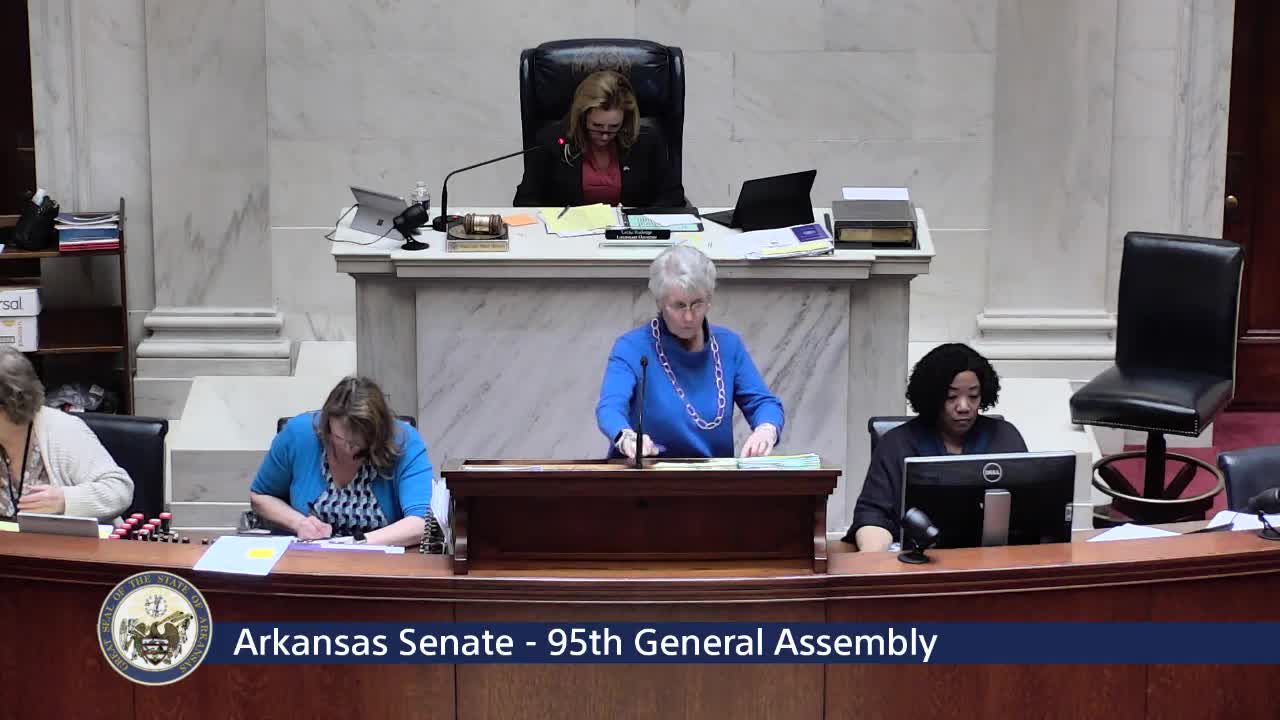
The Arkansas Senate on March 25 approved SB 238, a measure to broaden the state’s used-tire recycling fee base and raise revenue for four regional tire districts, processors and cleanup of stockpiles. Sponsor Senator Peyton (Payton in transcript) described the bill as a necessary update to a program lawmakers restructured two years ago.
The nut graf: supporters said the fee expansion—collecting the recycling fee on new tires, and keeping higher fees for extra-large and agricultural tires—will provide a dedicated revenue stream to let districts issue longer-term contracts and attract private capital for processors and collection infrastructure. Opponents and questioning senators pushed for clarity on how excess funds would be used and whether the districts’ governance and procurement rules protect public interest.
On the floor, Senator Payton explained the measure would broaden collection of an existing $3 fee to include tires sold on new automobiles and trailers and return some large-truck fees to $5; ag tires could see district-set fees up to $30. He told senators the current per-tire processing cost averages about $2.80 while the program now collects roughly $2.60 per tire after administrative deductions. Payton also cited DEQ estimates that cleaning identified stockpiles would cost roughly $9.67 per tire.
Questions from colleagues covered fee sunsets, how excess funds would be handled, the role of districts and DEQ’s oversight and whether retailer discretion (the bill contains an 80% tread threshold for not charging the fee on a used tire) was too subjective. Payton said initial funds flow through the Department of Finance and Administration (DFA), which retains its administrative percentage, then to the Department of Energy and Environment (DEQ) for program policing and licensing (7% cited) with remaining funds available for reimbursements to processors and for abatement projects.
The Senate adopted the bill on a roll call: 22 yays, 7 nays. Sponsor and supporters framed the measure as cheaper to fund on the front end than to pay for scattered cleanups later.
Ending: The bill directs collection changes and expands district authority to set certain fees; DEQ and DFA roles were described on the floor. The vote sends SB 238 to the House; additional implementation details — including contract terms, business plans and schedule for abatement — will follow in agency rulemaking and district procurement.