Get Full Government Meeting Transcripts, Videos, & Alerts Forever!
Get email alerts on the Healthcare Reconstruction topic
No spam. Unsubscribe anytime.
Committee advances two bills to expand insurance coverage for breast reconstruction procedures
Summary
The committee approved two measures intended to expand insurance coverage for modern breast reconstruction techniques after mastectomy, including mesh-assisted and nerve-sparing options and improved reimbursement for autologous flap procedures.
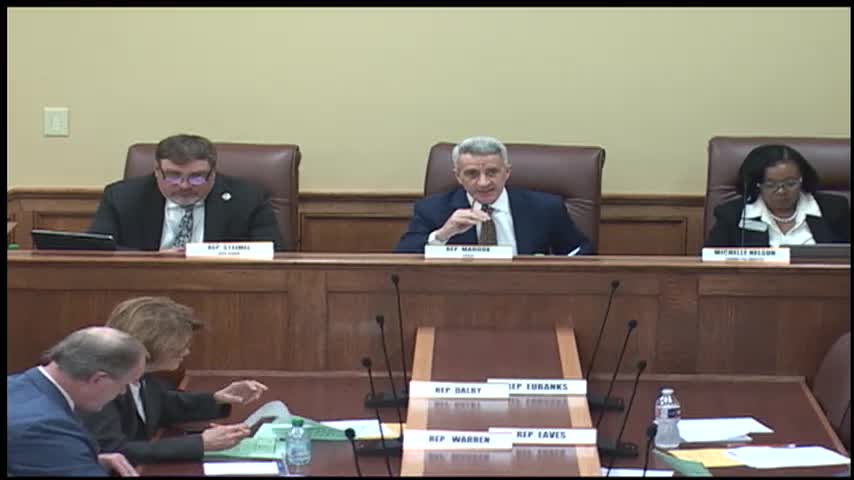
The House Insurance & Commerce Committee passed two related measures Thursday that sponsors said will expand access to modern breast reconstruction following mastectomy and address reimbursement barriers.
State Representative Ryan Rose (District 48) presented HB 1859, which he described as an amendment to Arkansas law to ensure insurance coverage for “modern and complete reconstruction options,” including surgical mesh and nerve reconstruction when a patient and her doctor agree those options are appropriate. “This bill ensures that insurance companies do not deny women access to these modern tools simply because they're newer,” Rose said during his presentation.
Later in the hearing, witnesses supporting SB 83 described problems with reimbursement for deep autologous flap reconstructions — procedures that use a patient’s own tissue and can require several days of hospitalization and a labor-intensive surgical approach. Doctor Robert Taylor, testifying for SB 83, told the committee that insurers have in some cases reimbursed the procedure at rates comparable to much smaller operations, forcing surgeons in Arkansas to arbitrate or litigate claims and, in some cases, stop offering the procedure in the state. “Insurance companies have drastically reduced reimbursement, making it financially unsustainable for surgeons to offer it and resulting in patients having to travel out of state for care,” Jennifer Moore, practice manager for Taylor Plastic and Reconstructive Surgery, told the committee.
Committee members asked about candidate eligibility and whether the bills would cover prophylactic mastectomy and preemptive procedures. Doctor Taylor said the measures would cover reconstruction for anyone appropriate for mastectomy, including prophylactic cases, if the patient and physician agree reconstruction is appropriate.
Rose and SB 83’s supporters emphasized that the measures do not mandate specific procedures; they guarantee coverage when a physician and patient decide the treatment is appropriate. HB 1859 includes a sunset clause that would expire unless renewed in 2031, Rose said.
Both bills passed the committee by voice vote after motions to pass; no roll-call tallies were recorded in the hearing transcript. Supporters said the bills aim to restore access and ensure reimbursement aligns with current surgical practice; no organized opposition was recorded during committee testimony.
The measures now move toward consideration on the House floor; sponsors said they would provide additional technical clarifications as needed.