Get Full Government Meeting Transcripts, Videos, & Alerts Forever!
Get email alerts on the Education Insurance topic
No spam. Unsubscribe anytime.
House committee advances plan to centralize property insurance for schools, higher education
Summary
The House Insurance & Commerce Committee passed a bill to create a captive insurance program that would consolidate property coverage for K–12 public and charter schools, state-owned buildings and public higher education; the bill contemplates a large state seed contribution and drew detailed questions about funding, valuation and local control.
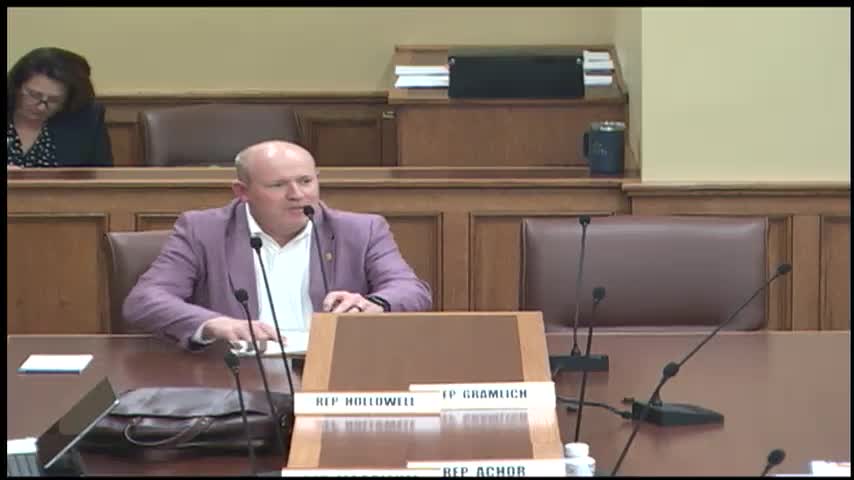
The House Insurance & Commerce Committee passed a bill Thursday to create a captive insurance program intended to provide property coverage for K–12 public and charter schools, institutions of higher education and state-owned properties.
Representative Jeff Wardlaw (House District 94), who presented the bill, said the measure would create a single administrating entity to buy property insurance and manage claims instead of the three separate programs that now cover state education property. “The purpose of creating a new program is to create a stable, affordable and self sustaining program for provision of property insurance,” Wardlaw told the committee.
Wardlaw said the bill is intended to lower overall premium costs by combining purchasing power and permitting the state to invest premiums rather than pay them to outside carriers. He said an anticipated funding package would move about $135,000,000 into the captive and that roughly $85,000,000 of that would be used up front to purchase reinsurance and premiums in the program’s first year. “When we start this program, we’re gonna be moving a hundred and 35,000,000 into a fund to buy those premiums upfront and then price those premiums back to the schools,” Wardlaw said.
Committee members asked extensive procedural and financial questions. Representative Perry asked for details about annual contributions, retention limits and reinsurance structure; Wardlaw said some figures — including the program’s retention level — were still being finalized and that he would provide exact numbers before the bill reached the House floor. Wardlaw estimated the program would purchase about $1,500,000,000 of insurance capacity initially; he said the exact retention and reinsurance layers would be provided to committee members later.
Several lawmakers pressed on governance and local control. Representative Tosh asked whether participation would be mandatory; Wardlaw said schools would be required to participate only if they use state “facilities funds.” Wardlaw and others said the bill includes legislative-intent language to ensure institutions of higher education can determine the coverage level they accept and to protect taxpayers if foundations or other parties agree to cover value differences for high-value facilities.
The bill also contains language intended to tighten deadlines for claims and to discourage using insurance as a funding mechanism for deferred maintenance, Wardlaw said. He told the committee the captive’s rules will include provisions addressing deferred maintenance and requiring routine upkeep rather than allowing facility repairs to be claimed as storm events years later.
Representative Eubanks moved that the committee pass the bill; the committee approved the motion by voice vote. Committee records show a voice vote and no roll-call tally was provided.
If enacted, the measure would move the captive’s administration to a division under the Arkansas Department of Transformation, Service and Shared Solutions (TSS), Wardlaw said, and the insurance department would retain regulatory oversight. Wardlaw said the structure is meant to separate the program’s operations from direct departmental administration and to allow it to be run more like an operating company.
Supporters told the committee the consolidated program should reduce broker fees and produce investment returns on funds that today are paid as premiums. Opponents did not appear in the formal public testimony for this item in the hearing record. Wardlaw said he expected to provide additional technical figures to the committee before floor action.