Get Full Government Meeting Transcripts, Videos, & Alerts Forever!
Get email alerts on the Wildlife Funding topic
No spam. Unsubscribe anytime.
Committee debates mechanism to reimburse Arkansas Game & Fish when licenses are given free; measure fails
Summary
Representative John Wardlaw told the House State Agencies committee that House Bill 1632 would create a year‑end set‑aside to reimburse Arkansas Game and Fish for licenses given away by statute or other action, a step he said is necessary to preserve federal matching funds.
Representative John Wardlaw introduced House Bill 1632, saying the measure would set up a fund to reimburse Arkansas Game and Fish Department when licenses are given “free” by statute or other legislative action. Wardlaw said the absentee reimbursement mechanism is intended to protect federal matching dollars under the Pittman‑Robertson program and other federal matching schemes.
The bill’s sponsor said the department itself cannot accept general revenue for license fees and that the proposal would create a year‑end set‑aside to restore lost license revenue so federal matches are not jeopardized. Wardlaw told the committee the department sets values for each license type (for example, a lifetime license carries a higher value than an annual combination license) and that the federal formula determines the match rate.
Committee members pressed on scope, cost and retroactivity. Representative Ray asked whether offering a “free” license would violate federal rules on matching dollars; Wardlaw replied that lost match dollars are the problem the bill addresses. Representative Collins and others asked how the bill would track licenses given away, whether agencies must purchase licenses in advance and how the value of lifetime licenses is calculated. Wardlaw said the Department of Game and Fish sets values (he cited examples during the hearing) and that the bill only creates an accounting and reimbursement mechanism — it would not itself give away any licenses.
Several members asked about the fiscal impact. Wardlaw and committee members noted there is no current fiscal exposure until the General Assembly later passes bills that actually authorize free or discounted licenses; as presented the impact was zero until such authorizations occur. Members also asked whether the mechanism would reach past statutes; Wardlaw said the state constitution limits retroactive application. Representative Hawk and others asked whether the reserve fund the bill would use is guaranteed; Wardlaw said those reserve balances vary year to year.
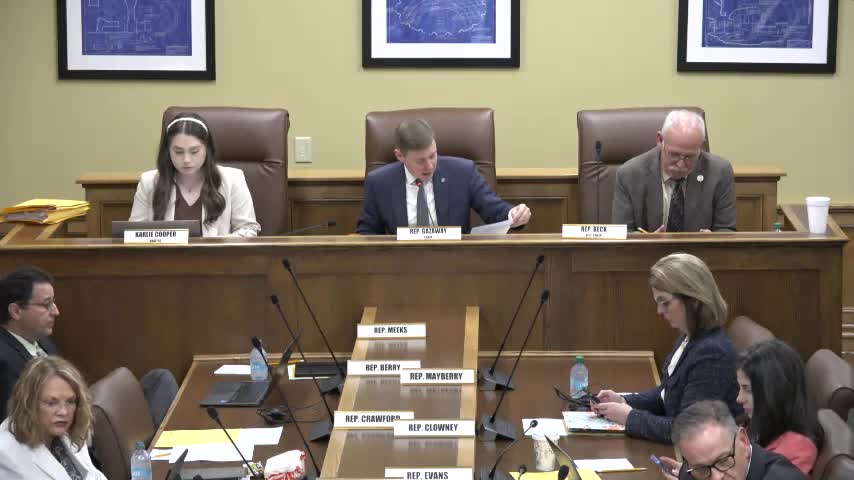
After closing remarks from Wardlaw, the sponsor made a motion to pass. The committee voted; the motion failed on the floor of the committee (voice vote recorded as “noes have it”).
Why it matters: Committee discussion highlighted a recurring practical issue — statutes granting complimentary or lifetime hunting and fishing licenses can affect federal matching dollars. The bill attempted to create a fiscal mechanism rather than change substantive eligibility. Members asked for clearer cost estimates and scope before supporting statutory change.
What’s next: No committee action to advance the bill was recorded; the motion to pass failed.