Get Full Government Meeting Transcripts, Videos, & Alerts Forever!
Get email alerts on the Medicaid Abortion Intent topic
No spam. Unsubscribe anytime.
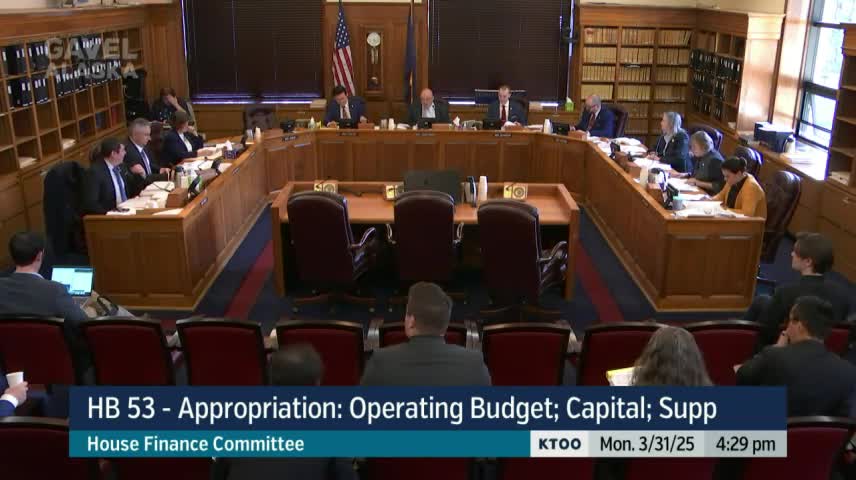
Committee rejects intent language to bar state funding for elective abortion services, 5-6
Summary
The House Finance Committee voted down Amendment 56, an intent provision that would restrict state Medicaid funding for abortion services except where federally required, after a divided debate and legal counsel warning about Alaska Supreme Court precedent.
Representative Staff moved Amendment 56, an intent provision long used in past operating budgets to restrict state appropriations for abortion services that are not medically necessary, but the committee rejected the amendment by a 5-6 roll call.
Sponsor remarks framed the amendment as a policy to prevent state Medicaid funds from being spent on elective abortions while preserving funding for life‑threatening or medically necessary services. Supporters described the language as longstanding budget language and said it is intended to allow emergency care while avoiding state funding of elective procedures.
Several members raised legal questions. Marie Marks of Legislative Legal Services told the committee that the Alaska Supreme Court has previously held the state must fund medically necessary abortion services for eligible women under Medicaid and the state constitution’s equal protection requirements. Marks told the committee: “the Alaska Supreme Court has held that the state must fund medically necessary abortion services for eligible women for coverage under the Medicaid program, just as the state funds pregnancy services for women covered under Medicaid.” She added, “in my opinion, this language clearly singles out abortion services” and that a similar restriction could be found unconstitutional if challenged.
Members split on policy and legal risk. Supporters said the amendment is customary and reflects a consistent policy choice; opponents and several legal advisers warned that singling out abortion in this way could violate Alaska constitutional equal-protection analysis and cited prior litigation that required medically necessary coverage.
The committee called the roll; the amendment failed on a 5-6 vote. The committee’s rejection preserves the current budget language as drafted before Amendment 56 and means no new intent restriction was adopted at this meeting.
The debate spanned policy, constitutional law and Medicaid implementation. Members requested clarification from Legislative Legal Services and noted the topic may reappear in future sessions or court proceedings.