Get Full Government Meeting Transcripts, Videos, & Alerts Forever!
Get email alerts on the Ambler Access Project topic
No spam. Unsubscribe anytime.
Northwest tribes and AIDEA press case for Ambler Access Project as path to jobs and minerals
Summary
Tribal leaders from Shungnak and Allakaket told the House Resources Committee that the Ambler Access Project and related mineral development are essential to local jobs, training and community stability; AIDEA said the project would replicate the Red Dog model, reduce exploration costs and requires tribal and regional buy‑in before advancing.
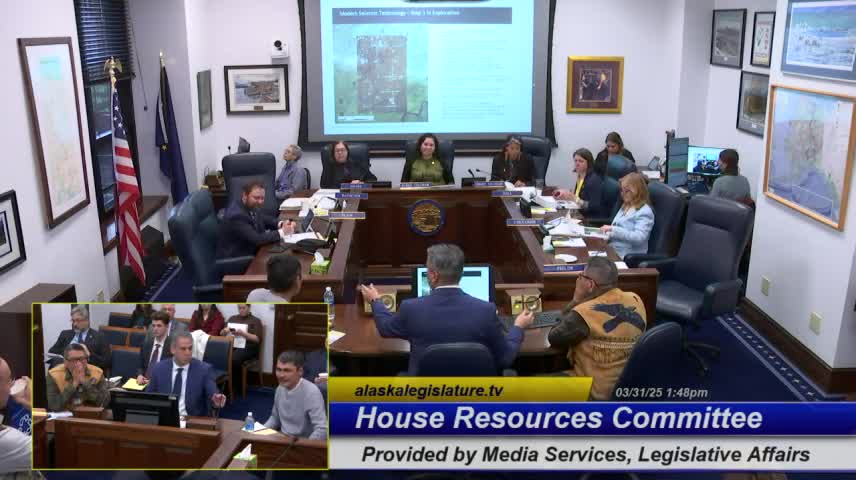
Tribal leaders from the Northwest Arctic and interior Alaska pressed the House Resources Committee on March 31 to support the Ambler Access Project as a route to jobs, training and local economic stability. “What we need the most in our community to help us continue to live the way we do is jobs. Most importantly, we need jobs,” Fred Sun Sr., tribal president of Shungnak, told the committee.
Why it matters: speakers said Ambler road access would lower the cost of exploration for critical minerals, create seasonal and (potentially) permanent jobs, reduce local outmigration and fund community services. AIDEA framed the Ambler project as modeled on the Red Dog (DeLong Mountain Transportation System) success, which the agency says can be replicated to bring sustained revenue and employment to the region.
Community testimony and priorities: Fred Sun Sr. and PJ Simon, first chief of the Allakaket tribe, described decades of local engagement with mining companies and a series of resolutions passed by local governments in favor of road access and training. Simon told legislators Allakaket seeks workforce training, not just short seasonal hires: “We want something more than that. We want an opportunity … it's called self determination.”
AIDEA and local partnerships: Jeff San Juan (AIDEA) explained the agency is pursuing outreach and resolutions of support from communities along the proposed corridor, and said AIDEA is working with regional corporations including Doyon and NANA. In response to Representative Fields’ question about eminent domain, San Juan said AIDEA requires community buy‑in and is working with regional partners; he pointed to an access agreement AIDEA holds with Doyon as an example of cooperative work.
Labor, contracting and local hiring: Committee members repeatedly asked whether Ambler development would include local‑hire or local contracting requirements. San Juan said transportation corridors like AIDEA’s do not themselves impose a regional hire mandate but that some mining companies working in the Ambler district have local hiring agreements with regional corporations. Speakers urged state participation in training programs and workforce pipelines so local residents can fill both mine and subcontractor roles.
Costs, revenue and timeline: AIDEA said it is relying on prior internal and academic studies (including a University of Alaska CED report containing 2019 estimates) to show long‑term tax and royalty potential; those estimates do not represent firm near‑term project schedules. San Juan told the committee the Ambler road would lower exploration costs and that private companies have paused investment when federal permitting or policy uncertainty increased.
What wasn’t decided: The committee took no formal action. AIDEA said it will continue stakeholder outreach and return with additional material. Tribal leaders asked for state help to fund training and to ensure contracts provide meaningful opportunities for local and regional residents.
Ending: The committee closed after further testimony and moved on to a scheduled wildfire presentation; representatives asked AIDEA and tribes to provide more detail on community agreements, consultant use and projected local hiring.