Get Full Government Meeting Transcripts, Videos, & Alerts Forever!
Get email alerts on the Tourism Funding topic
No spam. Unsubscribe anytime.
Baxter council reviews Visit Brainerd service agreement, requests ROI metrics and annual audit
Summary
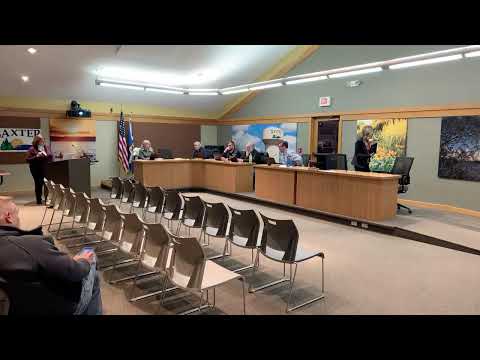
Visit Brainerd presented a proposed service agreement and annual plan to the Baxter City Council. The visitor bureau said Baxter supplies about 86% of its lodging-tax funding; council members asked for clearer branding for Baxter, return-on-investment data and the option of an annual audit before finalizing a long-term agreement.
Visit Brainerd representative Mary Advaitonasa presented a proposed service agreement and the organization’s 2025 budget to the Baxter City Council during a work session, outlining a $536,000 expected income and asking the council for direction on a renewed contract.
The presentation matters because Baxter supplies the majority of the lodging-tax revenue that funds Visit Brainerd’s work: “It’s 86%,” Advaitonasa told the council, and she asked what the City of Baxter would need to see to feel that money produces a return. Council members pressed for measurable economic-impact data and for more visible Baxter branding in Visit Brainerd’s promotions.
Advaitonasa described Visit Brainerd’s history and marketing plan and walked the council through budget details included in the meeting packet. She said the bureau runs “lean,” with roughly $200,000 in operations and $328,000 in programming in the proposed budget, and that non-tax revenues (advertising contracts, sponsorships and retail sales) amount to only a small portion of total income. She told the council the bureau now welcomes roughly 2,000 in-person visitors annually at its downtown information center and uses a multimedia marketing mix that mirrors guidance from Explore Minnesota Tourism.
Council members raised three recurring concerns: how Baxter’s lodging-tax dollars are tracked and spent, how the city’s name is represented in regional marketing, and whether Visit Brainerd should submit to an annual audit. Council member Tabbitt, who was absent and sent comments by email, “believes that an annual audit would be money well spent” and asked for a return-on-investment or economic-impact analysis showing how lodging-tax dollars translate into city revenue. Another council member and local business owners said Baxter should be more prominent in printed and digital materials rather than appearing only in photo captions.
Advaitonasa said the bureau has built a modest reserve since COVID — roughly one year of operating expenses, which she estimated at about $500,000 — and that Visit Brainerd has begun separating tax and non-tax funds in bookkeeping. She acknowledged statutory constraints on lodging-tax spending (advertising and promotion) and said the organization has been trying to grow non-tax revenue so it can respond to community requests that fall outside what lodging tax permits.
Council members and staff discussed practical next steps. City staff said the city attorney had reviewed and redlined a proposed contract submitted by Visit Brainerd; the redlined copy is available in the city’s SharePoint folder. Staff asked the council for guidance on whether to proceed toward a formal resolution and service agreement and which parameters the council wants included — for example, audit requirements, branding expectations and measurable performance indicators.
No formal contract vote was taken at the work session. Council members signaled support for directing staff to prepare a service agreement and resolution for future consideration, with more detailed performance measures and legal review to follow. Staff will incorporate the attorney’s redlines and the council’s feedback and return a draft for later council action.
Visit Brainerd offered several candidate performance indicators to track: a 5% year-over-year increase in lodging-tax receipts, 1,000,000 unique website visits, 100,000 social-media engagements, 24 new local business/event partnerships and 2,000 visitor inquiries answered. Advaitonasa asked the council what “success” looks like from Baxter’s perspective and invited follow-up conversations.
Next steps: staff will prepare a draft service agreement/resolution reflecting attorney edits and the council’s requested metrics; the council asked staff to include options for audit frequency and a clearer accounting of restricted lodging-tax funds. The item will return to council for formal consideration at a future meeting.