Get Full Government Meeting Transcripts, Videos, & Alerts Forever!
Get email alerts on the Legislative Procedure topic
No spam. Unsubscribe anytime.
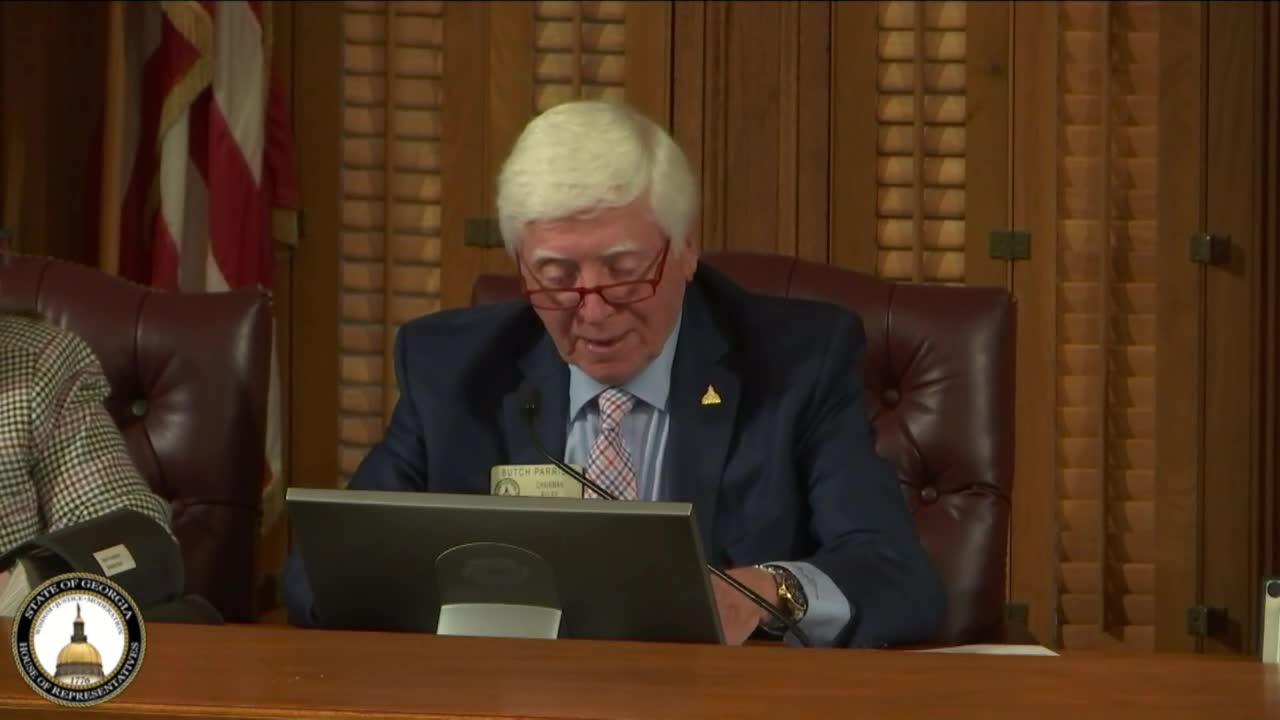
Senate Rules Committee sets supplemental calendar, advances omnibus licensing and other bills
Summary
At a rules committee meeting, the Georgia State Senate Rules Committee set a supplemental calendar under a modified structure and advanced a series of bills to the next step of the legislative process.
At a rules committee meeting, the Georgia State Senate Rules Committee set a supplemental calendar under a modified structure and advanced a series of bills to the next step of the legislative process.
The most substantial item was a rule substitute to Senate Bill 125, described by Chairman Hatchett as an omnibus licensing measure that incorporates other licensing-related proposals, including House Bill 34 and House Bill 187. The committee put the substitute under the modified-structure calendar for later consideration by the full Senate.
Committee members also approved a substitute for Senate Bill 162 that changes a single-word supervisory reference in the bill’s text: the committee replaced language stating that anesthesiologist assistants would be “under the direct supervision of a duly licensed physician” to instead reference supervision by an “anesthesiologist.” The substitute was moved, seconded and advanced without recorded opposition.
A rule substitute to Senate Bill 298 drew a fuller explanation from Chairman Leverett. The substitute adds a distinct section addressing legislative privilege and legislative immunity, and it specifies that the right of direct appeal created there applies in both civil and criminal contexts and must be exercised within 30 days of any judgment, order, or ruling. The committee’s substitute also notes that the right could arise multiple times during litigation (for example, at different discovery rulings), and it places those clarifications into a separate section of the bill.
Beyond those explained substitutes, the committee moved and seconded a number of other bills onto the supplemental calendar with no recorded opposition and little or no discussion. Bills listed as moved onto the calendar included Senate Bill 130, Senate Bill 191, Senate Bill 199, Senate Bill 201, Senate Bill 213, Senate Bill 241, Senate Bill 293 and others referenced during the meeting. In each instance recorded in the transcript, members called for a motion and a second, asked whether there was any opposition, and then indicated the measure was “on” — i.e., placed on the committee’s supplemental calendar under the committee’s modified structure.
The meeting concluded after the chair said the calendar would keep the committee busy for the afternoon.
Votes at a glance - Senate Bill 125 (rule substitute): motion to place under modified supplemental calendar; explanation provided by Chairman Hatchett; outcome: advanced/placed on calendar. - Senate Bill 162 (substitute): single-word change to supervisory language for anesthesiologist assistants (to “anesthesiologist”); outcome: substitute adopted and bill advanced. - Senate Bill 298 (rule substitute): added legislative privilege and immunity provisions; clarifies direct-appeal timeframe (30 days) and applicability in civil and criminal cases; outcome: substitute adopted and bill advanced. - Senate Bills 130, 191, 199, 201, 213, 241, 293 and others: motions moved and seconded and advanced to the supplemental calendar with no recorded opposition.
No roll-call votes or named movers/seconders were recorded in the transcript excerpt; the proceedings show repeated verbal motions and seconds and the oral statement “Any opposition? ... It’s on.”