Get Full Government Meeting Transcripts, Videos, & Alerts Forever!
Get email alerts on the Traffic Enforcement topic
No spam. Unsubscribe anytime.
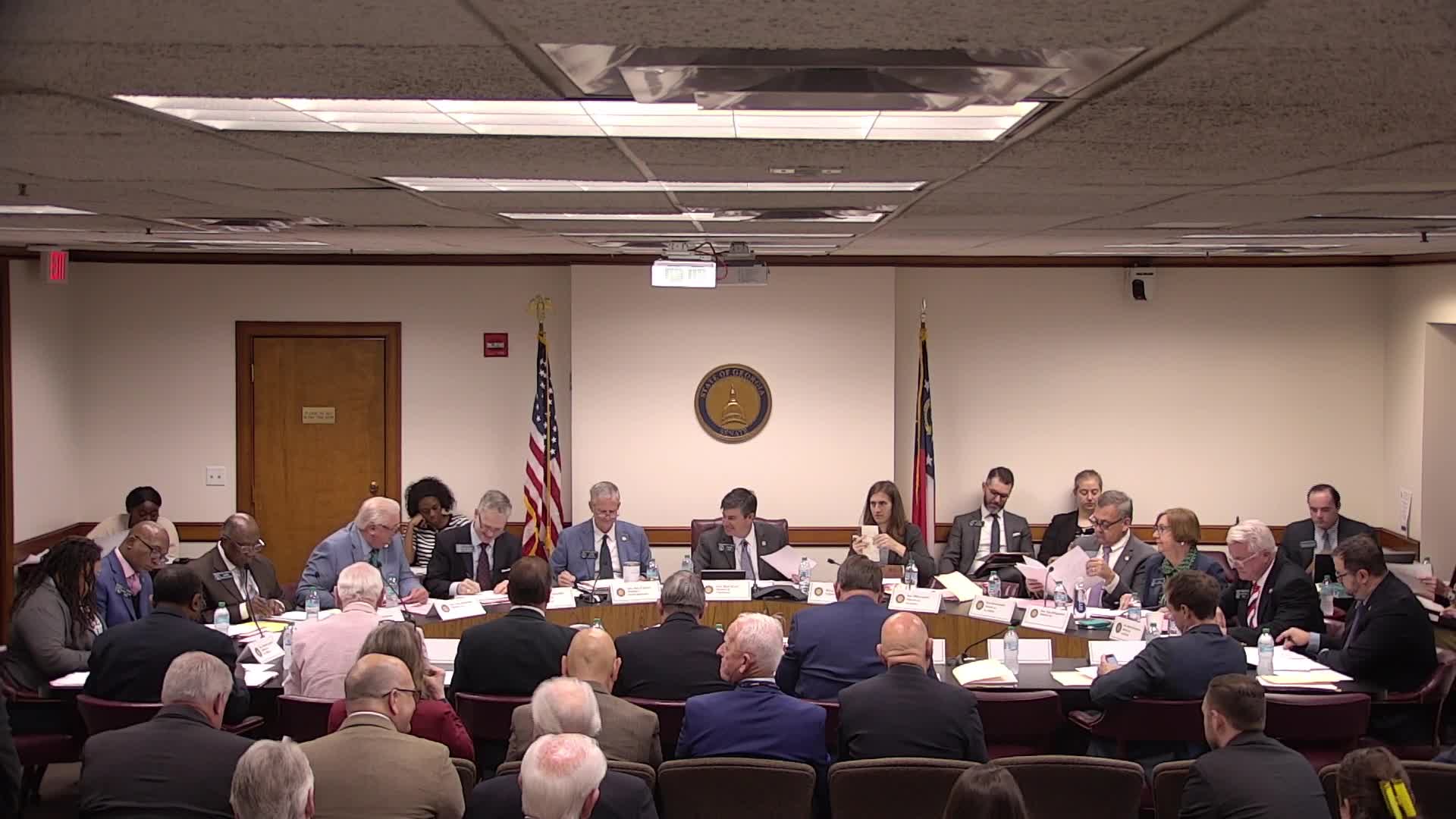
Georgia senators advance competing school-zone camera bills after extended debate over safety, revenue and sunsets
Summary
The Senate Rules Committee advanced both a ban/sunset measure and a reform substitute for school-zone speed cameras after extensive debate about timing, enforcement, and whether the devices primarily serve safety goals or generate revenue for private companies.
After extended discussion the Senate Rules Committee advanced two competing approaches to school-zone speed cameras — a repeal with industry sunset and a reform substitute that limits hours and increases local control — sending both measures from committee to the general calendar for floor consideration.
Representative Washburn, the author of the repeal measure, told the committee the cameras "have proven to be abusive to Georgia citizens" and asked that the committee pass the bill without amendment. He said the bill’s approach would ban new contracts after July 1, 2027, with the industry sunset occurring on July 1, 2028 (the substitute language in committee contained both dates and generated follow-up clarification from members and staff).
Opponents and some supporters said the devices do reduce repeat violations. Senator Jackson recounted crashes in school zones in his district and urged caution, noting that speeding in school zones is a public-safety problem in some areas. Senator Harbison, who represents districts with children who walk to school, also emphasized safety concerns and recounted local pedestrian fatalities in school zones.
The reform substitute, carried separately by Representative Powell in committee, set defined operating windows tied to instructional hours (for example, an hour before and an hour after arrival and dismissal within which cameras may run, with local governments able to further limit those times). It also included provisions about signage, revenue use for traffic-safety purposes, removal of liens or late-fee enforcement mechanics that previously involved the Department of Revenue, and administrative penalties and permit revocation processes involving the Georgia Department of Transportation and the Department of Public Safety.
The committee’s votes moved both the ban/sunset language and the reform substitute forward. Members called for local officials to handle contract and permit decisions and for additional technical fixes to ensure statutory language matched enforcement thresholds (members flagged minor inconsistencies in phrasing such as “10 miles per hour or more” versus “more than 10 miles per hour”).
Ending
Both measures now go to the Senate floor. Committee members said they expect the full Senate to weigh the competing priorities of local control, public safety in school zones and concerns about private companies’ revenue derived from automated citations.