Get Full Government Meeting Transcripts, Videos, & Alerts Forever!
Get email alerts on the Labor Employment topic
No spam. Unsubscribe anytime.
House passes bill to codify BOLI employer-assistance unit, add regulatory protections for employers
Summary
The House gave final passage to House Bill 22‑48 A, which codifies the Bureau of Labor and Industries' employer assistance unit and adds protections for employers who rely in good faith on bureau guidance; sponsors say it will reduce disputes and litigation costs.
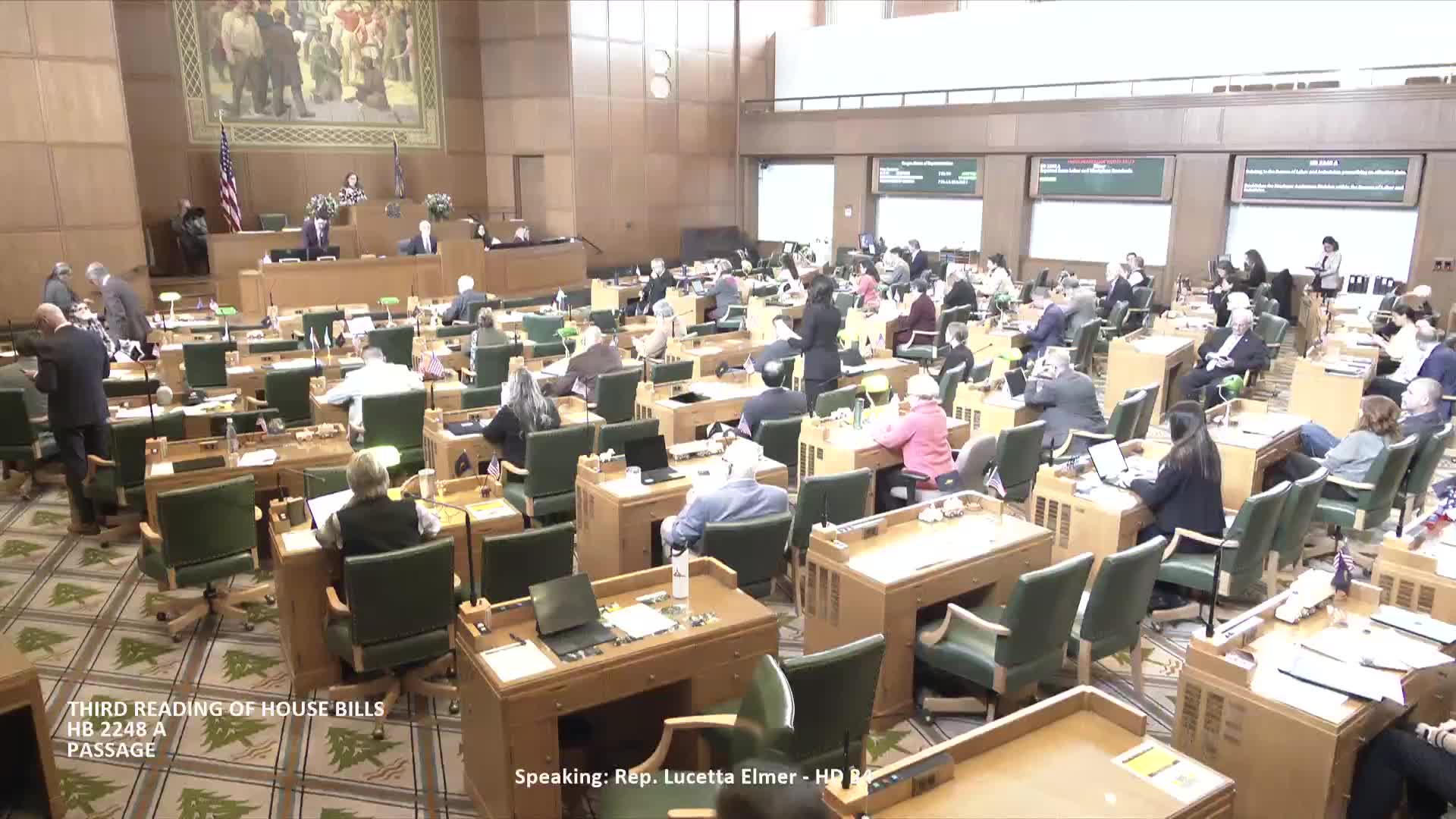
The Oregon House on April 1 passed House Bill 22‑48 A, a measure that codifies the Bureau of Labor and Industries' (BOLI) Employer Assistance unit and strengthens confidentiality and legal protections for employers who seek interpretive guidance from the agency.
Representative Elmer, vice chair of the House Labor and Workplace Standards Committee, told the chamber the bill has two primary aims: to codify BOLI's Employer Assistance unit and to bolster BOLI's alternative dispute resolution program. Elmer said the Employer Assistance unit provided nearly 19,000 consultations to employers in 2024 and that timely guidance can prevent prolonged disputes.
Under the bill, communications between an employer and the Employer Assistance unit would be exempt from public disclosure and the identity of requesting employers would be protected from other divisions and certain enforcement uses. Elmer said the measure also would limit penalties in cases where an employer reasonably relied on the bureau's guidance and the underlying law had not changed.
Representative Mannix spoke in favor on the floor, saying the unit offers a practical resource for small employers who want to comply with Oregon's complex employment laws. There was no recorded floor amendment, and the clerk declared the bill passed after the recorded vote.
The bill was described on the floor as a compliance and dispute-resolution measure; sponsors said it aims to reduce litigation and administrative costs and to encourage early engagement with the enforcement agency. No fiscal details were given during floor remarks.