Get Full Government Meeting Transcripts, Videos, & Alerts Forever!
Get email alerts on the Agriculture Land Use Natural Resources And Water topic
No spam. Unsubscribe anytime.
House committee advances multiple agriculture, land-use and water measures; hearings on well and water-right fee increases draw opposition
Summary
The House Committee on Agriculture, Land Use, Natural Resources, and Water on March 31 advanced multiple bills to the floor with committee amendments and held public hearings on proposed fee increases for well-construction and water-right/dam-safety services, where industry witnesses and water-user groups urged more general-fund support or scaled alternatives to large fee hikes.
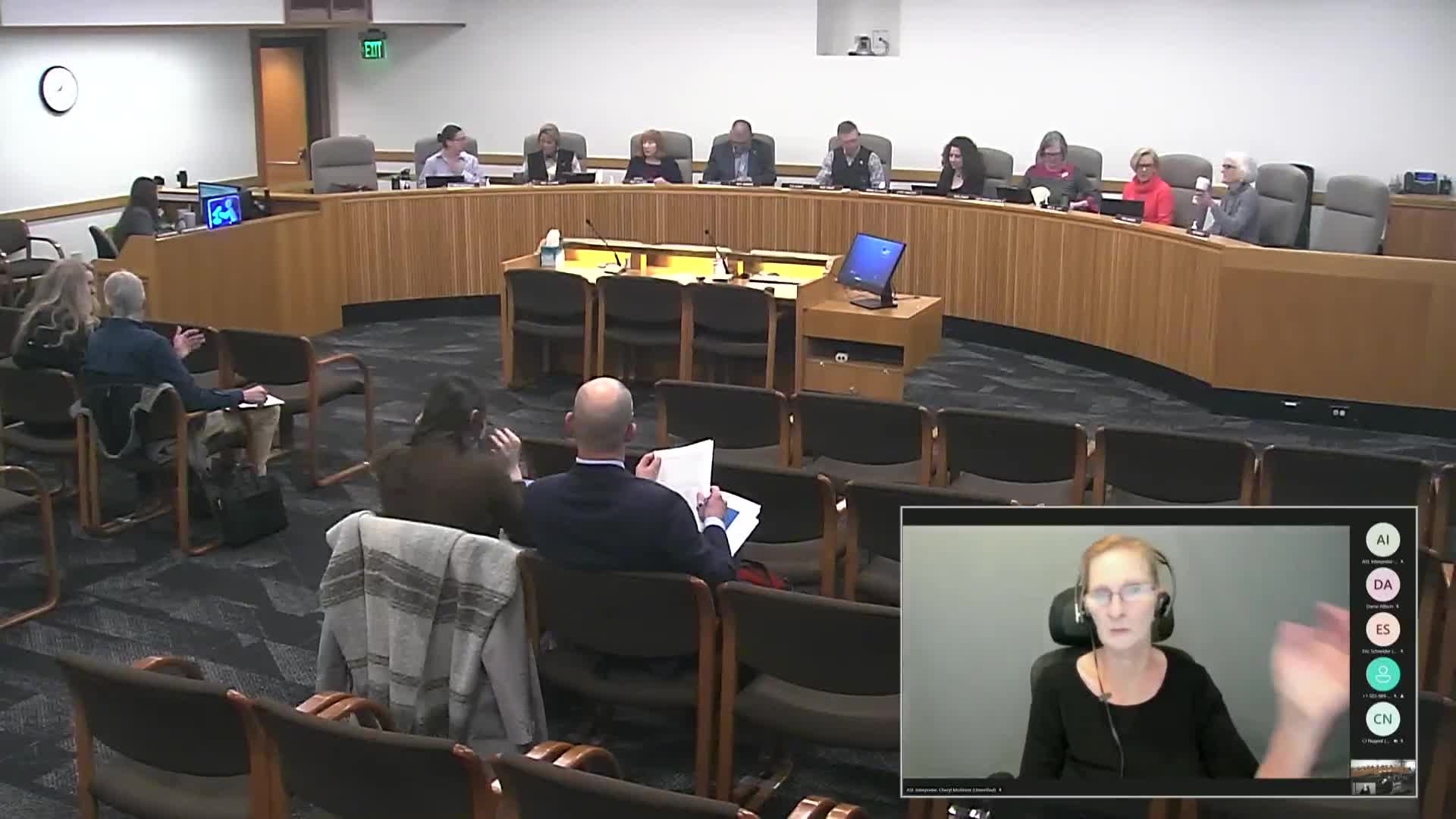
The House Committee on Agriculture, Land Use, Natural Resources, and Water met Monday morning, March 31, for a series of work sessions and public hearings. The committee approved amendments and recommended multiple bills to the floor with referrals to the Joint Committee on Ways and Means, and held public testimony on fee increases proposed by the Oregon Water Resources Department (OWRD).
The committee advanced House Bill 2730 (beginning farmer and rancher incentive program), House Bill 2950 (amendments to Oregon's public involvement land-use goal), House Bill 3010 (Spanish-language pesticide education appropriation to Oregon State University), House Bill 3103 (sustainable timber harvest rulemaking), House Bill 3587 (rocky habitat management site plans), and House Bill 3786 (ocean science competitive grants). Each was amended in committee and moved to the floor with a due-pass recommendation and prior reference to Ways and Means where applicable.
Those work sessions were followed by public hearings on three fee-related bills: House Bill 2808 (proposed increases to the well construction program fees), House Bill 2165 (a one-time general fund allocation to support well construction and compliance staff), and House Bill 2803 (proposed increases to water-right transaction and dam safety fees). Witnesses representing the well-drilling industry, groundwater associations, irrigation districts, and agricultural groups urged caution on large fee increases and recommended a greater share of general-fund support for programs that inspect wells and process water-right transactions.
"The fee increases proposed are 40% for start card fees and 10% for well driller licensing and landowner permit fees," Director Ivan Gall of the Oregon Water Resources Department told the committee when describing HB 2808's package and its projected effect on staffing and service levels. He said the star-card revenue supports about 9.8 FTE for the well-construction program and that unfilled shortfalls would force a reduction of roughly six FTE in the 2027-29 biennium.
Industry witnesses objected to using only fee increases to cover ongoing program needs. CJ Nugent of Nugent Drilling Company testified, "I am not opposed to any of them except for the star card fee," arguing an additional start-card increase could disadvantage compliant drillers and widen the gap with unlicensed operators. Representatives of the Oregon Groundwater Association and Oregon Groundwater Association leadership urged a mix of one-time general-fund support and longer-term solutions to avoid making well drilling prohibitively expensive for private well owners.
At the public hearing on HB 2803, Ken Yates of the Oregon Water Resources Congress said the association "opposes the astronomical 135% fee increase for most water-right transactions," describing the scale of the proposed increase as untenable without measurable service improvements. The Oregon Farm Bureau likewise testified in opposition, citing the burden on farms already facing rising costs.
Votes at a glance - HB 2730 — Beginning farmer and rancher incentive program: Committee adopted the -4 amendment (adds $400,000 GF appropriation and moves scholarship deadline from Sept. 1 to April 1) and moved the bill to the floor with a due-pass recommendation; referred to the Joint Committee on Ways and Means by prior reference. Motion moved by Vice Chair Fingerman McDonald; voice vote; motion passed in committee. - HB 2950 — Amendments to Oregon's land-use public involvement goal: Committee adopted the -4 amendment (creates public involvement goal update fund, appropriates monies, revises timelines and advisory membership, sunsets 01/02/2030), and moved the bill to the floor with a due-pass recommendation; referred to Ways and Means by prior reference. Motion moved by Vice Chair Fingerman McDonald; voice vote (roll-call recorded in transcript for the amendment, motion thereafter passed). - HB 3010 — Spanish-language pesticide education (OSU): Committee considered competing amendments. The -3 amendment (smaller appropriation strategy) failed on a roll-call; the -5 amendment passed and the bill as amended moved to the floor with a due-pass recommendation and referral to Ways and Means. The -5 adds specified requirements and an implementation timeline (OSU to develop/publicize Spanish-language pre-certification module by 12/31/2025) and includes a $40,000 appropriation to OSU. - HB 3103 — Timber inventory / sustainable harvest: Committee adopted the -5 amendment (directs State Forester and Board of Forestry to adopt sustainable harvest level by rule consistent with other legal requirements) and moved the bill to the floor with a due-pass recommendation; referred to Ways and Means by prior reference. - HB 3587 — Rocky habitat management site plans: Committee adopted the -3 amendment (coordination with federally recognized tribes; appropriation technical fix moving funds to the Department of State Lands) and moved the bill to the floor with a due-pass recommendation; referred to Ways and Means by prior reference. - HB 3786 — Ocean science competitive grants: Committee adopted the -1 amendment (technical fix to direct the appropriation to the Department of State Lands) and moved the bill to the floor with a due-pass recommendation; referred to Ways and Means by prior reference. The bill declares an emergency and takes effect 07/01/2025; appropriation: $3,000,000 GF. - HB 2808 — Well construction program fee increases (public hearing): OWRD proposed raising start-card fees ~40% and driller/licensing/permit fees ~10% to maintain existing staffing; department testimony said failing to fill shortfalls would require cutting 6 FTE. Industry witnesses and the Oregon Groundwater Association urged more general-fund support and recommended alternatives to recurring fee increases. - HB 2165 — One-time general-fund request for well construction and compliance: Testimony from the Oregon Groundwater Association and industry representatives supported the bill's one-time GF allocation (proposal cited in testimony: $830,415 for 2.25 FTE) as a means to stabilize the program and avoid an outsized fee burden on private well owners. - HB 2803 — Water-right transaction and dam safety fee increases (public hearing): OWRD proposed a 135% increase to many water-right transaction fees and a 56% increase to dam-safety annual fees, citing depleted ending fund balances, previous reliance on one-time ARPA funds, rising personnel costs and a decline in transaction counts. OWRD told the committee that without revenue shortfalls being filled, it would need to reduce 7 FTE effective 07/01/2025. Water-user groups (OWRC, Oregon Farm Bureau, irrigation districts) strongly opposed the magnitude of the proposed fee increases and asked for a more balanced 50/50 split of general fund and fee support, plus accountability benchmarks.
Context and key points - Appropriations and deadlines: HB 2730 (-4) adds $400,000 GF to a beginning farmer and rancher incentive fund and moves award/scholarship deadlines forward to April 1. HB 3010 (-5) appropriates $744,124 GF to the Higher Education Coordinating Commission for OSU/ODA work plus $40,000 specifically for OSU to develop the Spanish-language training. - Tribal and stakeholder coordination: HB 3587 (-3) explicitly added coordination requirements with federally recognized tribes for rocky habitat management planning; HB 2950 revised advisory membership and implementation timelines and included an explicit legislative intent note discussed on the record to include agricultural representation (Farm Bureau) for a seat on the advisory group. - Enforcement and illegal wells: Public testimony and committee discussion repeatedly cited concerns about unlicensed or "illegal" well drilling and the difficulty OWRD faces identifying and prosecuting or remediating such operations. Witness CJ Nugent suggested a demerit system for repeat noncompliant drillers. - Budget trade-offs: Committee members repeatedly framed the fee conversation as a budget-policy choice — either by raising user fees, directing additional general-fund dollars to the department, or making programmatic reductions. Directors and witnesses emphasized that past one-time funding (ARPA) and insufficient fee increases degraded ending fund balances and pushed current shortfalls onto fee payers.
Quotations from the record "The fee increases proposed are 40% for start card fees and 10% for well driller licensing and landowner permit fees," Director Ivan Gall said in committee testimony on HB 2808. "I am not opposed to any of them except for the star card fee," said CJ Nugent of Nugent Drilling Company during the HB 2808 public hearing, urging caution on additional start-card increases. "OWRC opposes the astronomical 135% fee increase for most water-right transactions processed by the department," Ken Yates told the committee in opposition testimony on HB 2803.
Ending Committee members generally supported moving the work-session bills to the floor with due-pass recommendations and prior reference to Ways and Means; the public hearings left the committee with contrasting proposals for how to fund OWRD services (large fee increases vs. greater general-fund support and accountability benchmarks). The committee closed with no final action on the fee bills and with requests from members and stakeholders for additional fiscal detail and possible compromise language in coming days.