Get Full Government Meeting Transcripts, Videos, & Alerts Forever!
Get email alerts on the School Materials Access topic
No spam. Unsubscribe anytime.
Oregon Senate passes bill barring discrimination as reason to remove school library materials
Summary
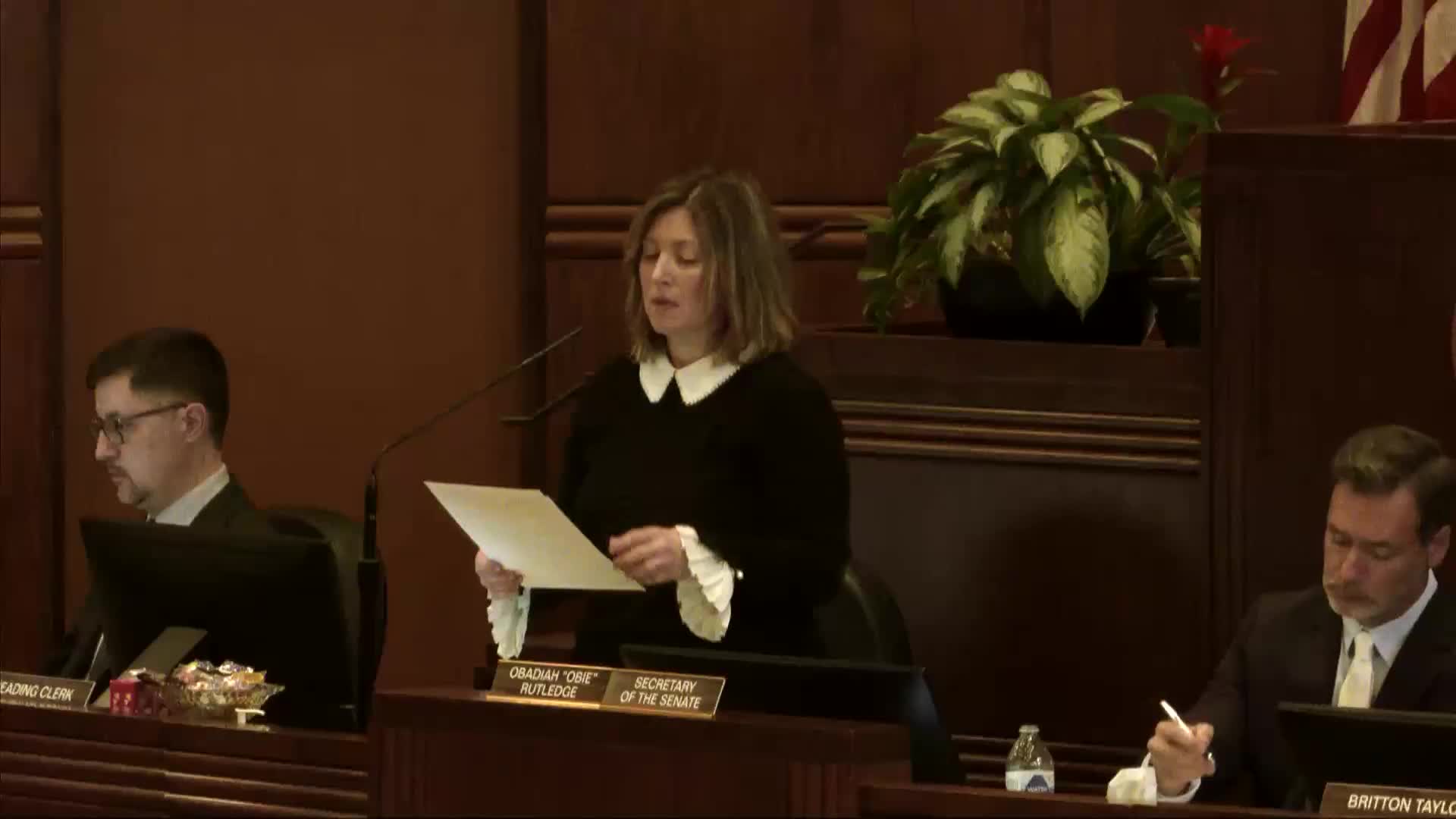
After an hour-long debate, the Oregon Senate on March 31 passed Senate Bill 10 98, which prohibits removing or restricting school instructional or library materials when the sole motivation is discrimination against a protected group. The bill preserves local review processes and allows appeals to the Oregon Department of Education.
SALEM, Ore. — The Oregon Senate passed Senate Bill 10 98 on March 31, a measure that forbids removing or refusing to select school library or instructional materials when the motivation is unlawful discrimination against a protected group.
The bill, as carried on the floor by Senator Frederick, directs that school review processes for challenged materials must not be used to discriminate on grounds identified in the statute cited in the bill (referenced in debate as ORS 6 59.85). The measure keeps existing local committees and school-board review in place and allows appeals to the Oregon Department of Education for complaints that allege discriminatory motives.
Supporters said the bill protects students’ access to a broad range of books and prevents local or out-of-district actors from using book challenges to exclude works by or about marginalized groups. “The bill just says that discrimination against a particular group cannot be the motivation for restricting material in schools,” Senator Frederick said on the floor. He added the bill “maintains a process for challenging these materials” and does not change age-appropriateness standards or require any particular book to be taught.
Opponents warned the measure could make it harder for parents and local school officials to remove what they regard as sexually explicit or violent material and said local control is preferable. Senator Robinson, who moved to substitute a minority report that would have given districts more unilateral authority to remove contested titles, argued that “the base bill will make it worse” and urged restoration of clearer local removal authority. The Senate voted down the substitution.
Debate included named examples of books that senators said had been placed in some Oregon school libraries; speakers repeatedly cited A Court of Mist and Fury, Cranked/Crank by Ellen Hopkins, Tricks and other titles as illustrations of material that some members consider inappropriate for students. Supporters of SB 10 98 said those examples illustrate the need to prevent removals motivated by discrimination rather than content-based, age-appropriateness determinations.
Senators also discussed how the bill interacts with the statute referenced repeatedly in debate (quoted in the transcript as ORS 6 59.85) and how local committees, school boards and the Department of Education will apply existing educational-value and age-appropriateness standards alongside the bill’s anti-discrimination limitation. Senator Frederick said librarians back the bill and that the existing review standards remain in place; he said the bill simply bars discriminatory motives as the basis for a removal.
On the floor the minority report to the committee report was offered and defeated. After the failed substitution, the Senate proceeded to third reading and final passage; the clerk recorded the bill as having received a constitutional majority and the measure was declared passed. Remaining measures on the calendar were carried over to the next day.
The legislation takes effect as provided in the bill language and preserves local committees and appeals through the state education system while adding the anti-discrimination constraint to the challenge process.
The Senate’s action follows extensive floor debate that centered on the balance between protecting students from material deemed age-inappropriate and ensuring that challenges are not driven by discrimination against authors or subjects tied to protected characteristics.