Get Full Government Meeting Transcripts, Videos, & Alerts Forever!
Get email alerts on the Marijuana Taxation topic
No spam. Unsubscribe anytime.
Senate hearing on bill to reallocate marijuana tax revenue pits prevention and enforcement against conservation programs
Summary
Senate Finance and Claims heard testimony on Senate Bill 307, which would redirect some marijuana excise tax revenue away from habitat, parks, trails and nongame wildlife toward substance‑use prevention and a new marijuana law‑enforcement account.
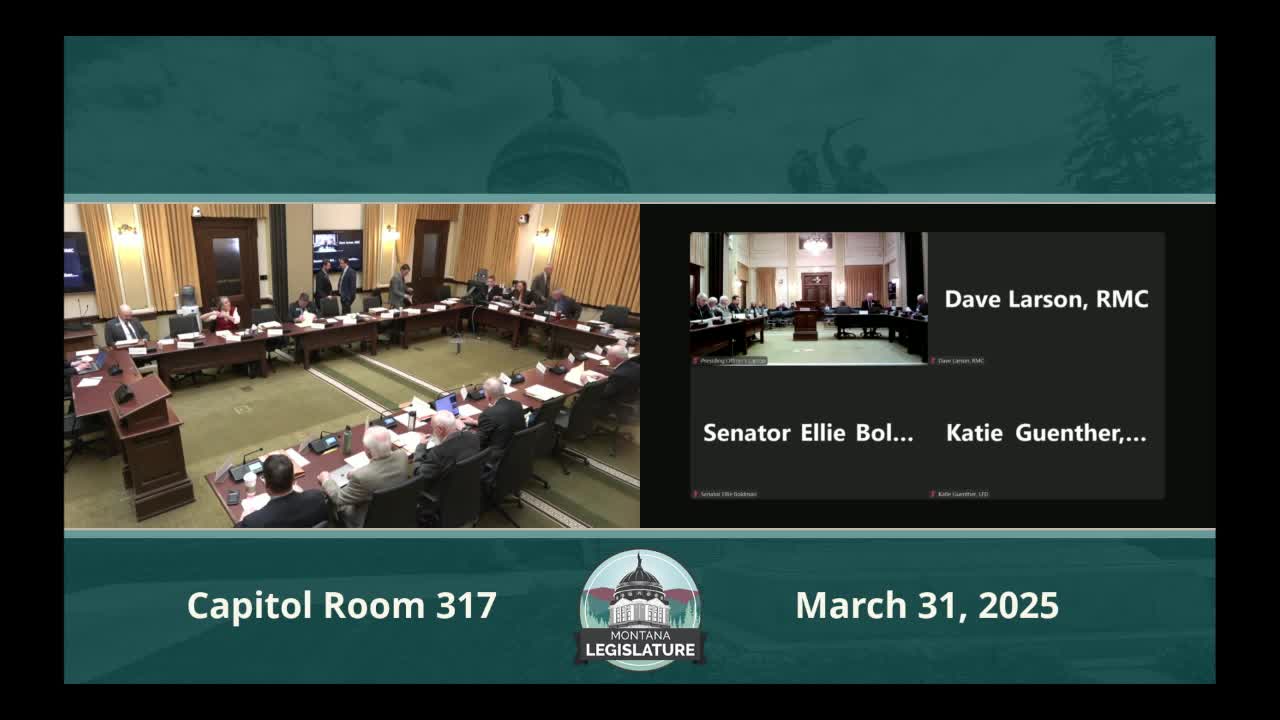
Senate Finance and Claims heard testimony on Senate Bill 307 at a committee hearing where sponsor Senator Tom McGillivray, a Republican representing Senate District 26 in Billings, said the bill would “create a nexus between marijuana revenue and marijuana harm” by moving certain marijuana excise-tax dollars away from habitat, parks, trails and nongame wildlife toward prevention and a marijuana law‑enforcement account.
McGillivray provided a one‑page comparison and a fiscal‑note summary showing current cash flows and account balances for Fish, Wildlife and Parks programs. He told the committee that, according to materials he received from fiscal staff, wildlife habitat has a cash flow of about $4.7 million and an account balance of about $33.7 million; park maintenance has roughly $8.5 million in annual cash inflow with an $11.2 million balance; trail maintenance about $1 million in cash flow with a $6 million balance; and the nongame wildlife account shows a smaller cash flow and a balance near $2 million. He also described a fiscal‑note estimate that would create a marijuana law‑enforcement operations account of about $2.3 million and increase funding for prevention from the current level cited in the note.
Proponents said prevention and enforcement resources are underfunded. Colleen Smith, a certified prevention specialist and executive director (prevention organization), said the state previously expanded a trained prevention workforce using ARPA funds and that the plan to have marijuana revenue replace that funding has not been implemented. “Primary prevention needs to be funded now,” Smith said.
Colleen Rahn, education director for NAMI Montana, noted some HEART fund spending may draw federal Medicaid match dollars and said it is not yet clear how the Department of Public Health and Human Services will allocate those matched funds. Steve Zabawa, founder of Safe Montana, urged the committee to create a THC enforcement division and said a $2.5 million allocation would help target black‑market sellers.
Opponents — a wide group of conservation, trails and sporting organizations — said the bill would break a negotiated funding balance voters and the Legislature set after legalization. Chris Smith, vice chair of the Montana State Parks Foundation, told the committee Montana state parks “do not receive any general fund money” and that the current 4% dedicated marijuana excise tax to parks is “critically important.” Tom Jacobson of the Montana Wildlife Federation called SB 307 a “false choice” and urged tabling the bill.
Other opponents, including Montana Audubon, Backcountry Hunters and Anglers, the Montana Trails Coalition, Prickly Pear Land Trust and the Rocky Mountain Elk Foundation, said the 32% allocation that supports Habitat Montana, state parks, trails and nongame programs is used for long‑term leases, easements, trail stewardship grants and species work. Peter Dudley of Montana Audubon said nongame funding supports species identified in the state wildlife action plan and helps keep species off federal endangered‑species listings.
Lena Havron, chief financial officer for Montana Fish, Wildlife and Parks, described how grants are disbursed over multiple years and said account balances reflect obligations and the timing of multi‑year grants. She told senators that the Nongame program would “virtually go away” if nongame revenue were removed, noting the only other nongame revenue is a small tax checkoff that brings in about $30,000 a year.
Committee members questioned sponsors and agency staff about account balances, grant cycles and whether the proposed change had been coordinated with the section‑C budgeting process. McGillivray said he is working with FWP and expects to offer amendments on the House side and indicated he would not offer an amendment in committee.
No formal action was taken on SB 307 during the hearing. The committee closed the SB 307 hearing and moved on to other business.
Ending: The sponsor said he would work with Fish, Wildlife and Parks on an amendment and seek changes in the next chamber; no votes or committee directives were recorded in the hearing.