Get Full Government Meeting Transcripts, Videos, & Alerts Forever!
Get email alerts on the Mobile Home Relocation Fund topic
No spam. Unsubscribe anytime.
House bill would create Montana Mobile Home Emergency Relocation Fund to help displaced residents
Summary
A bill before the House Business and Labor Committee would create a one‑time $500,000 fund and an ongoing small assessment to help owners of manufactured homes pay moving or displacement stipends when parks close or redevelop.
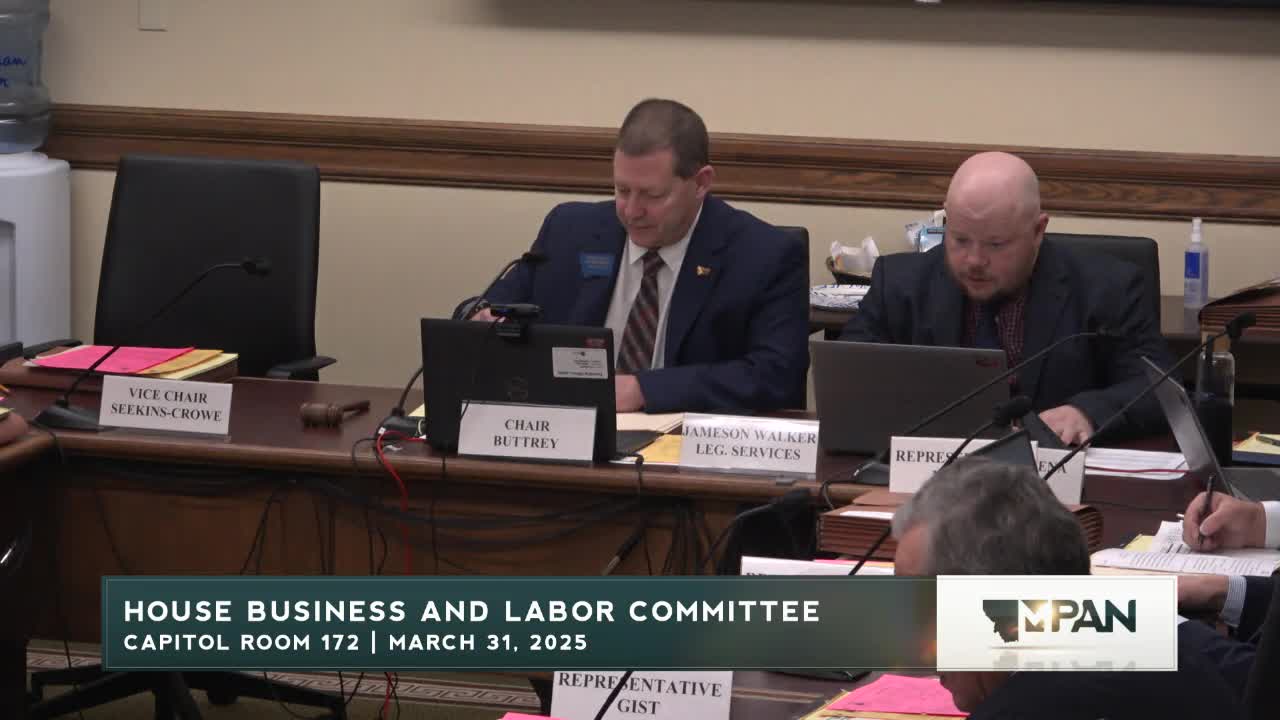
Representative George Nikolicakos, sponsor of House Bill 873, told the House Business and Labor Committee the bill would create a Montana Mobile Home Emergency Relocation Fund to help owners of manufactured homes displaced when parks close or are redeveloped.
"HB 873 does a few basic things," Representative George Nikolicakos said, including a one‑time appropriation of $500,000 and an option for eligible residents to receive a $10,000 moving stipend or half that amount as a displacement payment if they abandon the home.
Nut graf: Supporters told the committee manufactured‑housing communities serve as a last affordable rung for many Montanans — especially seniors, low‑income households and people with disabilities — and that redevelopment or park closures often leave residents with few relocation options and heavy costs.
Jake Brown of Shelter Whitefish, which advocates on housing issues, said the bill "creates a strategic tool to help lend some stability and some resources to Montanans who own their mobile home but are being forced to move." Danielle Maiden, Cooperative Housing Director at NeighborWorks Montana, described a recent Spring Creek Mobile Home Park closure in Kalispell where local fundraising and a one‑time relief fund moved 26 of 27 households into temporary or stable housing.
Representative Nikolicakos outlined how the bill would be financed: a $500,000 one‑time appropriation plus annual revenue from modest increases in mobile‑home license fees and a small per‑home assessment he said would typically range "between a $3 to $7 annual fee on the home." He told the committee his Department of Revenue runs estimate models indicating the fee structure should generate roughly $125,000–$150,000 per year and that the sponsor’s one‑time money plus these fees could yield roughly $1 million over the bill’s four‑year life, which includes a sunset and evaluation provision.
The bill would allow the Department of Commerce to administer the fund, make rules, and contract with nonprofits to deliver services; the sponsor noted a 10% administrative contracting fee provision intended to let nonprofits implement the program and reduce the department's full‑time‑employee need.
Committee members questioned implementation details, including how the fund’s automatic stop/start collection triggers would work, how long it would take to reach the targeted capitalization, and what kinds of relocation expenses the stipends would cover. Representative Nikolicakos said the statute would leave some specifics to department rulemaking and that he expects to work with stakeholders on modest amendments.
There was broad proponent testimony from nonprofit housing groups, local governments (City of Bozeman, City of Missoula), the Montana Landlords Association and NeighborWorks Montana. Adam Paschel of NeighborWorks, who worked directly on Spring Creek relocations, told the committee that most relocated households moved into rentals or purchased other housing and that only a small number of older homes could actually be moved.
Cheryl Cohen, Housing Division Administrator at the Department of Commerce, appeared as an informational witness to answer implementation questions.
The committee closed the hearing on HB 873 and did not take final action during the session recorded in the transcript.