Get Full Government Meeting Transcripts, Videos, & Alerts Forever!
Get email alerts on the Property Tax Deferral topic
No spam. Unsubscribe anytime.
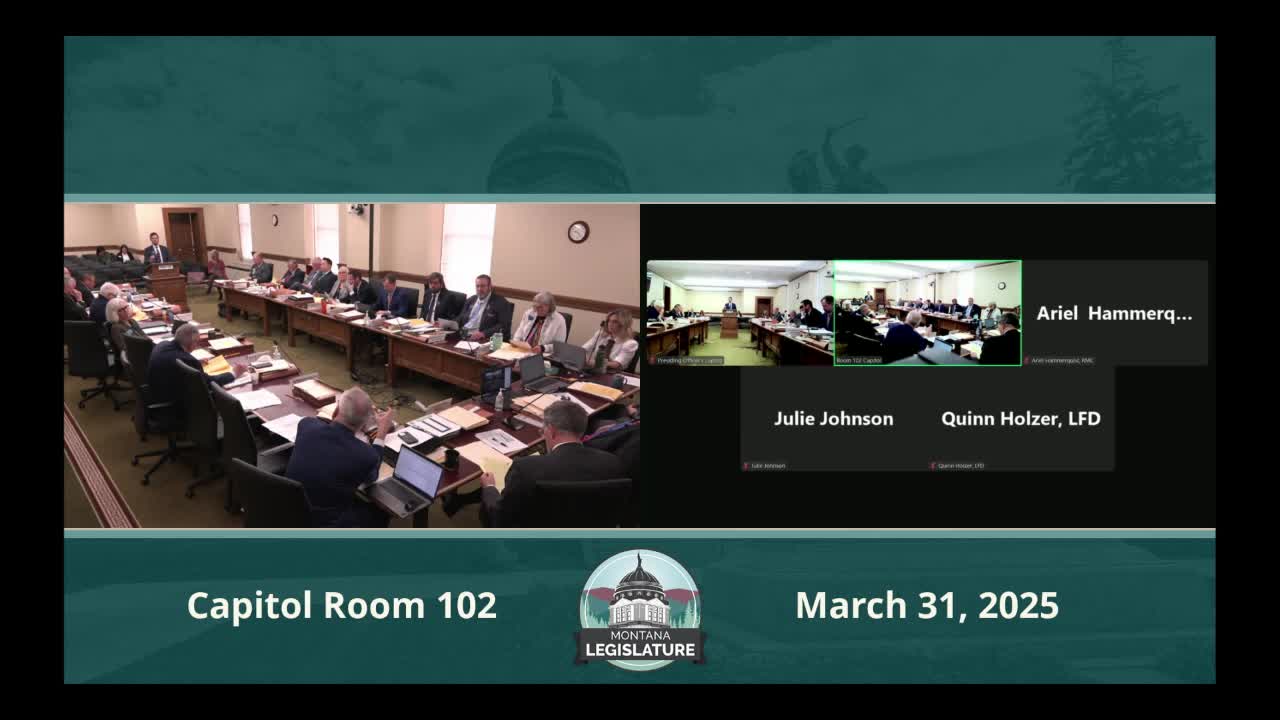
Lawmakers consider Board of Housing loan program to defer property-tax increases for some seniors
Summary
House Bill 836 would create a property-tax deferral (home-equity loan) program administered by the Montana Board of Housing for homeowners 62 and older who meet income, equity and residency limits; sponsor estimated program needs $5–7 million start-up and expects low default rates.
Representative Scott Rosenzweig (R) presented House Bill 836 as a property-tax deferral program for lower-income seniors and eligible active-duty military, modeled on elements of existing programs and administered by the Montana Board of Housing.
Rosenzweig said eligible borrowers must be at least 62, live in their homes for at least five years, reside in Montana at least seven months a year and hold at least 20 percent home equity. The bill would allow the board to extend a simple, non-compounded loan repayable when the homeowner sells the property or from the estate; spouses would be allowed to remain under the loan’s terms after the owner's death.
Sponsor testimony said the Board of Housing could extend lines of credit and secure loans with liens. The fiscal note listed an initial administrative cost of roughly $250,000 for about 2.5 full-time equivalent positions to run the program; Rosenzweig told the committee that, based on updated estimates, a pool of $5 million to $7 million would likely cover the program for the next few years. He said the board expects low default rates in this borrower class.
Committee members asked whether active-duty military should be included. Representative Mercer and Representative Beatty raised concerns that many active-duty service members move frequently and may not retain a primary residence long enough to benefit. Rosenzweig said he was amenable to removing active-duty eligibility if the committee preferred. Representative Walsh and others asked whether loans would be secured; Rosenzweig said he understood the board would place liens and that staff could clarify security and administrative arrangements with the board’s director.
Representative Rosenzweig closed by urging support and offering a possible two-year review to evaluate the program’s operation and personnel needs. No formal committee vote on the bill was recorded during the hearing; the sponsor asked that the committee send the bill to appropriations for further consideration.