Get Full Government Meeting Transcripts, Videos, & Alerts Forever!
Get email alerts on the Transit Rapidride K Line topic
No spam. Unsubscribe anytime.
Bellevue council backs letter supporting King County Metro’s RapidRide K locally preferred alternative
Summary
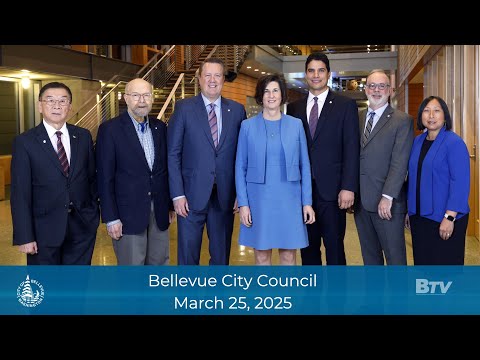
Bellevue City Council voted March 25 to direct city staff to prepare a letter of support for King County Metro’s RapidRide K locally preferred alternative, a 16-mile rapid transit route connecting Totem Lake and Eastgate.
Bellevue City Council voted March 25 to direct city staff to prepare a letter of support for King County Metro’s RapidRide K locally preferred alternative, a 16-mile rapid transit route connecting Totem Lake (Kirkland) and Eastgate (Bellevue) with stops in downtown Kirkland and downtown Bellevue.
The council’s request follows months of outreach and technical review. Director Andrew Singalakis of the city Transportation Department said the LPA now includes 35 passenger facilities and 11 “access to transit” areas—sidewalk, crossing and bike improvements—to help riders reach stations.
Why it matters: Metro and city staff said the K line is expected to improve person throughput in regional centers, shorten transit travel time and support the cities’ growth plans. Ryan Whitney, King County Metro line lead for the project, said the LPA delivers an estimated 44.7 minutes of PM-peak travel-time savings (a 24% reduction) under the revised analysis and keeps the project inside Metro’s target for RapidRide investments.
Council and Metro officials described changes made after earlier public and council feedback. Whitney said Metro removed the westbound and eastbound bus-only lanes on Northeast 10th Street after analyzing traffic diversions and intersection impacts; the removal “fully mitigates” the earlier increase in eastbound general-purpose travel time that had been predicted for Northeast Eighth and Twelfth streets. Metro staff also pledged to continue signal upgrades, queue jumps and other speed-and-reliability elements at targeted intersections.
Metro said the project would run buses every 10–15 minutes during peak hours and up to 30 minutes in the lowest-demand off-peak periods. Amanda Pleasant Brown, Metro government relations, and Yubia Ellison Morales, senior community engagement planner, described a four-week Phase 3 outreach period (Jan. 16–Feb. 13) that gathered about 1,800 direct responses through online surveys, in-person tabling and briefings. Morales said survey respondents broadly matched local demographics on race, age, disability status and household income and that community members increasingly reported feeling informed about the project.
After the presentation and discussion the council voted to direct staff to prepare a letter for the mayor’s signature supporting Metro’s RapidRide K LPA so Metro can transmit the LPA to King County Council and pursue preliminary design and a Small Starts grant application with the Federal Transit Administration.
Council members who spoke in the discussion praised Metro’s outreach and the city–Metro coordination. Councilmember Dave Hamilton said removing the NE 10th Street bus-only lanes was a “substantial improvement” that mitigated vehicle diversion; Councilmember John Stokes called the project “a great example” of regional partnership; Councilmember Lee emphasized ensuring strong local connections to the route. Director Singalakis noted the City of Kirkland had already approved the LPA and that Metro hopes to have King County Council adopt a project-vision ordinance in June and submit a Small Starts application in August.
Next steps: If county council adopts the alignment ordinance, Metro planned to start or continue NEPA work and preliminary design this fall and seek federal Small Starts funding in the federal grant pipeline to fund construction expected in later biennia.