Get Full Government Meeting Transcripts, Videos, & Alerts Forever!
Get email alerts on the Public Service Fleet Infrastructure Aggregation topic
No spam. Unsubscribe anytime.
Akron public service committee approves vehicle purchases, recycling grant and depot generator; discusses electric rate spike
Summary
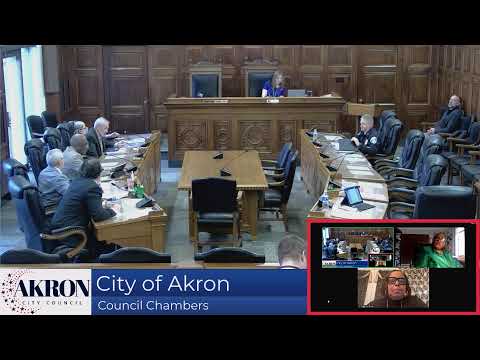
At a meeting of the Akron City Council Public Service Committee, members approved three emergency ordinances authorizing vehicle and equipment replacement, a recycling grant application, and installation of a backup generator and brine system at the city’s Copley Road (West) depot, and heard a briefing on recent electricity price movement and the city’s 13‑month community choice aggregation contract.
At a meeting of the Akron City Council Public Service Committee, members approved three emergency ordinances authorizing the purchase or lease of vehicles and equipment, application for a community recycling access grant, and installation of a backup generator and brine system at the city’s Copley Road (West) depot. Service Director Chris Slottle described the measures and staff outlined steps the city took this month to lock a community choice aggregation rate to limit short‑term exposure to rising electricity prices.
The measures matter because they fund core city operations and short‑term consumer protections. The equipment legislation covers annual fleet replacements and upfits across multiple divisions; the recycling grant provides roughly $196,570 for curbside, drop‑off and education work; and the depot project installs backup power and an expanded brine system to keep snow‑and‑ice and fueling operations running during outages.
“This is for our annual equipment replacement program,” Service Director Chris Slottle said, describing a package that he said totals “just under $5,000,000” and will include the upfit of 23 public works vehicles with snow‑and‑ice equipment, replacement of 10 marked police cruisers, two SUVs for the fire department, two fire‑maintenance vehicles and various mowers, loaders and tractors across divisions.
Slottle said the community recycling access grant is funded by a landfill surcharge; the city expects $196,570 this year and plans to continue the program that includes curbside education and summer “recycling right” inspections. “About 40,000 of these total funds will go to KAB to let them manage that program in the summer,” he said.
On the depot work, Slottle told the committee the city will bid to install a permanently wired backup generator so staff can run the brine system and the fuel station during extended power outages. He said the depot’s generator will be exercised automatically — typically once a week — to ensure it starts and transfers power when needed. Slottle explained the brine system reduces salt scatter on treated roads because brine sticks to pavement better than dry rock salt.
Committee members placed the three ordinances on the consent agenda and approved them by voice vote; the meeting record shows unanimous “aye” responses but does not list individual roll‑call tallies.
Staff also briefed the committee on the city’s decision this month to lock a 13‑month community choice aggregation contract at a citywide procurement rate of about 9.24 cents per kilowatt‑hour. Slottle said the rate was chosen to protect residents from rapid market increases and that the contract will be carbon‑free, supplied primarily by nuclear and hydroelectric sources in the supplier’s portfolio. “It locks us in for the next 13 months at this rate,” Slottle said.
Slottle and Tom Smith, a longtime public utilities manager, explained the recent spike in the PJM capacity charge drove much of the market movement. Staff advised residents who receive opt‑out letters to read contracts carefully for monthly fees and early termination penalties before switching suppliers; residents may opt out and shop independently.
Casey Shevlin told the committee the city will begin a fleet analysis through technical assistance available via Empower Clean Future Ohio and the Electrification Coalition to evaluate potential electric vehicle deployments where they are cost‑effective.
Committee Chair Councilman Kammer asked about consent and exercise of the generator; staff said the generator will be tested regularly. The committee approved the consent agenda and the items will move to full council with favorable reports.
What’s next: the ordinances were forwarded to all council for final consideration at the next full council meeting; staff said an RFP process for next‑year aggregation options will be launched later this summer or early fall.