Get Full Government Meeting Transcripts, Videos, & Alerts Forever!
Get email alerts on the Public Health Food Safety topic
No spam. Unsubscribe anytime.
Village staff proposes seasonal vendor permit and fees for temporary food events; council asks for comparables
Summary
Village staff presented plans to streamline temporary food permits (food trucks, trailers, booths), propose seasonal vendor permits and nominal fees, and to limit food-truck operations to organized events. Council asked staff to return with fee comparisons from neighboring communities and to draft code amendments.
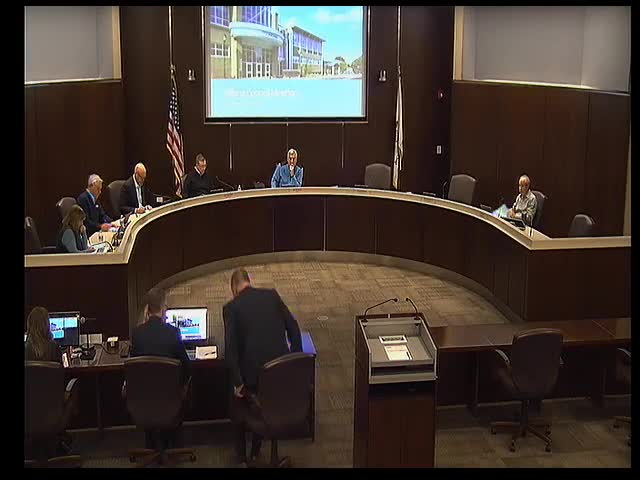
Village staff told the Administration, Technology and Community Health Committee that the current process for temporary food permits is time-consuming for vendors and staff and proposed a seasonal permit and fee structure to reduce repeated submittals.
Village Manager Reed said the village currently issues temporary food permits for food trucks, trailers and booths when operations last less than 14 consecutive days and that staff must review menus, food-preparation locations (licensed commissaries), suppression and gas reports when applicable, and site plans for special events. He said some applications take 30–60 minutes to process while others require multiple follow-ups that can consume several staff hours.
Mike (village staff) described three broad categories of temporary food establishments—food trucks, food trailers and temporary booths—and explained that the village treats temporary food operations like permanent restaurants for food‑safety and life‑safety review (gas, propane, suppression, grease control). He said staff issued 68 truck permits to 20 vendors last season and 14 permits for trailers to 7 vendors; Kona Ice accounted for numerous single-event permits because the vendor attended many events.
To reduce duplicated work, staff proposed issuing an annual temporary-food vendor permit for vendors that supply full documentation (menu, commissary or licensed kitchen for off-site prep, suppression/gas reports where required) and a single-event permit option for one-off vendors. Staff recommended smaller fees for Palatine brick-and-mortar businesses that already hold local business licenses and larger but still nominal fees for out-of-town vendors without local establishments. The village manager clarified that event organizers would not pay vendor fees; fees would apply to individual vendors.
Council members expressed support for streamlining and for giving Palatine-based businesses a reduced cost. Councilman Helms suggested waiving fees for established Palatine businesses; staff said $75 had been discussed earlier but may not cover staff time. Other council members suggested figures in the $200 range for vendors who operate many events, with larger fees considered for out-of-town vendors; staff said the village performed roughly 250 individual temporary-food permits last year.
Council asked staff to return with draft code amendments, a fee schedule and a comparison of what neighboring communities charge. Staff said the manager has authority under existing code to waive fees for nonprofit community groups and that the proposed draft ordinance would include that reference. Staff also said they would return with a list of vetted vendors that event organizers could use to speed approvals.
Staff underscored that food trucks would continue to be allowed only when operating as part of an approved special event; unauthorized park-and-sell activity in private parking lots remains a code violation. The committee did not take formal action; staff will prepare ordinance language and fee comparables for a future meeting ahead of the summer season.
— Ending: Staff will return with proposed code amendments, recommended fee amounts and comparables from neighboring communities for council consideration.