Get Full Government Meeting Transcripts, Videos, & Alerts Forever!
Get email alerts on the Housing Law Enforcement topic
No spam. Unsubscribe anytime.
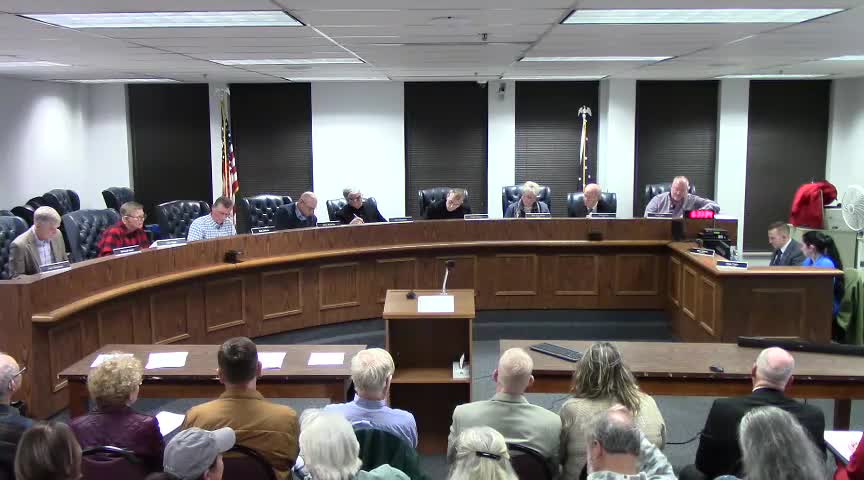
Council debates 'squatters' ordinance, seeks data and legal clarification before action
Summary
Council discussed ordinance 25-10 to address long-term unauthorized occupancy. Prosecutorial staff said existing criminal-trespass law typically covers many cases; council members asked for data, clarification of penalties, and information on fiscal impacts before deciding whether to advance the draft.
Wilmington — Councilmembers discussed a proposed ordinance (25-10) that would create a municipal "squatters" offense and a new removal process for people occupying private homes or other property without consent. The workshop discussion highlighted differences between the proposed municipal ordinance and existing Ohio Revised Code criminal-trespass statutes, possible financial impacts on city prosecution, and requests for data.
The ordinance's supporters said the measure is intended to address long-term occupation of property — for example, when a person establishes residence in a home while the owner is away — distinct from one-time trespass. One councilmember described the concern as "I've been there. Kick me out," referring to cases where people take up residence inside structures.
Mr. Dickerson, speaking for the prosecutorial perspective, questioned whether the new municipal offense is necessary. "A criminal trespass would be a first degree misdemeanor generally which would have a maximum sentence of 180 days as would this proposed legislation," he said, adding that prosecutors already pursue trespass charges and that many cases already receive substantial sentences. Dickerson said the proposed ordinance would add additional statutory elements prosecutors must prove and would not permit greater penalties than state law.
Council members also examined penalty provisions in the draft ordinance, noting a section that would make "any person who knowingly permits another person to occupy property without the consent of the owner or lawful tenant" guilty of a third-degree misdemeanor punishable by up to a $500 fine or 60 days in jail. Council members raised questions about shifting prosecution costs to the city if cases are charged under local ordinance rather than state code and asked whether fines or community service alternatives were available. One councilmember asked for data on how often long-term unauthorized occupancy occurs; staff said they had anecdotal testimony but no compiled statistics.
After extended discussion, council agreed to suspend further action at the workshop and asked staff and legal/prosecutorial offices to compile data and clarify the ordinance language, penalties, and fiscal impacts. The item will be revisited at the regular council meeting or a future session once more information is available.