Get Full Government Meeting Transcripts, Videos, & Alerts Forever!
Get email alerts on the Public Safety Encampments topic
No spam. Unsubscribe anytime.
Wilmington leaders press for action on encampments, cite strain from drop-offs at My Father’s Kitchen
Summary
City officials, public commenters and the law director debated rising encampments, petty crime and the role of local social service agencies; council members said nuisance ordinances will be considered while the law director warned against targeting a religious nonprofit for enforcement.
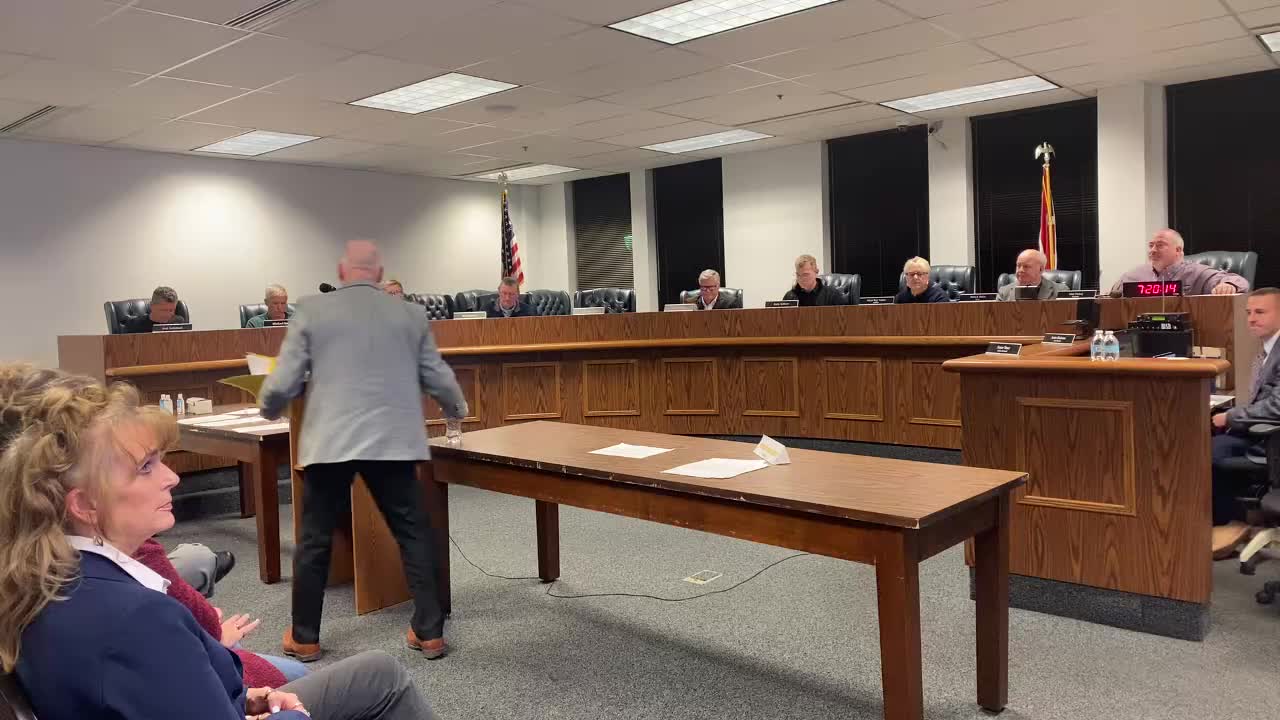
Mayor Haley and city staff told Wilmington City Council on (date not specified) that an increase in encampments, transient residents and related petty crime has saturated downtown public spaces and strained police resources.
At a council meeting presentation, city staffer Mike Clifton described repeated incidents—dumping, drug use along the bike trail and encampments at South Park—that he said accompany an influx of transient residents. Clifton said some multi-tenant homes near downtown had been converted into high-occupancy rentals and estimated “it was over $350,000 a year” in revenue tied to one such property based on occupancy, a figure he presented to illustrate incentives he said can drive congregation of people downtown.
Why it matters: council members and the mayor said the pattern is producing public-safety, sanitation and nuisance complaints and have directed staff to prepare possible ordinances that would give police additional tools to address repeat disorder and encampments.
Public commenters urged quicker action. Jane Jones, who reviewed two years of calls-for-service at three local nonprofits, said the agencies generated hundreds of police calls and tied a rough cost estimate to those responses: “If you were to take 819 times $90 … that’s $73,710 of our tax money being used,” Jones said, urging the city to study average call costs.
Resident Tony Thomas tied the issue to officer safety and questioned the net effect of drawing people to local services. “What’s it gonna take? A dead cop?” Thomas said during public comment.
Those remarks prompted a legal clarification from Law Director Dickman, who told council that while the city may lawfully enforce criminal and nuisance laws, “targeting a religious nonprofit entity creates liability and exposure” under the First Amendment. Dickman warned elected officials against singling out a religious organization and said pursuing enforcement outside regular law-enforcement channels risks constitutional claims.
Council response and next steps: several council members, including Councilman Tolliver and Councilman Wells, said they support drafting ordinances to address nuisance activity and to give police clearer authority. Mayor Haley and council agreed to review proposals from staff; Clifton and the mayor said they will bring suggested ordinances back to council for consideration.
What wasn’t decided: council did not adopt any ordinance at the meeting; Law Director Dickman cautioned that any measures must avoid unlawful discrimination or targeted enforcement, and council members acknowledged they are awaiting formal drafts before any vote.
Ending: Council President closed the discussion by saying staff should present proposed language and that the council would handle the measures when they return on the agenda.