Get Full Government Meeting Transcripts, Videos, & Alerts Forever!
Get email alerts on the Tax Abatement topic
No spam. Unsubscribe anytime.
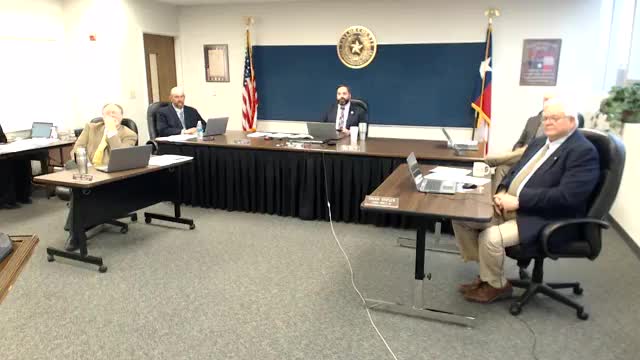
Residents, emergency officials raise water, wildlife and infrastructure concerns at public hearing on Lansium tax abatement
Summary
Residents and local emergency responders urged Taylor County commissioners on Tuesday to scrutinize proposed tax abatement agreements related to a project identified in public materials as associated with Lansium, citing groundwater, wildlife and emergency-services concerns.
Residents and local emergency responders urged Taylor County commissioners on Tuesday to scrutinize proposed tax abatement agreements related to a project identified in public materials as associated with Lansium, citing groundwater, wildlife and emergency-services concerns.
Mark Teague, a Taylor County resident and self-described economist, told the court renewable-energy projects and the land uses tied to some developers “are not efficient. They are not economically viable on their own,” and said that wind and solar installations “destroy the landscape” and harm wildlife. "Wind, the power kills birds and bats by the thousands," he said.
Andrew Teague, another nearby resident, described data centers he has observed in the Pacific Northwest and warned they can expand over time into “massive structures” that “require a ton of power that lead to brownouts and blackouts” and extensive cooling systems that, he said, pose groundwater and contamination risks. "If you poison the groundwater out in that area, it'll be devastating to those families," he said.
Chief Gary Young, who turned in a comment card and spoke during the hearing, urged more transparency from project proponents and said he was concerned about the additional emergency-response burden a major capital project could place on local law enforcement, EMS and fire departments. "I have been a little disappointed that there was not any more transparency with this whole project," he said.
County officials pushed back that not all public materials currently describe the project the same way and that more details may be forthcoming. County Judge Harper told the court he has seen varying project descriptions and said the county is “looking at getting estimated $4,000,000 a year in tax revenue” from the proposal. He also acknowledged officials must watch for water and grid impacts. "I know this system is gonna be % contained, but we need to watch out for leaks," Judge Harper said, summarizing concerns raised by commenters.
Judge Harper and other members of the commissioners court told speakers that the public comment period at the hearing was available but that commenters would be free to speak again when the Lansium/Caruso abatement items return to the court’s agenda for formal consideration. No vote on an abatement agreement occurred during the hearing.
Why this matters: tax abatements and large capital projects can alter land use, put pressure on local utilities and public safety services, and change county revenue streams. Commenters asked the county to require clearer disclosure from proponents about planned energy sources, water use and site plans before approving tax relief.
The court did not take formal action on the Lansium or Caruso abatements at this meeting; it invited further comments when the items are scheduled for consideration.
Ending: Commissioners said they will continue to monitor the project and invited proponents to provide details on energy sourcing, water use and community impacts before any final decision is made.