Get Full Government Meeting Transcripts, Videos, & Alerts Forever!
Get email alerts on the Economic Development Tax Abatement topic
No spam. Unsubscribe anytime.
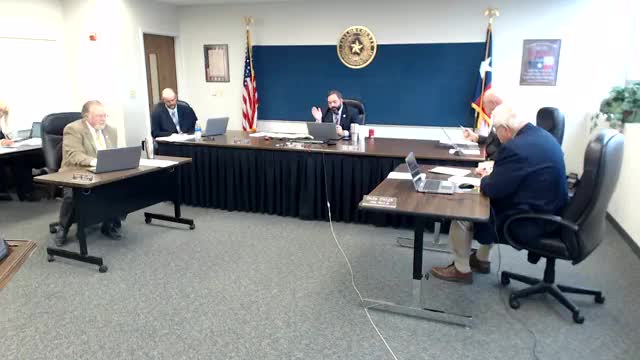
Taylor County gives preliminary approval to amended tax-abatement agreements, continues public hearing to Feb. 25
Summary
The county gave preliminary approval to second-amended tax abatement agreements for Lansdowne LLC and Abilene DLC LLC and kept the public hearing open until Feb. 25; the approval is explicitly conditional on the city creating a reinvestment zone and a final county vote on Feb. 25.
Taylor County Commissioners Court gave preliminary approval Feb. (date not specified) to amended tax-abatement agreements for Lansdowne LLC and Abilene DLC LLC but did not finalize or sign the agreements and kept the public hearing open through Feb. 25.
The court’s action, made as a preliminary motion by the County Judge and seconded by Commissioner Burcham, was explicit that no agreement would be binding until the county takes a final recorded vote on Feb. 25 and only if the City creates and approves the reinvestment zone the county’s agreement would rely on. The court also required additional questions raised during public comment be answered before any final approval.
Why it matters: the agreements would amend existing abatements to cover larger investments and could substantially increase annual tax benefits to the project area once occupancy and abatements begin. Commissioners and members of the public raised public-safety, traffic and infrastructure concerns tied to increased truck traffic and potential impacts beyond the project footprint.
County legal and staff briefed the court that the county’s abatement is currently 80 percent and the city’s is 85 percent; the city must still create the reinvestment zone before the county can finalize the second-amended agreements. County staff said the first building’s certificate of occupancy is expected this year, which would be the trigger for abatements to begin if the agreements are finalized.
Public comment and questions at the hearing focused on off-site impacts and energy sourcing. Major Teague, who identified himself as a reservist, urged the court to require clearer commitments about the project’s energy sources and potential grid impacts. Chief Young raised concerns based on previous experience with out-of-state renewable-energy projects that he said had not delivered on infrastructure promises and that local first responders had not always received promised support. Commissioners said they want answers on road use, possible road improvements funded by the developer, and whether tax revenue from the project would be available to fund public safety.
The court’s preliminary motion included three conditions reported in the hearing record: (1) the city must move forward with creating the reinvestment zone, (2) outstanding questions from staff and public comment must be answered before the final vote, and (3) no agreements will be signed or binding until the Feb. 25 final vote.
The motion passed on a roll-call vote: Commissioner Williams — yes; Commissioner Kendrick — no; Commissioner Burcham — yes; Commissioner Stoutler — yes; County Judge — yes. The court recorded the outcome as a preliminary approval with final signature and execution expressly reserved for the Feb. 25 session.
Next steps: the court will hold the continued public hearing Feb. 25 for final action and invited additional public input at that session. County staff and the city will provide the requested clarifications in advance of the Feb. 25 vote.
Ending: The county made clear during debate that any final entry into amended agreements depends on the city’s reinvestment-zone decision and additional information supplied to the court; no signatures or binding commitments will be executed before the Feb. 25 final vote.