Get Full Government Meeting Transcripts, Videos, & Alerts Forever!
Get email alerts on the Blight And Trespass Enforcement topic
No spam. Unsubscribe anytime.
Shreveport residents press committee for uniform enforcement of blight and trespass laws
Summary
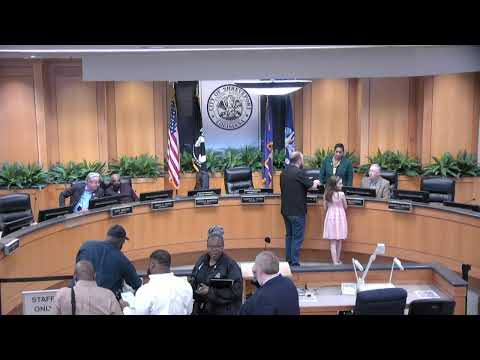
At a Property Standards Committee meeting, Councilwoman Tabitha Taylor and neighborhood residents pressed city officials to enforce existing blight and trespass laws more uniformly and to clarify who to call when vacant houses are occupied or catch fire.
At a Property Standards Committee meeting, Councilwoman Tabitha Taylor and neighborhood residents pressed city officials to enforce existing blight and trespass laws more uniformly and to clarify who to call when vacant houses are occupied or catch fire.
Neighborhood leaders said repeated fires and unauthorized occupation of vacant houses are damaging property values and public safety in Highland and other neighborhoods. "This new law would allow officers to take people out of such houses and would probably prevent some fires," said John Paul Young, a resident who spoke during public comment, describing the proposed ordinance being discussed by the administration.
Why it matters: Residents said enforcement is the principal gap. Several speakers described multiple calls that led to no follow-up, and neighborhood volunteers and inspectors reported ongoing problems with open dumping and people living in boarded or vacant houses. The committee heard that existing city code (Chapter 58, article 6) already defines blight and provides penalties but that implementation is uneven.
Residents and neighborhood leaders described specific problems. Teresa Edgerton Scott, a Highland neighborhood volunteer, said property standards staff and volunteers picked up "38 bags of trash" at two lots during a recent cleanup and asked the city to better coordinate bulk pickup and enforcement to prevent repeat dumping. William Hartman, executive director of Revitalize Historic Highland, pointed committee members to Chapter 58 and said it already contains blight-elimination language and penalties.
City legal and enforcement staff explained the administration's rationale for a proposed ordinance that would make occupying certain dangerous vacant structures per se unlawful. "If there is no water service, that creates a health hazard," Attorney Jones told the committee, describing why the measure was written to make utility status one objective standard police can use to remove occupants.
Attorney Jones read the ordinance's criminal-penalty provision aloud: "The penalty shall be a fine of not more than $500 and/or in prison for not more than 30 days or both. Each calendar day that such violation exists shall be considered a separate violation," citing section 58-207.
Several speakers urged better interdepartmental follow-through. Charlotte Russell, president of the Highland Neighborhood Association, and Madison Poche, a resident, both said constituents repeatedly followed the steps recommended at prior meetings yet still see no enforcement. Council members including Councilman Brooks and Councilman Dela Farrow asked the police and department heads for data on calls for service and dispositions so the council can see whether complaints result in citations, arrests, or other actions.
Police and fire chiefs described operational limits and planned improvements. Chief Smith said residents should call the police nonemergency line (673-7300) for suspicious activity or suspected trespassers; a bona fide emergency should still go to 911. Fire Chief Rees said the fire department will extinguish open burning and use investigators and truck video to collect evidence when possible, but investigators often arrive after alleged offenders have left.
Attorney Jones and police staff emphasized where state law places burdens on proof. Under Louisiana criminal trespass statutes, the first paragraph places some burden on the property owner or lawful possessor to complain; the proposed ordinance is designed so the city itself can act when an objectively dangerous condition (for example, no water service or a dilapidated structure) exists.
Committee members and department staff discussed several operational follow-ups: expanding interagency communication, giving property standards and fire greater access to police field-interview data, deploying additional cameras at illegal dump/encampment sites, and clarifying which department issues citations for bulk trash or parking violations. The police noted the city is transitioning to a Tyler Technology records system that will let officers, property standards and fire search field interview and incident records more easily.
On bulk pickup and dumping, Solid Waste staff and council members said the current process and ordinances are confusing to residents. The committee discussed stricter enforcement of bulk-pickup size rules and the need to hold landlords accountable when tenant evictions generate large piles of debris. The marshal's office generally gives a 24-hour window during evictions; after items hit the curb they may be removed but the committee requested clearer interdepartmental guidance.
The committee committed to follow up. Councilwoman Tabitha Taylor said she wanted clearer, uniform direction from the mayor's administration and department heads so patrol officers and inspectors apply the same standards across districts. The committee agreed to reconvene in roughly two weeks for progress updates and to request calls-for-service data and enforcement dispositions from police and other departments.
Ending: The Property Standards Committee did not vote on any new ordinance at this meeting; instead members asked administration and enforcement officials to report back with data and recommended changes intended to translate existing code and proposed rules into consistent, boots-on-the-ground enforcement.