Get Full Government Meeting Transcripts, Videos, & Alerts Forever!
Get email alerts on the Elections topic
No spam. Unsubscribe anytime.
Taylor County commissioners unanimously oppose bills to end countywide polling places
Summary
Taylor County Commissioners Court voted 5-0 March 25 to adopt Resolution 13-25 opposing proposed state legislation that would end countywide polling place programs, citing costs, worker shortages and risks to voter convenience and ballot secrecy.
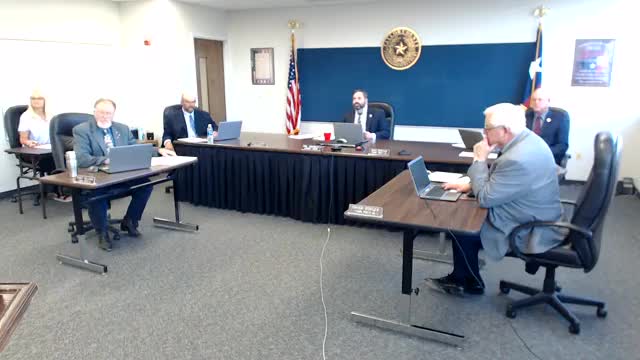
Taylor County Commissioners Court voted unanimously March 25 to adopt Resolution 13-25 opposing proposed state bills that would eliminate the countywide polling place program and restrict use of electronic poll books and ballot-marking devices.
The resolution passed 5-0 after elections staff summarized how countywide voting works and warned of operational and fiscal impacts if the Legislature requires a return to precinct-based voting and hand-marked ballots.
Elections administrator Miss Reagan told the court the county first used countywide polling places after state pilot legislation and has since held every election under the program. “There are a few of these bills that have also proposed requirement that we no longer be able to use ballot marking devices in an election,” she said. Reagan said countywide voting lets voters cast a ballot at any polling place and relies on electronic poll books to prevent double voting by flagging a voter as having already voted across locations.
Why it matters: Reagan estimated that a forced return to precinct-based voting, loss of electronic poll books or a ban on the county’s current voting system could cost Taylor County about $2,200,000 to cover extra workers, equipment, licenses and storage. The court was also told the county typically operates 19–21 polling places under the countywide program, down from 34 precincts, and that some precincts approach the 5,000-registered-voter limit cited in the Election Code. The elections office said 97 Texas counties currently use the countywide program and that about 80% of the state’s registered voters cast ballots using countywide processes.
Court members and staff discussed voters’ concerns about ballot secrecy and recent claims that data analysis could connect ballots to voters. Reagan said those concerns have been raised to her office and that the secretary of state subpoenaed an algorithm that has been discussed publicly. “Ballot secrecy is paramount, and nobody should know if somebody else voted,” she said. She and other court members said the perceived risk could be addressed by changes to how precinct numbers or other identifying labels are published, rather than by dismantling the countywide program.
Commissioners also focused on logistics and cost. Judge Riley and the commissioners said rural precincts and the county’s warehouse storage limit for equipment would complicate a return to precinct-based voting; several commissioners said it could amount to an unfunded state mandate that would require raising local revenue. “If it comes down and it’s going to cost us more for personnel, machines…and the list that Miss Reagan shared with us, we’re going to consider that an unfunded mandate,” one commissioner said.
The court voted 5-0 to adopt the resolution opposing elimination of the countywide polling place program and related provisions that would ban electronic poll books or ballot-marking devices. The motion to adopt the resolution was moved and seconded from the floor and passed without public opposition.
The elections office said it will forward the county’s resolution to the county’s state legislators and encouraged other counties to take similar action; the speaker said many other counties had already submitted resolutions.
Votes at a glance: Resolution 13-25 — Oppose elimination of countywide polling place program, restrictions on electronic poll books and ballot-marking devices: Passed 5-0.
What’s next: The resolution will be transmitted to the county’s state lawmakers; commissioners said they will continue to monitor legislation in the current session.