Get Full Government Meeting Transcripts, Videos, & Alerts Forever!
Get email alerts on the Road Safety Trucks topic
No spam. Unsubscribe anytime.
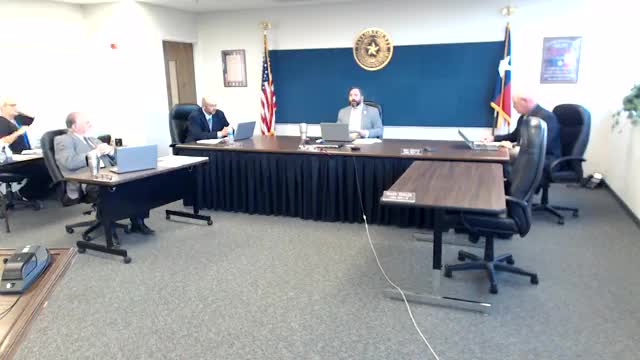
Tarrant County approves no‑through‑truck signs for Precinct 2 after hours of public testimony
Summary
After a lengthy public hearing dominated by residents’ safety and road‑damage complaints tied to construction traffic, the Tarrant County Commissioners Court voted 4‑0 to place no‑through‑truck signage on six Precinct 2 roads and adopt a narrowly tailored ordinance allowing deliveries while blocking cut‑through heavy truck traffic.
Tarrant County Commissioners Court voted 4‑0 March 11 to place “no through truck” signage on Ferris Road, Sphinx Road, Hader Road, Summerhill Road, Shirley Road and Fullwilder Road in Precinct 2, following roughly two hours of public comment from residents, contractors and company representatives.
Residents told the court heavy truck traffic tied to a nearby construction project has increased safety risks, damaged local roads and depressed property values. “I stand in full support,” said Michael Teague during the public comment period, addressing Commissioner Kyle Kendrick’s proposal. Multiple speakers described frequent heavy trucks, rock chips and gravel on driveways, and traffic they said made bicycle and horseback travel unsafe.
The order adopted by the court defines the prohibited movement narrowly: trucks above two axles may not use the restricted roads as a cut‑through unless they are making deliveries or providing services to a property or business inside the restricted zone. Emergency vehicles, county crews and local service providers are exempt. County staff said the restriction is designed to stop through traffic while allowing legitimate local access.
Commissioner Kendrick framed the action as a public‑safety response to recorded and reported traffic patterns. County counsel explained the ordinance’s mechanics and said the county is following Texas law on local traffic controls and public hearings. Ed Stamey, presenting the order, said the proposed alternate routes will route heavy trucks to 1) I‑20 to Shirley Road and the city portion of Shirley into Sphinx Road, and 2) I‑20 to FM 2404 to a separate Lansium entrance. Stamey said signage would be installed quickly; commissioners and staff said the signs should be up within days and the order was expected to take effect on the coming Saturday (the 15th on the meeting materials).
Speakers included homeowners who said the volume and speed of trucks had made previously rural roads hazardous. Cheryl Davis, a real‑estate broker who lives at the corner of one affected road, said multiple sales fell through because prospective buyers saw trucks operating near the property. “We no longer can walk out there,” she said. Farmers and ranchers raised concerns about runoff and stock‑tank water sources; Denise Sikash said she relies on runoff that crosses a parcel the developer recently bought and asked how development would affect her cattle water. County staff said stormwater work inside the city limits will follow city codes and that county rights‑of‑way would not be altered by the signage order.
Representatives of the primary contractor and developer addressed the court. Jason Marshall of DPR Construction said their intent had been to spread truck traffic and that projects are temporary. “Projects by nature are temporary,” Marshall said, and added the company plans to build an internal road to move most truck traffic off county roads.
Commissioner Kendrick moved adoption of the order; Commissioner Williams seconded. The court voted 4‑0 to approve placing the no‑through‑truck signage as presented. Commissioners and company representatives told residents they expect the bulk of truck traffic to shift when the developer’s private access road is completed, a project county and company representatives estimated could take roughly three to four months under good weather and material availability.
The court’s order and the public discussion stressed enforcement limits: the county cannot block access on city‑maintained portions of road, and the measure will not restrict deliveries or emergency access. County staff said local law enforcement and city partners will assist with enforcement and public‑safety presence if needed.
Ending: Court members thanked residents for attending and staff for tailoring the order narrowly to address legal requirements and public‑safety concerns. The full order and a map of the restricted and alternate routes are part of the county record.