Get Full Government Meeting Transcripts, Videos, & Alerts Forever!
Get email alerts on the Housing Displacement topic
No spam. Unsubscribe anytime.
Committee pauses adoption of displacement mitigation support plan after questions about town role and funding
Summary
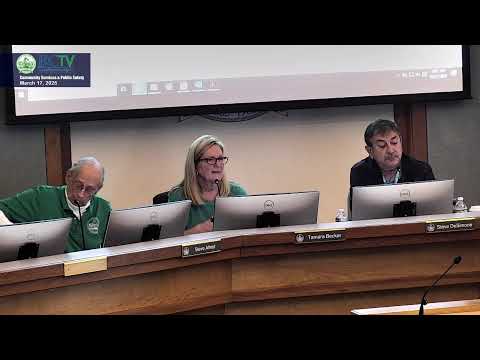
Committee members voted 2-1 to deny adopting a draft displacement mitigation support plan and directed staff and the Housing Action Committee to decide where the document should reside, citing open questions about town involvement, funding and the scope of a proposed 29‑question voluntary questionnaire.
Committee members voted 2-1 to deny adopting a draft displacement mitigation support plan and directed staff and the Housing Action Committee to decide where the document should reside, citing open questions about town involvement, funding and the scope of a proposed 29‑question voluntary questionnaire.
The vote came after a detailed presentation by Missy Lueg, director of planning for the Town of Hilton Head Island, who called the draft plan “a community‑led, initiative that provides support services to individuals and families that are facing displacement on Hilton Head Island.” Lueg said the plan assembles a Community Response Team, names DeepWell as an activation lead, and relies on private funding sources including the Community Foundation of the Lowcountry and the United Way of the Lowcountry.
The plan, Lueg said, is intended as a “playbook” that coordinates existing nonprofit and social‑service resources so residents facing sudden moves can be referred quickly to housing, employment, legal and other support.
Nut graf: Committee members and public speakers praised the plan’s goal to speed assistance for households at risk of losing housing, but several members said the draft left important operational and liability questions unanswered — chiefly how much direct town involvement was intended, whether use of a town logo or submission channel would discourage development, and who would control and administer the private displacement fund.
Committee discussion and public testimony
Housing Action Committee members and nonprofit leaders urged adoption. Jack Alderman, chair of the Housing Action Committee, said the town’s role as presented was limited to notification and information‑sharing and that “no spending by the town” was required for the plan to function. Alderman called the plan “a smart, well‑coordinated way to support our workforce.”
DeepWell’s role as the plan’s activation partner and Community Foundation/United Way roles as fiscal partners were repeatedly described in the presentation and by supporters. Lueg said the draft is a roughly 10‑page document and that DeepWell “is the lead partner, so they’re the activation agency that then assembles the team.”
Opposition focused on perceived town exposure and the questionnaire
Several committee members and public commenters urged that the plan should not be adopted as a town document because they feared it would draw the town deeper into housing operations. One committee member called the 29‑question voluntary questionnaire “rather invasive” and said developers would be reluctant to answer questions that might invite public pressure or delay redevelopment. That speaker recommended the questionnaire be revised and suggested that completed forms be routed to a nonprofit lead rather than retained by town staff.
Assistant Town Manager Sean (surname not specified in transcript) reiterated the town’s stated intent: the town would notify the lead nonprofit agencies when a potential displacement event is identified and would otherwise function primarily as an information conduit. “Our goal was simply to make sure that we were all organized together as a community and that there was information sharing,” he said.
Public comment included appeals both for adoption and for tighter limits on municipal involvement. Sandy West, vice chair of the Housing Action Committee, urged committee members not to “squash this,” saying Chimney Cove in 2022 showed the need for a standing plan. Other residents and committee members asked for clearer definitions (for example, what sizes or types of properties the questionnaire would target), disclosure of any plan to use town funds, and details on fiscal‑agent administration and administrative fees.
Committee action and next steps
After debate the committee approved a motion to deny adopting the draft plan at this time and to return it to the Housing Action Committee for further work on where the document should “live” and on tightened language. The motion passed 2 to 1; the meeting record shows the committee called for staff to coordinate with the Housing Action Committee on revisions and clarification of town responsibilities and the voluntary questionnaire.
The committee did not adopt the plan or change any existing town code or policy. Members asked staff and the Housing Action Committee to bring back a revised document that more clearly separates the town’s facilitation/notification role from the operational role of nonprofit lead agencies and that clarifies funding sources, fiscal‑agent arrangements and any administrative fees.
Clarifying details and background
- Plan length: described in the staff report as about a 10‑page document. - Lead agency: DeepWell (activation lead named in the draft). - Fiscal partners named in the draft: Community Foundation of the Lowcountry (identified in materials as the Hilton Head Island Displacement Fund) and United Way of the Lowcountry. - Questionnaire: draft contains 29 voluntary questions; committee members described some questions as intrusive and asked for a rewrite. - Precedent: Chimney Cove (2022) was repeatedly cited during discussion as the event that prompted creation of the Finding Home/workforce housing framework and the displacement response work.
Why it matters
Supporters said an agreed‑upon response protocol would allow nonprofits to mobilize faster and reduce the time displaced households spend seeking housing. Opponents warned that unclear language, an agenda‑driven questionnaire channelled through town processes, or an unclear funding path could chill redevelopment and unintentionally pull the town into ongoing housing operations.
What’s next
The committee’s action sends the draft back to the Housing Action Committee. Staff was asked to work with HAC to rewrite the questionnaire and to clarify a one‑page description of the town’s role so the document is explicitly nonprofit‑led and privately funded unless and until council approves otherwise.
Ending: The displacement support plan remains under review; no town adoption occurred at this meeting and the committee asked staff and the Housing Action Committee to return with a revised, tighter document that addresses the operational and funding concerns raised by members and the public.