Get Full Government Meeting Transcripts, Videos, & Alerts Forever!
Get email alerts on the Nfp Guide And Enforcement topic
No spam. Unsubscribe anytime.
NFP board outlines priorities for guide, enforcement, stormwater and invasive‑species resources
Summary
Board members discussed topics for upcoming work sessions and asked staff to pursue legal and interdepartmental guidance on enforcement, planting resources, stormwater and data‑sharing with MNFI and MSU Extension; no formal actions were taken.
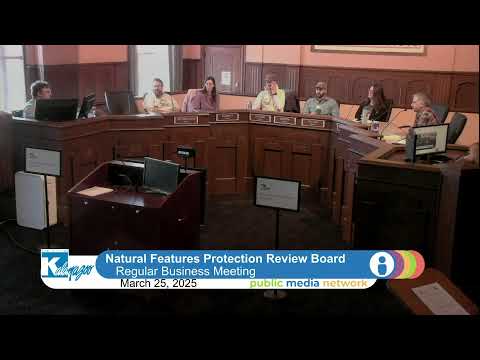
The NFP Review Board spent a substantial portion of its March meeting discussing a draft NFP guide and a list of possible work‑session topics, and directed staff to pursue follow‑up with the city attorney and other departments.
Board members and staff identified enforcement and permitting, cultivars versus true natives (plant sourcing), stormwater management for NFP properties, and invasive‑species resources as priorities for upcoming meetings. Nolan told the board he had asked the city attorney whether the city can point applicants to external contractor lists or trade groups and said he would follow up when he has a clear answer.
Members said a concise guide—separate from the ordinance—would help applicants and developers who face staff turnover. Board members raised practical needs: where applicants can source native plants, how to define acceptable cultivars, and whether the city can point to authoritative public databases without endorsing specific vendors. Director Frederickson and others suggested checking state or regional resources such as the Michigan Natural Features Inventory (MNFI) and MSU Extension; members also discussed Midwest and Michigan invasive‑species databases (MISIN/MIPIN) as references for contractors and staff.
Board members proposed scheduling focused work sessions: enforcement and permitting in April, plant‑selection and cultivar discussion in May, and stormwater topics in June, with staff from public works, sustainability and MSU Extension invited to present. Nolan said staff can also explore data‑sharing or subscription agreements to keep species data current.
Members also discussed revived outreach ideas: occasional site visits or “field trips” to monitor whether native‑landscaping commitments are implemented and to highlight successful projects. The board did not take formal action on any ordinance language at the meeting; staff will return with attorney guidance, potential presenters and a proposed schedule for work sessions.
The board noted the continued Imagine Kalamazoo 2025 planning effort and an upcoming public event at the Kalamazoo Institute of Arts this week.