Get Full Government Meeting Transcripts, Videos, & Alerts Forever!
Get email alerts on the Employee Compensation topic
No spam. Unsubscribe anytime.
Broadwater County compensation panel debates 3%–5% pay recommendation as health premiums rise
Summary
County staff and compensation board members discussed cost-of-living indexes and a $74 monthly health-insurance premium increase affecting 68 employees while preparing a COLA recommendation for July 2025–June 2026; no formal vote was taken and staff will fold the board—s recommendation into the budget process.
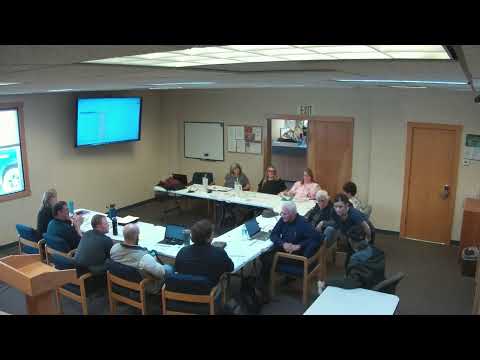
Broadwater County—s compensation panel spent its meeting reviewing inflation measures and insurance cost increases as it prepared a recommendation on employee pay for the fiscal year that starts July 2025.
County Administrative Officer Bill Jarocki opened the discussion and framed the board—s task as a recommendation that will be considered by the Board of Commissioners during the budget process. "The people we hire in Broadwater County are our most important resource," Jarocki said, and he reviewed national and regional inflation measures including the Consumer Price Index (CPI) and the Personal Consumption Expenditures (PCE) price index to provide context for a cost-of-living adjustment (COLA).
Lindsay Rickmeyer, a county staff member who prepared a worksheet for the panel, told members the county currently has 68 employees on health insurance and the plan's premium will increase by $74 per month per covered employee starting in April. Rickmeyer used a $40,000 annual salary example to show how different COLA percentages and insurance contributions would affect taxable wages and take-home pay.
Board member Angie (last name not provided in the record) recommended a minimum 3% COLA to match recent inflation measures, and said a 4% COLA would be more appropriate if the county does not absorb the insurance premium increase. "So for our employees to be able to afford that CPI, our COLA, I believe, needs to be at 3%," Angie said.
Panel members discussed alternatives and trade-offs. Board members noted that last year the board recommended a higher COLA (3.5%) and that counties vary widely in the approach they use (flat dollars, percentage steps, or combinations). One board member summarized that combining the roughly 2.9%–3% CPI with the $74-per-month insurance increase could push a breakeven COLA materially higher if the county did not cover any portion of the premium increase; that calculation was discussed but not formally adopted at the meeting.
Administrative staff and board members also discussed constraints on county revenue. Jarocki said the Montana Department of Revenue uses multi-year measures that limit allowable budget growth and described county revenue from property tax as a primary funding source for personnel costs. Debbie Kelly, a county staff member, described permissive-levy rules that limit the insurance revenue the county may count: "It's based on the number of employees on payroll as of June 30 of every fiscal year," Kelly said, and she explained the county cannot include unfilled positions in that calculation.
No formal motion or vote on a final COLA percentage was recorded at the meeting. Staff said they will take the board's input and incorporate recommended COLA scenarios into the broader county budget work, which will be presented to the Board of Commissioners for final decisions.
Discussion took place primarily during the scheduled compensation-board agenda item; an interruption from a member of the public about an unrelated sanitation complaint was noted and deferred to a future public-comment forum.
Next steps: the compensation panel's recommendation will be forwarded to the Board of Commissioners and county staff will model budget scenarios that reflect the COLA ranges discussed and the potential county share of the insurance premium increase.