Get Full Government Meeting Transcripts, Videos, & Alerts Forever!
Get email alerts on the Airport Construction And Cip topic
No spam. Unsubscribe anytime.
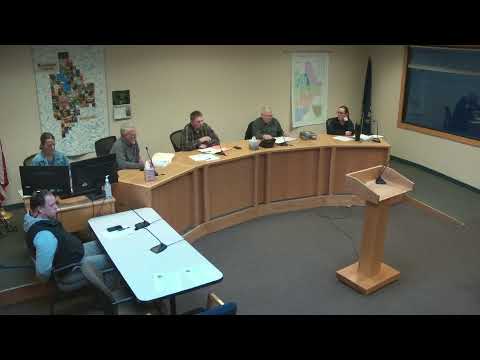
Townsend airport board amends CIP, pushes snow-removal work earlier as FAA-funded apron work advances
Summary
The Townsend Airport Board reviewed an FAA-funded apron expansion and amended its capital improvement plan to accelerate snow-removal equipment and storage while delaying an AWOS weather station and land acquisition and removing a fuel-system replacement line.
The Townsend Airport Board on Tuesday reviewed construction activity at the airport and approved changes to the airport capital improvement plan that move snow-removal equipment and a storage building earlier in the schedule while delaying an AWOS weather station and land acquisition and removing a fuel-system replacement from the CIP.
Board members heard a construction update from Lance Bowser of Robert Peischen Associates, who said the FAA-funded apron expansion has a notice to proceed and crews have moved equipment onto the site. Bowser said grant offers from the FAA are on a temporary hold while the agency changes some grant language and grant assurances, and that one original grant award came out roughly $150,000 short of the amount the project team had requested. “The FAA doesn’t know why. They put in for the amount and when it came out, it it was a hundred and $50,000 short,” Bowser said. He told the board the shortfall may affect available FAA funding in 2026 and would be discussed again as staff finalizes the CIP.
Why it matters: The apron expansion is the active construction item tied to multiple FAA and state funding pots. Changes in grant language and an unexplained $150,000 variance could reduce available discretionary FAA funds for other planned projects the board had scheduled in upcoming years.
Most important details
- Construction: Bowser said the contractor received certificates of insurance naming Broadwater County and the airport authority as additional insureds and moved a dozer on site; crews will strip topsoil and begin hauling gravel. Paving was discussed for mid-May, with reopening expected in June if weather cooperates; staff cautioned that mid-May paving is optimistic and that rain could push work later.
- Grant funding: Bowser described a roughly $800,000 FAA grant-availability estimate for 2026 (subject to the $150,000 shortfall) and an estimated annual FAA allocation of about $150,000 thereafter. He also noted a fluctuating Bipartisan Infrastructure Law (BIL) allotment that the spreadsheet shows at about $145,000 but has varied historically.
- Millings stockpile and county property: The board discussed plans to stockpile asphalt millings on county-owned land east of a cattle guard (not on airport property). Airport staff and the consultant expressed concern that millings left in place long-term can compact into an asphalt-like “rock” and become difficult to remove; the contractor offered to coordinate placement and spreading to minimize future problems.
- CIP changes: After discussion the board voted to amend the airport capital improvement plan as recommended by staff and consultant. The board directed staff to: move the snow-removal equipment and storage building to 2026; schedule wildlife/terminal-area fencing for 2027; shift the AWOS 3-PT certified weather station to 2028; leave pavement maintenance in 2030; and move land acquisition for development to 2031. The board also removed the fuel-system replacement line from the CIP after staff told the board the FAA will not fund major fuel-system replacements or upgrades (FAA treats fuel systems as self-sustaining once installed).
- Snow-removal equipment and Buy American constraints: Staff and the consultant told members that purchasing used plow/tractor equipment with FAA funds is technically difficult because of Buy American and domestic-content requirements and that availability of compliant, U.S.-made tractor-based plows is very limited. Board members discussed facility needs (heated storage) and cost estimates for a new building and heavy equipment; staff said a full new building plus highway-grade plow had previously been estimated near $1 million but could be trimmed in scope. The board agreed the airport needs improved snow-clearance capability and prioritized the equipment and building.
- AWOS and instrument-approach timing: Bowser explained that an AWOS 3-PT would be a certified weather station with recurring maintenance costs (on the order of $8,000–$10,000 per year for recalibration visits plus an approximate $50 monthly data upload fee) and that the development of a new instrument approach procedure typically takes multiple years; he estimated about a three-year timeline from the start of procedure work to publication.
- Fuel system update and short-term equipment: Staff reported that the interim QT pod fueling reader and associated hardware have been ordered from the vendor and that the contractor (Energy Systems) expects to install the system next week if the cellular/data connection is arranged. The board favored a cellular data link rather than relying on the airport’s existing point-to-point Wi‑Fi for reliability.
Board direction and next steps
- Staff will record the amended CIP schedule and submit the updated document with inflation adjustments as discussed. The board directed staff to remove the fuel-system replacement from the FAA-funded CIP (FAA ineligibility) and to proceed with the QT pod installation using a cellular data connection to maximize uptime.
- Staff and the county will continue to coordinate placement and reuse of millings; the board asked staff to keep the board apprised of any county decisions that would leave millings on county property adjacent to the airport.
Ending
Board members said they want to preserve the airport’s pavement-maintenance funding and avoid borrowing so deeply that future pavement upkeep would be at risk. Staff will return with final grant details, and the board will monitor whether FAA grant language changes and the $150,000 shortfall are resolved in the FAA’s forthcoming grant offers.