Get Full Government Meeting Transcripts, Videos, & Alerts Forever!
Get email alerts on the Waste Management topic
No spam. Unsubscribe anytime.
Commission discusses a new business assessment model for solid waste; working meeting set
Summary
Public Works Director TJ Gravely and commissioners discussed a proposed fee schedule to standardize business solid‑waste assessments, raising questions about measurement criteria, community hall and event venue classifications, and how to account for large generators such as hospitals without scales or a local landfill.
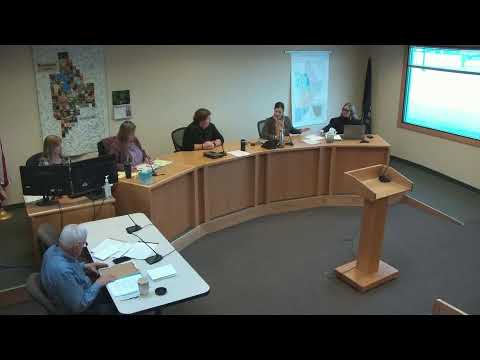
Broadwater County commissioners spent extended discussion time March 5 reviewing a proposed solid‑waste business assessment schedule that Public Works Director TJ Gravely presented as an effort to address inconsistent assessments across business types.
"This has been a problem for a long time where people aren't being assessed properly," Gravely said, describing variance in how businesses have been assigned assessments (for example, some hospitals receiving one assessment while other generators receive more). Gravely said the model he drafted draws on fee schedules used by Park County and Lewis and Clark County but must be tailored to Broadwater's circumstances.
Commissioners and Gravely discussed several specific concerns in the plan: how to define and categorize a "community hall" or commercial event/wedding venue; whether some businesses will face a minimum number of assessments (the draft lists a minimum but is unclear on criteria for additional assessments); how to handle large waste generators such as hospitals and assisted‑living facilities that produce considerable non‑medical trash; and the practical problem of not having scales or a county landfill to measure or process tonnage accurately.
Gravely offered a working assumption during the meeting that an example business producing 6,000 pounds a year might be assessed two units ("you are given 1 assessment for every 3,000 pounds"), but he acknowledged the county currently lacks a systematic way to track volumes and would be "eye‑balling" without better measurement.
Commissioner Randolph (by surname as used in the meeting) pressed for clear, consistent criteria and said the public should have a chance to review the proposal. Commissioners agreed to hold a working meeting at 1:30 p.m. the same day with the solid‑waste board and other stakeholders to refine definitions, clarify criteria for extra assessments and decide how to treat hospitals, assisted‑living facilities and commercial event venues.
Gravely said community halls in the draft were set to be charged three assessments and that this category intended to include privately owned event spaces that regularly host public gatherings. He also removed a proposed fixed attendance cutoff for events (previously 100 attendees) after commissioners raised concerns about arbitrary thresholds.
No fee schedule was adopted at the March 5 meeting; Gravely said the solid‑waste board would evaluate the working‑meeting recommendations and the item would return to the commission for formal action.